
Flowers
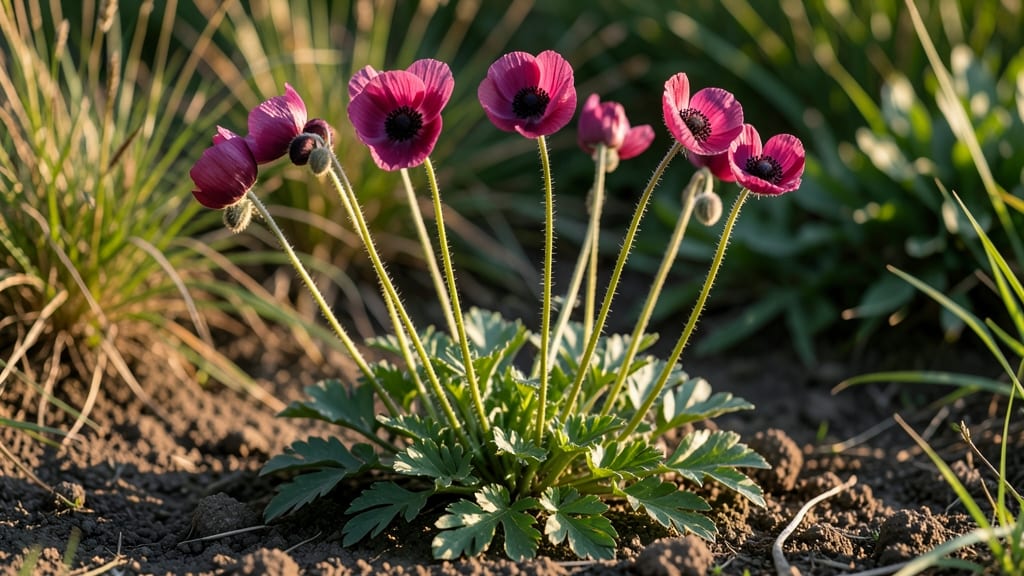
Anemone flower perennials appear to die back in late fall or winter but actually survive underground, storing energy in their roots and tubers for a stunning spring rebirth. This dormancy strategy ensures year-round resilience in colder climates.
This clever survival tactic isn't just about enduring winter—it's how anemones prepare for their dramatic spring comeback. 🌱 Their fibrous roots and thick tubers act like natural batteries, converting stored starches into energy when temperatures rise.
Unlike annuals that die completely, these perennials stay alive just below the soil, ready to burst forth with those iconic cup-shaped blooms once frost risks pass. I've seen firsthand how anemones that get proper winter care can return even stronger year after year, proving their underground strategy really works.
What makes this especially fascinating is how anemones time their dormancy perfectly. Most varieties trigger this survival mode when daytime temperatures consistently drop below 50°F, with the foliage yellowing as a clear signal.
This precise timing ensures they're not caught off guard by early frosts while still getting maximum sunlight for root development. The key to helping them thrive through winter is protecting those energy reserves—whether through proper mulching or avoiding overwatering during dormancy.
💡 In This Article
- Why Anemone Flowers Go Dormant in Winter
- Caring for Dormant Anemone Roots Over Winter
Why anemone flowers go dormant in winter
Anemone flowers trigger dormancy through a complex interplay of photoperiodism and temperature cues. When daylight hours shrink below 12 hours and nighttime temperatures dip consistently below 50°F, the plant's meristem cells (growth centers) begin producing higher levels of abscisic acid—a plant hormone that signals dormancy.
This process is similar to how deciduous trees prepare for winter, but anemones take it a step further by actively storing energy in their rhizomes and tubers rather than just shedding leaves.
The underground storage system is what truly sets anemones apart from other hardy perennials like peonies or hellebores.
While peonies rely primarily on thick, fleshy roots that store starches, anemones develop a dual system: their fibrous roots spread wide to absorb moisture, while the tuberous rhizomes (often the size of a golf ball) become the primary energy reserve.
These tubers can contain up to 30% starch content by dry weight—about twice what you'd find in a potato—providing the fuel needed for rapid spring regrowth. 🌱
What's particularly fascinating is how anemones time their dormancy to avoid both early frosts and late-season warmth. Most varieties enter full dormancy when soil temperatures drop below 40°F, but they remain sensitive to temperature fluctuations.
This explains why anemones in colder climates (USDA zones 3-5) often need extra protection—their roots can still be active enough to be damaged by sudden freezes. Compare this to hellebores, which can tolerate freezing soil because their energy reserves are distributed differently in their crowns rather than concentrated tubers.
The dormancy process also involves cellular changes that make the plant more frost-resistant. As temperatures drop, the plant increases production of antifreeze proteins (similar to those in winter wheat) that prevent ice crystals from forming in cell walls.
This is why you'll often see anemone foliage staying green longer in mild winters—it's not dead, just in a state of suspended animation. The key difference from annuals is that these proteins don't degrade completely, allowing the plant to "wake up" quickly when spring arrives.
One common misconception is that all anemones behave the same during dormancy. In reality, there are significant variations between species.
For example, Japanese anemones (Anemone hupehensis) have deeper rhizomes that can survive -20°F temperatures, while windflowers (Anemone nemorosa) have shallower roots that need 3-4 inches of mulch in zone 4 climates.
This explains why some gardeners report their anemones returning vigorously while others struggle—it often comes down to matching the right variety to local winter conditions.
The spring rebirth begins when soil temperatures consistently stay above 50°F for at least 2 weeks. At this point, the abscisic acid levels drop and gibberellins (growth hormones) take over, triggering the tubers to convert stored starches into sugars that fuel new shoot growth.
This is why proper winter care isn't just about survival—it's about ensuring those tubers remain undamaged so they can perform this biochemical transformation efficiently. 💫