
How To
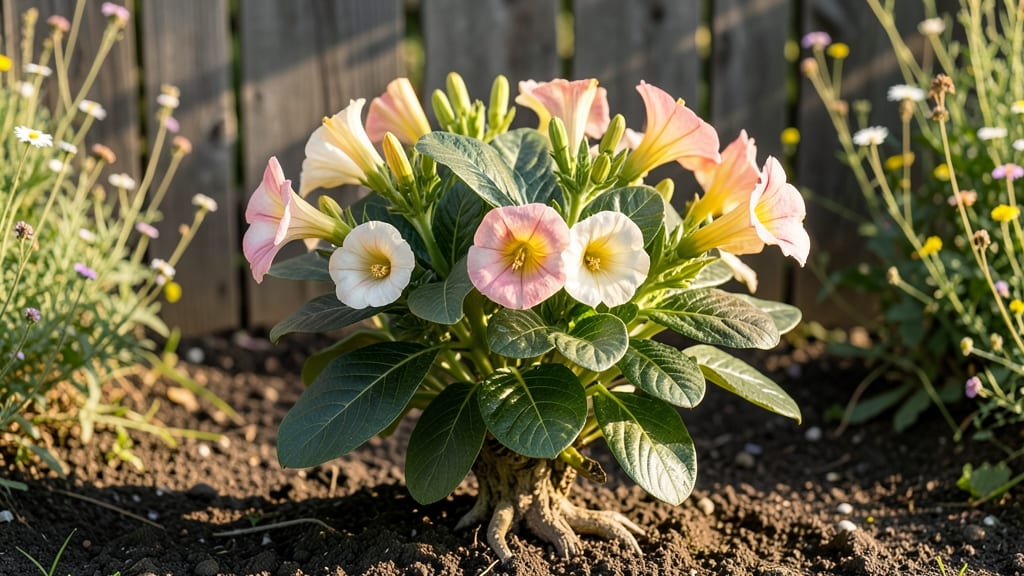
Are four o'clocks perennials? They act as perennials in warm climates like USDA zones 9-11, where they regrow yearly from tuberous roots, but often treated as annuals in colder regions due to frost sensitivity. Their growth cycle depends heavily on temperature and seasonal conditions.
These plants earn their perennial status in mild climates because their thick, tuberous roots store energy underground, allowing them to push through soil and bloom again each year. 🌱 In colder regions, however, the roots often don't survive winter freezes, forcing gardeners to replant them annually.
The key difference lies in how well the tubers endure temperature drops—below 20°F, they typically perish, turning what could be a long-term garden staple into a seasonal treat.
What many gardeners don't realize is that even in colder zones, you can sometimes coax perennial behavior by digging up tubers before the first frost and storing them in a cool, dry place over winter. This extra step transforms a one-season plant into a multi-year favorite with minimal effort.
💡 In This Article
- Climate Zones Where Four O'Clock Plants Thrive as Perennials
- Year-Round Care for Four O'Clock Plants in Different Climates
Climate zones where four o'clock plants thrive as perennials
The perennial nature of four o'clock plants hinges entirely on their ability to survive winter temperatures. In USDA zones 9-11—where winters rarely drop below 30°F—these plants naturally regrow each spring from their tuberous roots.
The roots store carbohydrates and nutrients during dormancy, allowing them to push through the soil as soon as temperatures rise above 55°F. This natural cycle mirrors how other tuberous perennials like dahlias or cannas behave in frost-free climates.
The tuberous roots are the secret weapon of four o'clock plants, capable of surviving dry spells and even brief cold snaps down to 25°F if they're well-established. However, when temperatures plummet below 20°F for extended periods, the cell membranes in these roots rupture, killing the plant.
In zones 8 and below, this frost sensitivity forces gardeners to replant annually, as the roots simply can't endure the winter freeze-thaw cycles common in colder regions. 🌡️
What makes this particularly interesting is how the plant's growth habit changes with climate. In perennial zones, you'll see vigorous, multi-stemmed plants that can reach 3-5 feet tall with abundant blooms from late spring through fall.
In annual zones, the same plants may only reach 2-3 feet and produce fewer flowers because their energy is focused on root development rather than above-ground growth. This difference highlights why zone matters so much for long-term gardening success.
For gardeners in marginal zones (like zone 8), the transition between annual and perennial behavior creates a gray area. Some varieties, particularly those bred for cold tolerance, might survive mild winters with protection like mulch or row covers.
The key factor here is soil temperature—roots need to stay above 32°F to avoid damage. This is why many gardeners in these zones experiment with overwintering tubers indoors or in unheated garages.
Another fascinating aspect is how four o'clock plants adapt their flowering cycles based on temperature. In perennial zones, they often bloom continuously from early summer until frost. In annual zones, they may produce a single flush of flowers in late spring before focusing on root growth.
This adaptation ensures the plant's survival strategy aligns with its environment—whether that means putting energy into flowers or into storing nutrients for next year.
Consider this comparison: In zone 10, a four o'clock plant might produce 12-15 inches of new growth annually from its tubers, while in zone 5, the same plant would need to be replanted every year because the roots would freeze solid.
This stark contrast explains why some gardeners in cooler climates treat them as annuals despite their perennial classification in warmer areas. 🌿