
Flowers
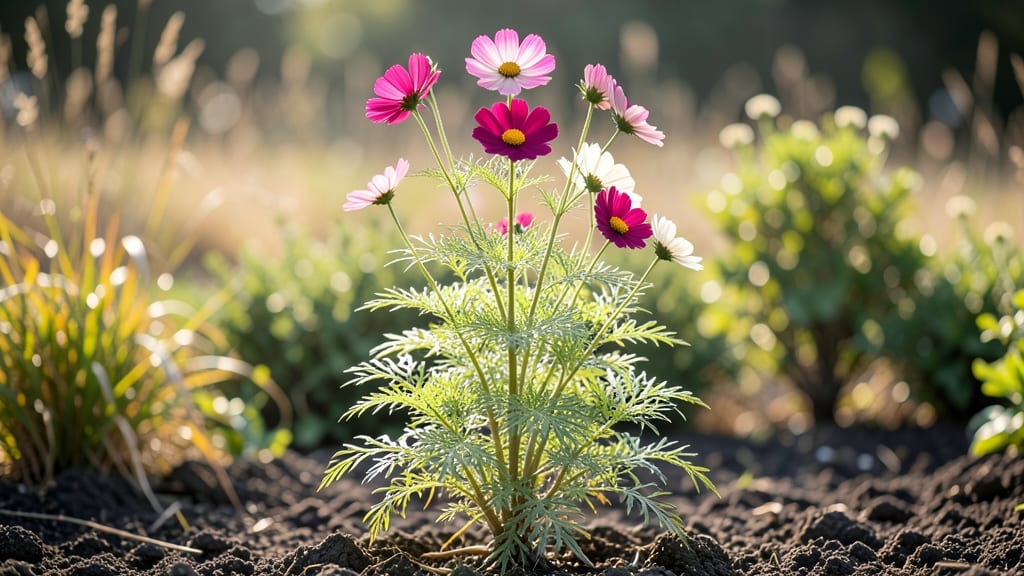
Deciding whether cosmos flowers are annuals or perennials depends on your climate: they grow as annuals in most regions but act like perennials in frost-free winters, naturally reseeding and reblooming year after year with minimal gardener intervention.
This dual nature comes down to their hardy taproots and self-seeding habits. 🌱 In colder zones, cosmos plants complete their life cycle in one season, but in mild climates like USDA zones 9-11, they often survive winters and return stronger each year.
The key is their ability to drop seeds that germinate readily—meaning you might find new cosmos popping up even where you didn't plant them! For gardeners in transitional zones, strategic deadheading and winter mulching can help them behave more like perennials.
What makes this so rewarding is how low-maintenance they are. Unlike many perennials that demand careful division or winter protection, cosmos thrive on neglect—just give them full sun and average soil, and they'll reward you with continuous blooms from summer through fall.
The tradeoff? In colder regions, you'll need to replant seeds each spring, but that's a small price for their effortless beauty.
💡 In This Article
- Why Cosmos Flowers Act Like Perennials in Some Regions
- How to Extend Cosmos Blooms Year-After-Year
Why cosmos flowers act like perennials in some regions
Cosmos flowers exhibit perennial-like behavior in frost-free climates thanks to their unique taproot system. Unlike many annuals with shallow roots, cosmos develop a deep, fibrous taproot that stores nutrients and moisture, allowing them to survive mild winters when protected by mulch or snow cover.
This root structure enables them to regrow from the base once temperatures rise again, creating the illusion of perennial growth. 🌱 In USDA zones 9-11 where winters rarely drop below 30°F, these roots often remain viable through the season.
The real game-changer is their prolific self-seeding habit. Each cosmos plant produces hundreds of tiny, wind-dispersed seeds that germinate eagerly in spring. These seeds can remain viable in the soil for 2-3 years, meaning you'll often find "volunteer" cosmos popping up where none were planted.
This natural reseeding creates dense patches that bloom continuously from early summer through first frost, mimicking the behavior of true perennials like coneflowers or black-eyed Susans.
Climate plays a crucial role in this behavior. In colder zones (USDA 5-8), cosmos complete their life cycle in one season because frost kills the foliage and roots.
However, in transitional zones (USDA 8-9), the combination of their hardy roots and early spring germination allows them to establish before summer heat arrives. The key difference is winter survival: while the tops die back, the roots often persist to regrow in spring, especially when protected by organic mulch.
What makes this adaptation so effective is their drought tolerance. Once established, cosmos roots can access water from 12-18 inches below soil surface, giving them an advantage over many perennials that rely on surface moisture.
This deep root system also helps them outcompete weeds while maintaining their delicate, airy growth habit. The result is a plant that behaves like a perennial in ideal conditions but doesn't require the same level of winter care as true perennials.
For gardeners in marginal climates, this dual nature creates interesting possibilities. In zones 8-9, you might see both self-seeded volunteers and plants that overwinter successfully from the same garden bed.
The plants that overwinter typically produce even more vigorous growth the following year, sometimes blooming 30-50% larger than their first-year counterparts. This "reblooming" phenomenon is what gives them their perennial-like appearance in these transitional zones.
The botanical term for this behavior is "facultative perennial," meaning cosmos can grow as either annuals or perennials depending on environmental conditions.
This flexibility is one reason they're so popular among low-maintenance gardeners—they adapt their growth cycle to whatever climate they're planted in, always delivering that signature cloud of delicate blooms. 🌿