
Vegetables
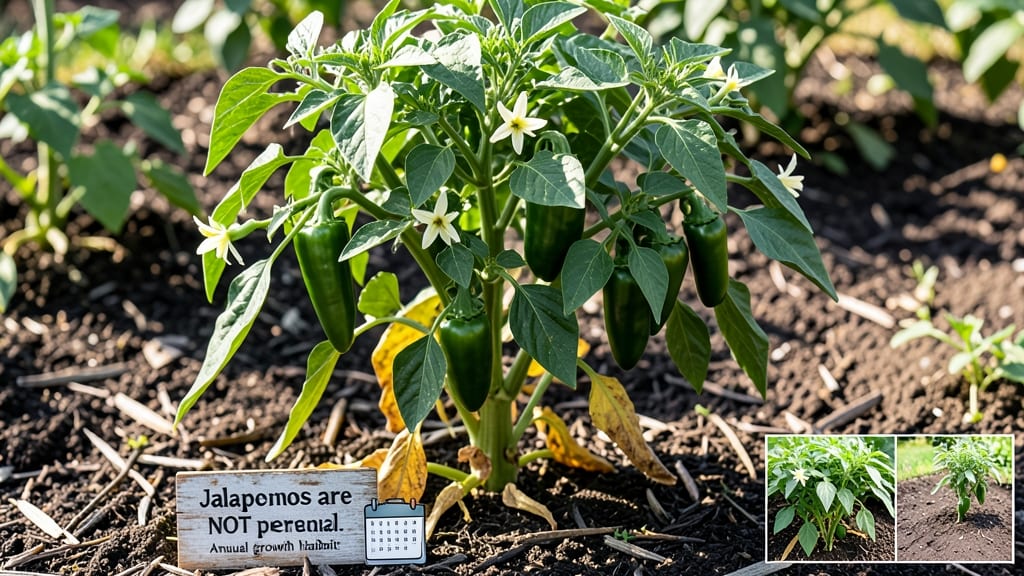
Jalapeños aren't true perennials—they die back each year in colder climates but can regrow from their root systems when conditions warm up again (USDA zones 9-11). Their ability to return depends on winter protection and how well the roots survive frost.
Jalapeño plants behave more like short-lived perennials—they lose their tops in cold weather but keep their roots alive underground.
This means you can sometimes get new growth in spring if the roots stay healthy. 🌱 The key difference from true perennials is that jalapeños won't reliably produce for years without protection, especially in zones below 9.
Many gardeners treat them like annuals for simplicity, though patient growers can coax multiple harvests from the same plants with proper overwintering.
What makes this interesting is how climate adaptation plays a role. In warmer regions (zones 10+), jalapeños often act like true perennials, producing for years with minimal care. But in cooler areas, even hardy varieties need winter strategies like thick mulch or container growing to survive.
The root system's resilience is what makes this possible—unlike annuals that die completely, jalapeño roots can wait out the cold and start fresh when temperatures rise.
💡 In This Article
- Why Jalapeño Plants Die Back Each Year
- How to Extend Jalapeño Growth Beyond One Season
Why jalapeño plants die back each year
Jalapeño plants exhibit what botanists call "cold-induced dormancy"—their aboveground foliage and stems die when exposed to temperatures below 32°F, but the root system often remains viable underground.
This happens because jalapeños originate from Mexico's highlands where nights can drop to 40°F, but they lack the cold-hardiness of true perennials like asparagus or rhubarb. 🌱 The key difference lies in their cellular structure: jalapeño roots contain higher concentrations of soluble sugars that act as natural antifreeze, preventing complete freezing but not full winter survival.
When frost hits, the plant's vascular system shuts down, causing the aboveground growth to blacken and crisp within 24-48 hours. However, the roots continue respiring at reduced rates, consuming stored starches to stay alive.
This is why you might see new shoots emerging in spring—those roots have been patiently waiting for warmth. True perennials like peppers in Zone 10+ maintain their foliage year-round, but jalapeños in colder zones behave more like biennials, with a single growing season followed by dormancy.
The root system's survival depends on soil temperature staying above 35°F and moisture levels remaining consistent. In ideal conditions, roots can persist for 1-2 years underground, though their vigor declines with each freeze-thaw cycle.
This is why gardeners in Zone 8 often see weaker regrowth compared to those in Zone 10, where plants may produce continuously. The trade-off is that jalapeños prioritize root survival over fruit production during cold snaps.
What's fascinating is how jalapeños use their energy reserves differently than true perennials. While plants like strawberries allocate energy to both roots and crowns for winter, jalapeños focus nearly all their resources on root storage.
This makes them more resilient to short freezes but less capable of sustained perennial growth without human intervention. The plant's natural strategy reflects its wild ancestors, which would die back in Mexico's dry winters but regrow when rains returned.
Here's what happens at the cellular level: frost causes ice crystals to form in the plant's extracellular spaces, but jalapeño roots produce proteins called "dehydrins" that bind to cell membranes, preventing rupture. This is why you might see roots still firm and white after winter, while stems turn mushy brown.
The root tips contain meristematic cells that can regenerate new shoots when temperatures rise above 55°F—the threshold for active growth.
For gardeners, this means timing is everything. If you prune back dead foliage in late winter but leave the roots intact, you're giving the plant a head start on spring growth. The first leaves that emerge will be small and yellowish—a sign the plant is mobilizing stored nutrients.
Within 4-6 weeks, you'll see normal green foliage if the roots survived, proving that jalapeños are more persistent than they appear. 🌿
One common misconception is that all jalapeños behave the same way. In reality, heirloom varieties like 'Early Jalapeño' often have slightly better cold tolerance than hybrid types, which have been bred for fruit production rather than root hardiness.
This genetic variation explains why some gardeners get reliable regrowth while others struggle—it's not just about climate, but also about the specific plant's heritage.