
Flowers
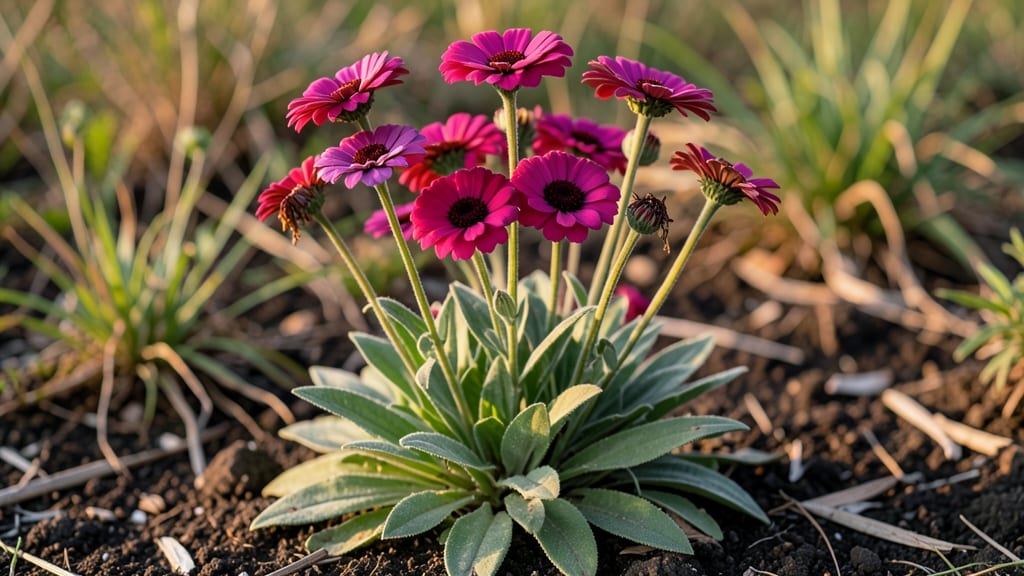
Zinnia flowers are not true perennials in most climates, dying back to the ground each winter and requiring annual replanting. However, in warm zones (USDA 9-11), they may self-seed prolifically or survive mild winters with proper care, returning the following season.
Zinnia flowers act more like annuals in most regions because they can't tolerate freezing temperatures—once frost hits, their tender stems and leaves blacken and die. 🌱 The key difference comes down to geography: in frost-free areas (like Southern California or Florida), zinnias naturally behave as perennials, reblooming year after year without replanting.
Even in cooler zones, gardeners can trick zinnias into lasting longer by saving seeds from mature plants or growing them in containers that can be moved indoors during winter. This approach turns what would normally be a one-season plant into a repeat performer.
What's often overlooked is how zinnias' growth habit changes with climate. In colder areas, they focus all their energy on producing flowers and seeds quickly before winter, while in warm zones, they devote more resources to root development and survival.
This explains why some varieties (like 'Benary's Giant') thrive as self-seeding perennials in mild winters—it's not just luck, but their natural adaptation to frost-free conditions.
💡 In This Article
- Why Zinnias Die in Cold Climates
- Tips to Extend Zinnia Lifespan in Gardens
Why zinnias die in cold climates
Zinnias (Zinnia elegans) are classified as annuals in most regions because their tender growth cannot withstand frost. The critical threshold is 28°F (-2°C)—when temperatures drop below this, the plant's cell walls rupture due to ice crystal formation, causing irreversible damage.
Unlike hardy perennials such as coneflowers, zinnias lack the deep root systems or woody stems to store energy for regrowth after winter dormancy. Their fibrous roots only penetrate about 12-18 inches deep, offering minimal insulation against freezing soil.
The botanical difference lies in their native habitat: zinnias originated in Mexico's highlands where temperatures rarely drop below 35°F (2°C). In frost-free zones (USDA 9-11), these flowers naturally behave as perennials because they can complete their life cycle without seasonal dieback.
For example, in Southern California's mild winters, zinnias often self-seed prolifically, creating dense stands that return annually without human intervention. The key adaptation is their ability to produce seeds before the first frost, ensuring genetic continuity through germination the following spring.
What most gardeners miss is how zinnias' growth strategy shifts with climate. In cold regions, they allocate nearly all their energy to rapid flowering and seed production (a survival mechanism called "escape strategy"), while in warm zones, they invest more in vegetative growth and root development.
This explains why some varieties like 'Crystal' or 'Profusion' appear perennial in mild winters—they've evolved to prioritize survival over quick reproduction. The trade-off? In colder climates, their energy focus on flowering means they're less likely to establish strong roots for overwintering.
There's also a physiological response to temperature that affects zinnias' lifespan. When nights dip below 50°F (10°C) for extended periods, their metabolic rate slows dramatically, halting new growth and causing existing leaves to yellow—a condition called "chilling injury."
This is why zinnias grown in containers often fare better than in-ground plants: containers can be moved to protected spots during cold snaps, maintaining optimal 60-75°F (15-24°C) nighttime temperatures that zinnias prefer.
One fascinating exception is the species Zinnia acerosa, native to Texas and northern Mexico, which shows more perennial tendencies in its native range. These wild zinnias develop thicker stems and deeper roots, allowing them to tolerate brief freezes down to 25°F (-4°C).
While not true perennials, they demonstrate how selective breeding could potentially create cold-hardier zinnia varieties for gardeners in marginal climates.
For gardeners in transitional zones (USDA 7-8), the solution often lies in understanding these botanical limits. By choosing varieties with known cold tolerance (like 'Thunderbird' series) or using row covers to extend the growing season, you can push zinnias to behave more like perennials.
The key is working with—not against—their natural growth patterns. 🌱