
Plants
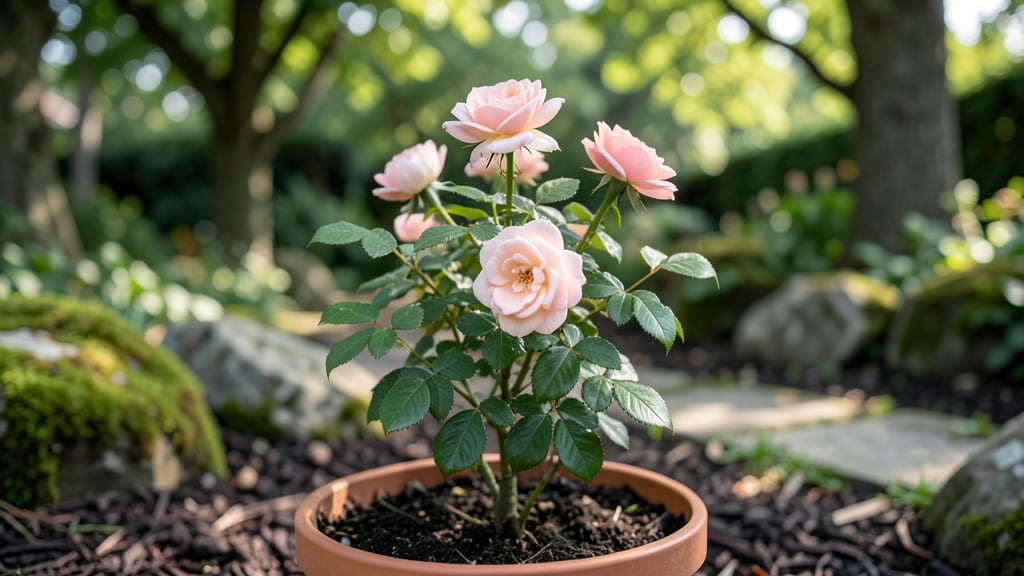
Mini roses are indeed perennials, meaning they return each year—but they often lose foliage in winter while their roots stay alive underground. With proper care, they’ll burst back to life in spring, delivering vibrant blooms year after year.
This winter dormancy isn’t a sign of death—it’s a survival strategy. 🌱 Mini roses, like other deciduous perennials, shed leaves to conserve energy during cold months, while their root systems remain active just below the frost line.
The key to keeping them thriving is understanding their hardiness zone (typically 5-10) and providing the right winter protection, like mulching or light pruning, to shield those roots from freezing temperatures.
What sets mini roses apart is their resilience: even after a harsh winter, their roots store enough energy to fuel a dramatic spring regrowth. That’s why gardeners who treat them as annuals miss out on years of low-maintenance beauty.
The secret lies in mimicking nature—giving them the right conditions to "sleep" through winter and wake up stronger.
💡 In This Article
- Why Mini Roses Go Dormant in Winter
- How to Protect Mini Roses for Year-Long Blooms
Why mini roses go dormant in winter
Mini roses enter dormancy as a survival mechanism when temperatures drop below 40°F (4°C), a process triggered by shorter daylight hours and cooler soil.
This isn't death—it's a botanical power-down mode where the plant redirects energy from leaves (which would freeze) to its root system, which stays alive 3-6 inches (7-15 cm) underground, where temperatures remain above freezing even in harsh winters.
Think of it like hibernation: the plant conserves energy in its roots while waiting for spring's warmth to restart growth.
Their deciduous nature sets them apart from evergreen roses, which maintain foliage year-round. Mini roses typically thrive in hardiness zones 5-10, meaning they can survive winters where temperatures dip to -20°F (-29°C) if properly protected.
The roots contain stored carbohydrates that act as fuel for spring regrowth, similar to how a potato stores energy to sprout new shoots. Without this dormancy, the plant would expend too much energy maintaining above-ground growth during winter's energy scarcity.
What makes this dormancy visible is the leaf drop, which occurs when chlorophyll breaks down in response to cold. The stems may turn brown and appear dead, but the root system remains metabolically active, respiring slowly to maintain viability.
This is why you'll often see mini roses in gardens that look completely dead in winter—yet they'll burst back with new shoots when temperatures rise above 50°F (10°C) for several consecutive days.
Interestingly, the timing of dormancy varies by climate. In milder zones (like zone 9+), mini roses may stay semi-dormant with some leaf retention, while in colder regions (like zone 5), they enter full dormancy.
The key difference is that in warmer climates, the plant conserves less energy, while colder climates force a deeper, more protective dormancy. This explains why some gardeners in warmer areas might not notice the dramatic dieback that others see in colder regions.
Here's what's happening at the cellular level: Cold temperatures trigger the production of abscisic acid, a plant hormone that signals dormancy. This hormone causes the plant to close stomata (pores) to prevent water loss and redirect resources to root storage organs.
Meanwhile, the roots continue to absorb water and nutrients from the soil, maintaining just enough metabolic activity to stay alive. This delicate balance is what allows mini roses to survive winters that would kill more delicate plants.
The root system's survival is particularly impressive. Studies show that well-established mini rose roots can maintain viability even when soil temperatures drop to 28°F (-2°C), thanks to antifreeze proteins that prevent ice crystal formation in root cells.
These proteins act like natural antifreeze, similar to how some fish survive in Arctic waters. Without this adaptation, the roots would freeze and the plant would die—making dormancy an absolute necessity for winter survival.