
Flowers
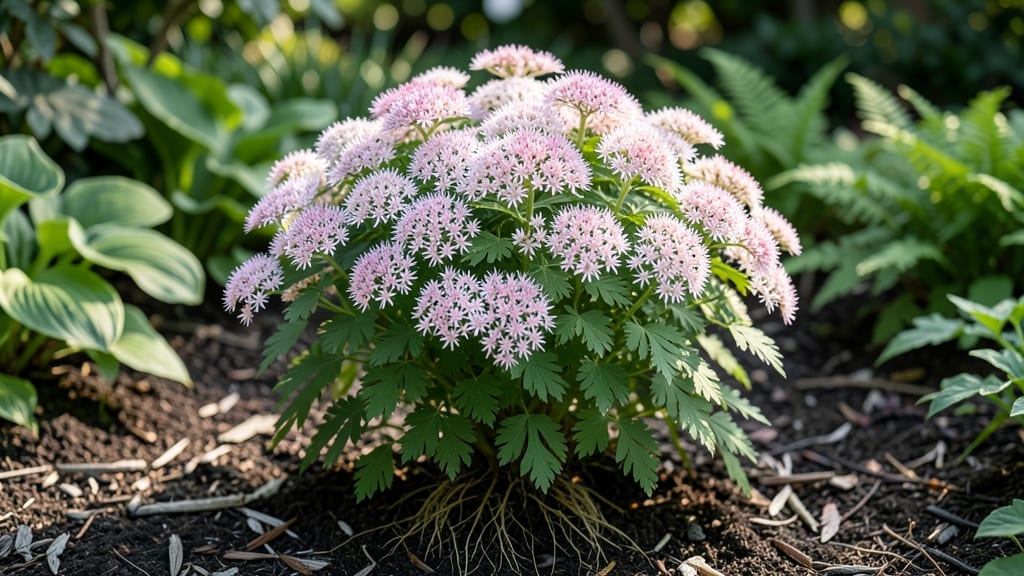
Yes, astilbe is a perennial that survives multiple growing seasons by dying back to the ground in winter and regrowing from its hardy root crown each spring with proper care and climate conditions.
Astilbe's perennial nature shines through its unique dieback cycle, where the plant's rhizomes (underground stems) store energy over winter. 🌱 Unlike annuals that complete their life cycle in one season, astilbe's roots remain dormant but alive beneath the soil, ready to burst back with feathery plumes when temperatures rise.
This hardiness makes it a favorite for gardeners in USDA zones 3-8, where it reliably returns year after year with minimal intervention.
What sets astilbe apart is its cold stratification requirement—exposure to winter chills actually triggers its spring regrowth. This biological adaptation explains why proper winter care (like mulching) can extend its lifespan even in colder regions.
The plant's ability to regenerate from its root crown also means gardeners can experiment with pruning times without permanent damage.
💡 In This Article
- Understanding Astilbe’s Perennial Dieback and Regrowth Cycle
- Caring for Astilbe as a Perennial: Mulching, Pruning, and Winter Protection
Understanding astilbe’s perennial dieback and regrowth cycle
Astilbe's perennial status hinges on its specialized rhizomatous root system, which functions like a biological battery. During summer and fall, the plant converts sunlight into stored carbohydrates in these thickened underground stems.
When temperatures drop below 40°F, the above-ground foliage yellows and dies back—a natural process called senescence that conserves energy for the dormant period. This dieback isn't death but rather a survival strategy where the plant redirects resources to its roots, which can remain viable for years in ideal conditions.
The magic happens through a process called cold stratification, where exposure to winter's chill (typically 32-40°F for 4-8 weeks) breaks dormancy hormones in the rhizomes.
This triggers the production of growth regulators that signal new shoots to emerge in spring. 🌱 What's fascinating is that astilbe's hardiness varies by species—Astilbe chinensis can survive down to -30°F (zone 4), while Astilbe japonica tops out at 10°F (zone 7).
The root crown's ability to regenerate from just 1-inch segments explains why even damaged plants often recover.
This biological cycle explains why astilbe thrives in partial shade—its leaves contain high levels of anthocyanins (the same pigments in red cabbage) that protect against UV damage in bright light.
The feathery plumes you see in summer are actually flower clusters that form on stems emerging from last year's rhizomes, proving the plant's energy reserves were sufficient.
Unlike annuals that complete their life cycle in one season, astilbe's roots remain in a state of suspended animation, ready to restart growth when conditions improve.
What most gardeners don't realize is that astilbe's dieback timing is actually an indicator of its health. Plants that brown back too early (before first frost) may be nutrient-deficient, while those that stay green into winter might lack proper cold stratification.
The ideal regrowth window occurs when soil temperatures reach 50°F—this is when you'll see the first green shoots pushing through the mulch. This precise timing is why astilbe performs best in regions with distinct seasons rather than warm climates where winter chills are minimal.
Consider this comparison: While daylilies (another perennial) can regrow from their roots even after being cut back to the ground, astilbe's rhizomes are more delicate. They require consistent moisture (but not soggy soil) and well-draining conditions to prevent rot.
The plant's ability to regenerate from just 2-3 inches of rhizome makes division easy—simply split clumps in early spring when new growth is 2-3 inches tall, and you'll have multiple plants ready to thrive.
For gardeners in marginal zones (like zone 6), the key to perennial success lies in protecting these rhizomes. A 3-4 inch layer of mulch (straw or shredded leaves) acts like a thermal blanket, maintaining soil temperatures just above freezing.
Without this protection, the rhizomes can experience freeze-thaw cycles that cause cellular damage—similar to how ice crystals rupture plant tissues in winter. This is why proper winter care isn't just about aesthetics but about ensuring the plant's biological clock can reset properly each season.