
Flowers
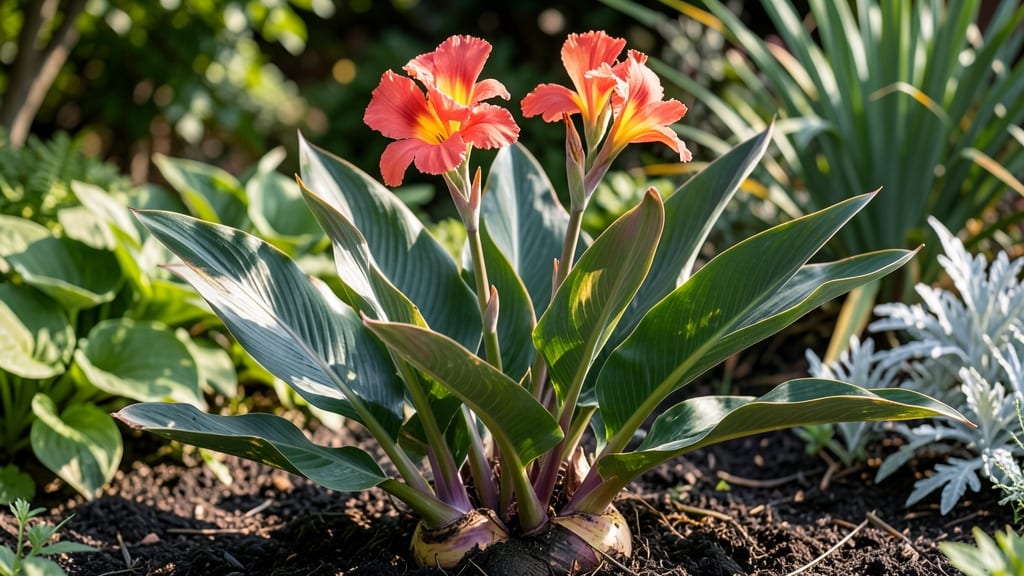
Canna lilies act as perennials in frost-free zones by relying on their underground rhizomes, which store energy and remain dormant during cold months, then sprout fresh foliage each spring.
This survival strategy makes them perfect for warm climates where freezing temperatures don't occur. Unlike true hardy perennials that survive winter above ground, canna lilies retreat completely underground, storing starches in their thick rhizomes. 🌱 When spring arrives, these stored reserves fuel rapid regrowth, often producing dramatic foliage within weeks.
The key difference is their temperature sensitivity—any frost will kill the above-ground parts, but the rhizomes remain viable for years if properly protected.
For gardeners in cooler regions, this means strategic planning: either digging up rhizomes for indoor storage or providing heavy mulch to insulate them. The trade-off is worth it—once established, canna lilies reward you with bold tropical foliage and vibrant blooms season after season.
💡 In This Article
- How Canna Lily Rhizomes Enable Perennial Growth
- Winter Care Tips for Protecting Canna Lily Rhizomes
How canna lily rhizomes enable perennial growth
The secret behind canna lilies' perennial behavior lies in their specialized underground storage organs called rhizomes. These thick, horizontal stems store starches and nutrients—up to 40% of their dry weight—which act as a biological battery for regrowth.
Unlike true hardy perennials that maintain some above-ground structure through winter, canna lilies completely retreat underground when temperatures drop below 50°F, entering a state of dormancy. 🌱
This dormancy isn't just about cold tolerance—it's a precise response to temperature and daylight cues. Research shows canna rhizomes begin converting starches to sugars when nighttime temperatures consistently fall below 45°F, preparing for regrowth.
The rhizomes themselves contain meristematic tissue (growth points) that remain protected by thick, waxy skin, allowing them to survive years of dry conditions. In contrast, hardy perennials like hostas rely on above-ground buds that can withstand freezing.
What makes canna lilies unique is their rapid energy mobilization. When spring arrives, these stored starches convert to sugars within 7-10 days of soil warming above 60°F, fueling new shoots that can emerge within 2-3 weeks.
This speed is comparable to tropical plants like ginger, which share similar rhizome-based growth strategies. The trade-off is their frost sensitivity—the above-ground parts die at 32°F, but the rhizomes remain viable if protected.
Gardeners often notice this survival mechanism when canna lilies appear to "die back" completely in fall, only to return stronger in spring. This cycle differs from annuals that must be replanted yearly, or true perennials that maintain some structure through winter.
The rhizome system allows canna lilies to achieve perennial status in warm climates while avoiding the energy costs of maintaining above-ground growth during cold periods. 💛
Scientifically, this strategy is called "geophyte" survival—plants that rely on underground storage organs. Canna lilies represent an extreme version of this, with rhizomes that can weigh up to 2 pounds in mature plants.
This size allows them to store enough energy to produce the dramatic foliage and blooms that make them prized garden plants, even after complete winter dieback.
Understanding this mechanism helps explain why canna lilies thrive in zones 8-11 but require special care in cooler regions. The rhizomes' ability to store and rapidly mobilize energy is what transforms them from frost-sensitive tropical plants into reliable perennials in suitable climates. 🌿