
Plants
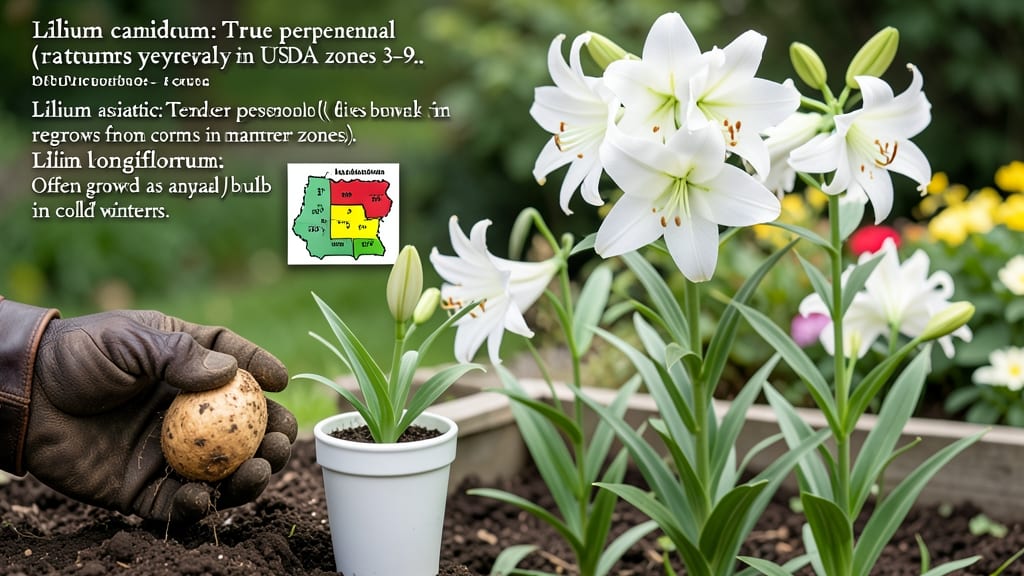
Not all lilies are perennials—while hardy varieties like daylilies and Asiatic lilies return year after year, many popular lilies such as Easter lilies and stargazers die back after flowering and require protection to survive winter. Their long-term growth depends heavily on your local climate and how you care for them.
The confusion often comes from how we use the term "lily"—it actually refers to hundreds of different plants, some of which are true perennials while others behave more like annuals or even tropical plants. 🌱 For example, daylilies (which aren't true lilies at all!) thrive in most climates and regrow each spring, but Easter lilies typically last just one season unless you bring them indoors before frost.
What's interesting is that even perennial lilies may need special care during their dormant season to ensure they bounce back strong next year.
Many gardeners discover this the hard way when their beautiful summer blooms disappear by fall, only to realize they've been growing what's technically an annual variety.
The key difference lies in their hardiness zones—native lilies have adapted to survive winters in their natural habitats, while tropical varieties simply can't handle freezing temperatures without human intervention.
💡 In This Article
- Lily Types and Their True Perennial Nature
- How to Extend Lily Lifespan in Different Climates
Lily types and their true perennial nature
The botanical world divides lilies into two broad hardiness categories based on their natural growth cycles and climate adaptations. True perennials like Asiatic lilies and Martagon lilies thrive in USDA zones 3-8, meaning they naturally regrow from underground bulbs each spring after a dormant winter period.
Their bulbs store nutrients and energy, allowing them to push through soil at 50-60°F temperatures when frost has passed. 🌿 These varieties typically bloom for 4-6 weeks in late spring to early summer, then enter a 6-8 month dormant phase where their foliage yellows and dies back naturally.
In contrast, tender lilies such as Easter lilies (Lilium longiflorum) and stargazer lilies (Lilium 'Stargazer') originate from warmer climates and behave more like annuals in cold regions. Their bulbs lack the cold resistance of hardy varieties—exposure to temperatures below 28°F causes irreversible damage to their cellular structure.
What makes this confusing is that even these tender varieties can produce stunning blooms for 2-3 weeks in their first season, only to completely die back afterward unless protected.
The key difference lies in their bulb composition: hardy lilies contain higher levels of antifreeze proteins that prevent ice crystal formation in their cells during winter.
Daylilies (Hemerocallis) present an interesting exception—they're often called "perennials" but aren't true lilies at all. Their fan-shaped foliage dies back to the ground each winter, but their thick rhizomes (horizontal stems) survive underground.
These plants can actually live for decades with proper care, producing new growth from the same root system year after year. The confusion stems from their common name, which leads many gardeners to assume all plants called "lilies" follow the same growth pattern. 🌸
Understanding these differences helps explain why your garden might look completely different the following spring. Hardy lilies will send up fresh shoots from their bulbs when soil temperatures reach 55°F, while tender varieties may show no signs of life if their bulbs froze.
Even in mild climates, tender lilies often require 3-4 months of consistent warmth before they'll rebloom, making them less reliable for seasonal gardeners. The visual contrast between a thriving perennial lily bed and empty soil where tender lilies once stood can be quite striking after winter.
What most gardeners don't realize is that even within "perennial" lily categories, there are variations in cold tolerance. For example, Tiger lilies (Lilium lancifolium) handle zone 4 winters well, while Oriental lilies (like 'Casa Blanca') typically need zone 6 protection.
This explains why some gardeners in transitional zones might see one variety return reliably while others fail completely. The 5-10°F temperature difference between these zones can mean the difference between a thriving plant and a lost investment. 🌱
Another fascinating aspect is how lilies use their dormant period. Hardy varieties actually recharge their bulbs during winter through a process called vernalization, where cold temperatures trigger hormonal changes that prepare them for spring growth.
This biological mechanism explains why you can't simply dig up a dormant lily bulb and replant it in warmer conditions—it needs to complete its cold cycle to rebloom properly. Tender lilies lack this adaptation, which is why they're often grown as annuals or brought indoors before frost.