
Flowers
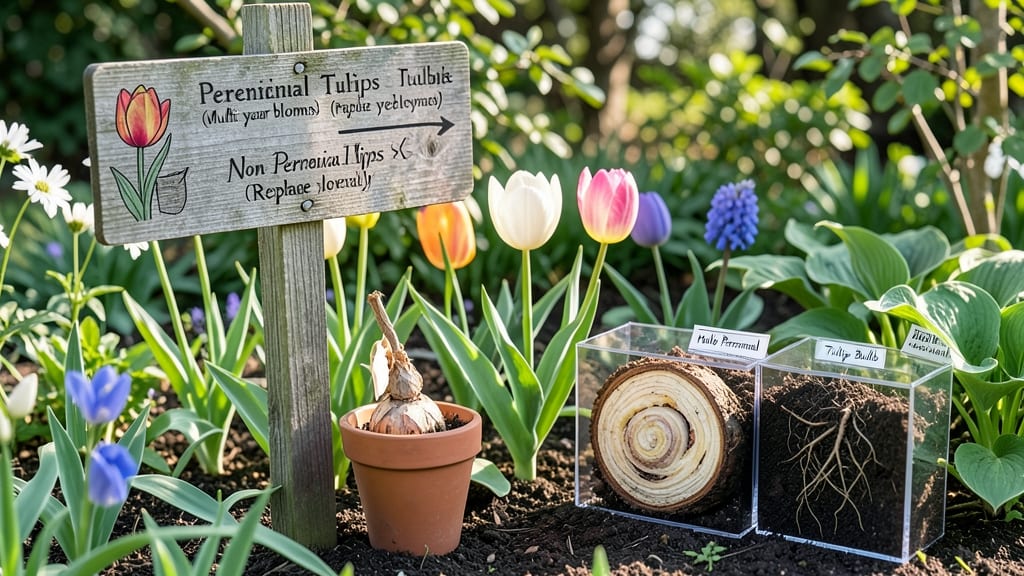
Not all tulips are perennials—while many hybrid and species tulips reliably return each year, popular varieties like Darwin hybrids often behave as annuals in colder regions because their bulbs enter dormancy or succumb to winter frost.
Tulips fall into two main categories: true perennials and those that act like annuals. 🌱 The difference comes down to their natural growing habits and climate resilience.
Species tulips (like Tulipa tarda) and some hybrids naturally regrow year after year, while others—especially Darwin hybrids—struggle with winter survival in zones below USDA Zone 5. Even when they return, their blooms may weaken over time unless given proper care.
This isn't just about cold tolerance—it's also about bulb health. Many gardeners unknowingly plant bulbs too shallowly or in poor soil, which stresses the roots and prevents proper energy storage for next season.
I've found that adding a thick layer of mulch after the first frost can make a huge difference in protecting those delicate bulbs from freeze-thaw cycles.
💡 In This Article
- Why Some Tulips Die After One Season
- How to Extend Tulip Lifespan in Your Garden
Why some tulips die after one season
The key difference between perennial and annual tulips lies in their bulb's ability to store energy and withstand winter stress. True perennial tulips—like Tulipa tarda or Tulipa clusiana—develop deep, robust root systems that can survive -20°F temperatures by converting starches into protective sugars.
These species evolved in Central Asian steppes where winters are harsh but dry, allowing their bulbs to remain dormant yet intact.
Hybrid tulips, especially Darwin hybrids and Parrot tulips, face a different challenge. Their breeding prioritized larger blooms and vibrant colors over cold hardiness. When temperatures drop below 25°F, their bulbs often experience freeze-thaw damage—water expands as it freezes, rupturing delicate bulb cells.
Even if the tops die back, the bulb may rot internally, making it appear as though the plant vanished entirely. 🌨️ This is why these varieties often disappear after one season in colder climates.
The science gets even more interesting when you consider vernalization—the process where tulip bulbs need a period of cold (40-50°F) to trigger flowering. Some hybrids require 12-16 weeks of winter chill, while others need less.
If your climate doesn't provide enough cold, the bulb may not flower at all or will produce weak, stunted blooms. This explains why tulips sometimes return but look pitiful after their first year.
Another critical factor is bulb depth. Most gardeners plant tulips 6-8 inches deep, but species tulips often need 8-10 inches to survive harsh winters. Shallow planting exposes bulbs to temperature fluctuations near the surface, accelerating moisture loss and frost penetration.
I've seen Darwin hybrids planted at 6 inches in Zone 5 gardens completely disappear, while the same variety planted 10 inches deep often returns—though with reduced vigor.
Even when bulbs survive winter, they may not rebloom due to energy depletion. Tulips store food in their scales, and if the previous year's growth was weak (from poor soil or pests), the bulb may not have enough reserves to produce another flower stalk.
This is why many gardeners treat tulips as annuals—they're beautiful for one season but require careful management to persist beyond that.
Consider this comparison: Species tulips (like Tulipa greigii) have 5-7 bulb scales packed with starch, while Darwin hybrids often have only 3-4 scales. Fewer scales mean less stored energy and reduced cold tolerance.
That's why species tulips reliably return for years, while hybrids may need annual bulb division to revive them.