
Plants
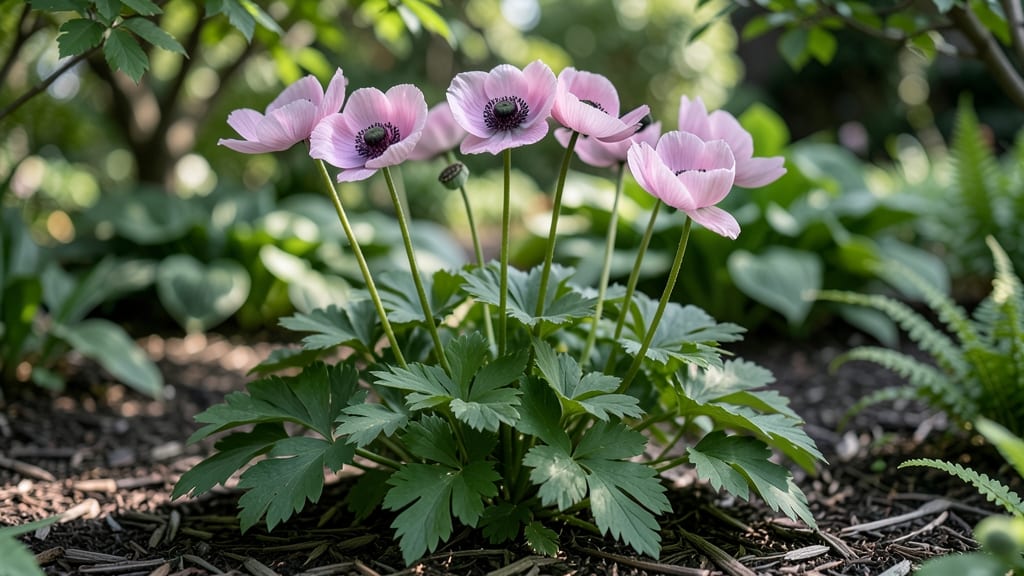
Anemones are perennials because they store energy in underground tubers or rhizomes, allowing them to regrow each spring after their foliage dies back annually.
This unique survival strategy lets them thrive for years despite appearing to "die" in winter. 🌱 Unlike annuals that complete their life cycle in one season, anemones preserve their root systems underground, storing nutrients to fuel regrowth when conditions improve.
Their dormant period actually strengthens the plant—many gardeners consider this their secret weapon for long-term beauty with minimal maintenance.
What makes this cycle fascinating is how environmental cues trigger dormancy. As temperatures drop and daylight shortens, the plant redirects energy to its roots, creating a natural food reserve.
This adaptation explains why anemones often outlive other perennials in challenging climates—some varieties have been known to regrow for decades from the same root stock.
💡 In This Article
- How Anemone Perennial Life Cycle Works
- Caring for Anemones Through Their Dieback Cycle
How Anemone perennial life cycle works
Anemones rely on specialized underground structures—either thickened tubers or fibrous rhizomes—to survive their annual dormancy. These storage organs function like natural batteries, accumulating starches and sugars during the growing season to fuel regrowth.
For example, Japanese anemone (Anemone hupehensis) stores nutrients in its rhizomes, which can extend up to 12 inches deep in well-drained soil, while windflower anemones (Anemone nemorosa) develop compact tubers just 3-4 inches below the surface. The deeper the roots, the better they insulate against temperature fluctuations.
The dormancy trigger is a delicate balance of temperature drops below 50°F and reduced daylight hours, typically occurring in late fall. As days shorten, the plant's meristem cells (growth centers) in the foliage begin to senesce, while the roots shift into storage mode.
This physiological switch is mediated by plant hormones like abscisic acid, which signals cells to break down chlorophyll and redirect nutrients to the tubers. The result? What appears as dead foliage is actually a strategic withdrawal of resources to preserve the root system.
Regrowth begins when soil temperatures stabilize above 55°F and daylight increases, typically in early spring. The tuber or rhizome's stored energy activates dormant buds, which sprout new shoots within 4-6 weeks in optimal conditions.
This timing explains why anemones often emerge before many other perennials—a survival advantage in competitive garden ecosystems. The deeper the root system, the more resilient it becomes to drought or frost, which is why established anemones can survive 10-15 years or longer from the same root stock.
What's remarkable is how this cycle mirrors animal hibernation. Just as bears conserve energy in fat reserves, anemones store carbohydrates in their tubers, with some varieties like hybrid anemones accumulating enough starch to support 3-4 years of dormancy if conditions remain unfavorable.
This biological efficiency is why anemones thrive in regions with harsh winters—their underground systems act as living insulation, protecting the plant's genetic material until conditions improve.
The root depth also plays a critical role in nutrient retention. Anemones with deeper rhizomes, like Anemone x hybrida, can access moisture and minerals from lower soil layers, giving them an edge in nutrient-poor environments.
This vertical growth strategy explains why they often outcompete shallower-rooted perennials in the same garden bed. The trade-off? Their dormancy requires careful soil preparation to ensure the roots don't dry out or freeze during winter.
One often-overlooked detail is how anemones "test" their environment before fully committing to regrowth. The first shoots often appear 2-3 weeks before other perennials, acting as a biological sensor for soil conditions.
If the ground is too cold or dry, the shoots may wither back temporarily—a built-in safety mechanism that prevents wasted energy. This adaptive behavior is a key reason why anemones succeed in gardens where other plants struggle.