
Flowers
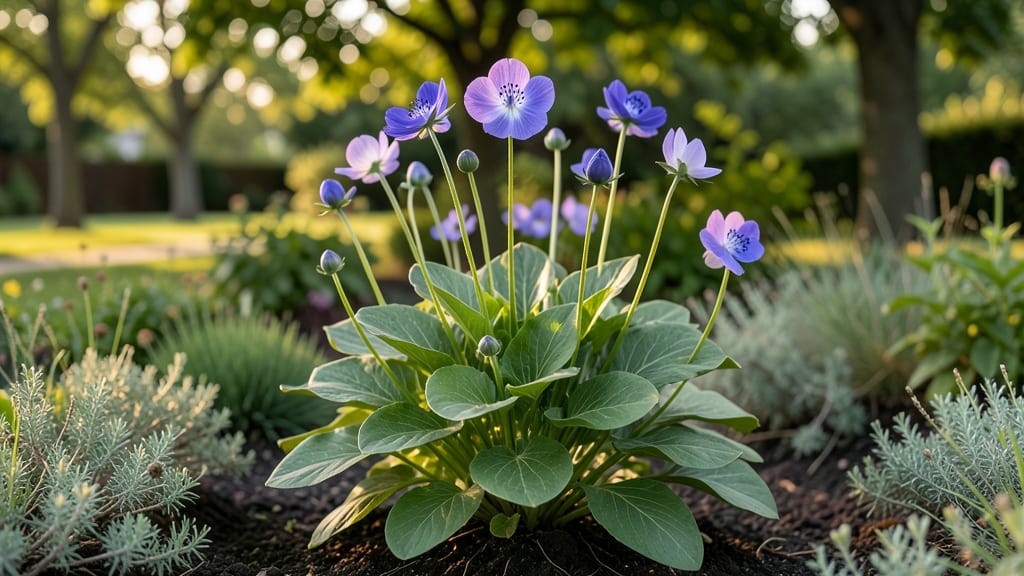
Balloon flowers are indeed perennials, thriving across USDA zones 3-8 with proper care. These hardy plants return yearly, producing their signature blooms annually when given the right conditions, though winter protection may be needed in colder regions.
Balloon flowers earn their perennial reputation thanks to their deep root systems and natural dormancy during winter months. 🌱 Unlike annuals that complete their lifecycle in one season, these plants store energy underground to fuel new growth each spring.
In my experience, the key to consistent reblooming lies in soil preparation—well-draining, slightly acidic soil mimics their native Asian habitats. The secret to their resilience? Their ability to tolerate light frosts while remaining dormant until temperatures stabilize in spring.
What sets balloon flowers apart is their adaptability across such a wide range of climates. While they thrive in zones 3-8, gardeners in colder microclimates often report better survival rates when using 3-4 inches of organic mulch during winter.
This protective layer insulates the roots while preventing soil temperature fluctuations that could stress the plant. The trade-off? Some varieties may delay blooming until they've fully established their root systems in spring.
💡 In This Article
- Balloon Flower Cold-Hardiness and Winter Survival Tips
- How to Encourage Annual Reblooming in Balloon Flowers
Balloon flower cold-hardiness and winter survival tips
The perennial nature of balloon flowers stems from their remarkable root hardiness and natural dormancy cycle. These plants develop a deep taproot system that can penetrate 12-18 inches into the soil, allowing them to access moisture and nutrients even during dry spells.
This root structure acts like a natural storage unit, accumulating carbohydrates during the growing season to fuel regrowth in spring.
The key biological mechanism here is their ability to enter a state of dormancy when temperatures drop below 20°F, a process triggered by shorter daylight hours and cooler soil temperatures.
What makes balloon flowers uniquely resilient is their cellular adaptation to frost. Their cells produce antifreeze proteins that prevent ice crystal formation within the tissues, similar to how certain trees survive winter.
In USDA zones 3-8, these plants can withstand temperatures as low as -30°F when properly established, though younger plants may need extra protection. The trade-off comes in spring—plants that experience severe winter dieback often take 3-4 weeks longer to emerge compared to those with consistent winter protection.
For gardeners in colder microclimates, the secret to winter survival lies in soil insulation. Organic mulch (like straw or shredded leaves) creates a 5-10°F warmer microclimate at the soil surface, preventing freeze-thaw cycles that can damage roots.
I've found that applying 4-6 inches of mulch in late fall—after the ground freezes but before heavy snowfall—provides optimal protection. This layer also helps maintain consistent moisture levels, which is crucial since balloon flowers are particularly sensitive to winter desiccation.
There's an important distinction between hardiness and performance: while balloon flowers may survive winter in zone 3, their blooming vigor often declines if winter conditions are extreme. Varieties like 'Blue Sky' tend to recover better than 'White Pearl' after harsh winters, suggesting genetic differences in cold tolerance.
The science here involves differential expression of cold-acclimation genes—some cultivars simply activate these protective mechanisms more effectively than others.
What most gardeners don't realize is that balloon flowers actually benefit from cold stratification—a process where seeds or plants experience cold temperatures before germination. This natural mechanism ensures they don't sprout until spring conditions are favorable.
When you plant them in fall, you're essentially giving them this stratification period for free, which explains why fall-planted balloon flowers often establish more robustly than spring plantings.
The reblooming cycle begins when soil temperatures consistently reach 50°F for at least a week. At this point, the plant's meristems (growth points) become active, and you'll see new shoots emerge from the base.
This timing explains why early spring blooms are often smaller—the plant is redirecting energy toward root establishment rather than flower production. The good news? With proper care, these early flowers signal the plant's readiness to produce its characteristic 2-inch trumpet-shaped blooms throughout the growing season.