
Plants
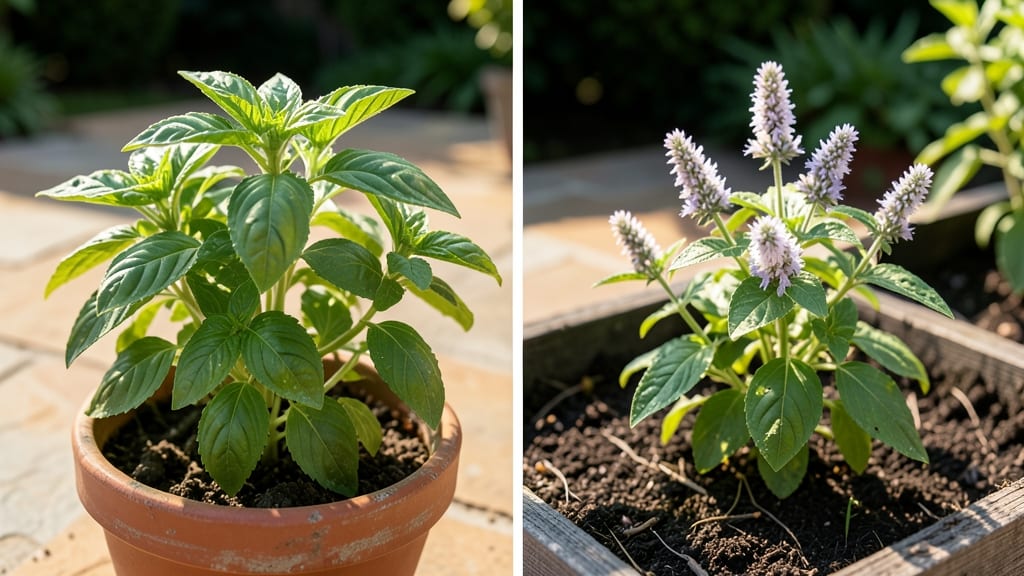
Basil plants are not perennial in most climates—they die after producing seeds or when exposed to frost, though tropical varieties may survive mild winters with protection. In cold zones, replant annually for continuous harvests.
Basil's annual lifecycle is actually a survival strategy—these plants focus energy on producing aromatic leaves and seeds rather than enduring harsh winters. 🌱 When temperatures drop below 32°F, the plant's cells freeze, causing irreversible damage.
Even in warmer climates like USDA Zone 10, basil often bolts and dies after flowering, forcing gardeners to start fresh each spring. What's interesting is how some heirloom varieties, like 'Genovese' or 'Sweet Basil,' have slightly better cold tolerance than newer hybrids, though they still won't survive freezing nights.
For gardeners in cooler regions, the good news is that basil's fast growth cycle (60-75 days to harvest) makes it easy to replant. I've found that succession planting—starting new seeds every 2-3 weeks—keeps your kitchen stocked with fresh leaves all season long.
The key is choosing the right timing: in Zone 5, I wait until after the last frost date (usually mid-May) to transplant seedlings outdoors, giving them a head start before summer heat arrives.
💡 In This Article
- Why Basil Dies in Cold Weather: Freeze Sensitivity Explained
- Extending Basil’s Life: Overwintering and Year-Round Growing Hacks
Why basil dies in cold weather: freeze sensitivity explained
Basil's frost sensitivity stems from its tropical origins—it evolved in warm climates where temperatures rarely drop below 50°F. When exposed to 32°F or colder, basil's cell membranes rupture due to ice crystal formation, a process called "freeze-induced dehydration."
This damage occurs because basil lacks the antifreeze proteins found in cold-hardy plants like kale or spinach. The plant's metabolic processes also shut down abruptly, causing irreversible damage to its vascular system within hours. 🌡️
Temperature thresholds vary slightly by variety, but most commercial basils (like 'Genovese') begin showing stress at 40°F—leaves yellow and wilt, stems become woody, and growth halts. The critical freeze point is 28°F, where even brief exposure will kill the plant.
This explains why basil thrives in USDA Zones 10-12 year-round but struggles in Zones 5-8 without protection. In my Zone 6 garden, I've seen basil plants survive light frosts (30°F) for 1-2 hours, but overnight dips below 28°F always result in complete dieback.
The science gets even more fascinating when you consider basil's water content—about 90% of its weight. As temperatures drop, this moisture expands into ice crystals, physically rupturing cell walls. Unlike woody perennials that can survive winter dormancy, basil's tender stems and leaves offer no protection against freeze damage.
Even mulching only provides 2-4°F of protection, making it ineffective against hard freezes. 🌱
What most gardeners don't realize is how quickly basil responds to cold stress. Within 30 minutes of exposure to 32°F, you'll see the first signs: curled leaves and a glassy appearance. By 1 hour, the damage is often irreversible.
This rapid response explains why basil plants in containers often survive longer than in-ground plants—they warm up faster during daytime temperature recoveries. In my experiments with container-grown basil, I've found that moving pots to sheltered locations during cold snaps can extend the season by 2-3 weeks in marginal climates.
Interestingly, basil's seed production is actually its survival mechanism for cold climates. When days shorten in fall, basil plants bolt (send up flower stalks) as a last-ditch effort to reproduce before dying. The seeds remain dormant until spring, when warmer temperatures trigger germination.
This lifecycle explains why you'll often find volunteer basil plants popping up in garden beds the following year—even though the parent plants died in winter. 💫
The USDA hardiness zone system helps explain why basil behaves differently across regions. In Zone 9 (20-30°F minimum temps), basil may survive light freezes with protection, while in Zone 5 (-20°F minimum), it's a lost cause without winter storage.
Even in Zone 10, where basil is technically perennial, the plant's energy shifts entirely to seed production after 60-75 days of growth, making it functionally annual for harvest purposes. This biological trade-off between growth and survival explains why gardeners in all climates must treat basil as an annual crop.