
Plants
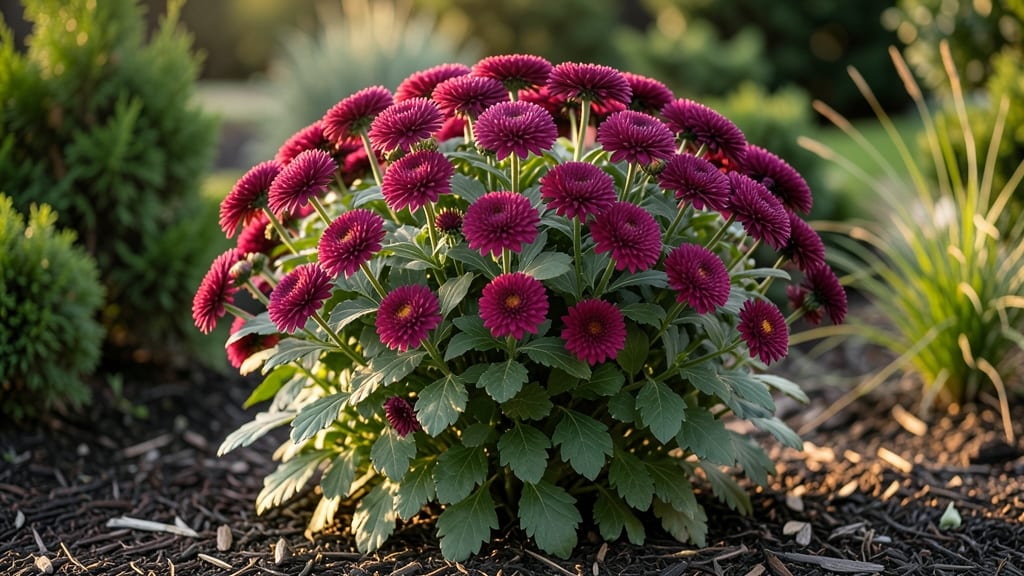
Belgian mums aren't true perennials—they go dormant each fall, only reblooming reliably in spring when planted in USDA Zones 7-9. Outside those zones, they act like annuals unless you protect them through winter. Their seasonal dieback often makes gardeners think they're hardy perennials, but their true lifespan depends on climate and care.
These showy flowers confuse many gardeners because their winter dormancy mimics perennial behavior, but their roots aren't as cold-hardy. 🌱 Unlike true perennials like hostas, Belgian mums develop shallow root systems that struggle in freezing temperatures below 10°F.
That's why gardeners in colder regions often treat them as annuals or take special steps to overwinter them—like digging up clumps and storing them in cool, dark places. The key difference lies in their genetic makeup: they're actually tender perennials, meaning they need protection to survive winter.
What makes this especially tricky is how their foliage dies back completely by late fall, giving the false impression of dormancy like true perennials. In reality, their root systems are more delicate and require specific conditions to regenerate in spring.
This misunderstanding leads many to assume they'll return year after year without intervention, when in fact their longevity depends entirely on where you live and how you care for them during winter months.
💡 In This Article
- Why Belgian Mums Die Back Annually (And How It Differs From Perennials)
- How to Overwinter Belgian Mums in Cold Climates
Why Belgian mums die back annually (and how it differs from perennials)
Belgian mums (Chrysanthemum × morifolium) undergo a natural process called seasonal senescence—their leaves and stems die back completely in fall to conserve energy during winter.
Unlike true perennials like hostas or peonies, which store energy in deep, cold-hardy root systems, Belgian mums develop shallow fibrous roots that lack the protective insulation of true perennials.
This makes them vulnerable to freezing temperatures below 10°F, even though their foliage disappears by late fall. 🌿 The confusion stems from their chrysanthemum lineage: while some mums are hardy perennials, Belgian varieties are hybridized for vibrant blooms rather than cold resilience.
The key difference lies in their root structure and energy reserves. True perennials like coneflowers store carbohydrates in thick, woody roots that survive winter intact, allowing regrowth in spring. Belgian mums, however, rely on a more delicate root system that must be protected from freeze-thaw cycles.
Their tender perennial classification means they can survive mild winters (Zones 7-9) but require intervention in colder regions. Even in ideal zones, their lifespan is typically 3-5 years without division, as their energy reserves deplete over time.
What most gardeners miss is how their dormancy differs from true perennials. When Belgian mums die back, they're not entering a deep, protected dormancy like peonies—their roots remain active but vulnerable. In Zones 7-9, the soil rarely drops below 15°F, allowing roots to survive.
But in Zones 5-6, even a 10°F dip can kill unprotected roots. This is why they're often called "short-lived perennials"—their biological clock is ticking faster than hardy varieties. 🌱 The misconception arises because their foliage disappears completely, mimicking perennials that truly hibernate underground.
Another critical factor is their genetic programming for blooming. Belgian mums are bred to produce abundant flowers in fall, which requires significant energy. This reproductive focus leaves less energy for root development and winter survival.
Compare this to hardy mums like 'Rudolph' or 'Balsam', which prioritize root growth over blooms. The trade-off is why Belgian mums are stunning but require more care—every bloom is a drain on their limited reserves. In colder climates, this energy deficit becomes a survival issue unless gardeners intervene.
Consider this comparison: a hardy mum might have roots extending 12-18 inches deep, while a Belgian mum's roots rarely exceed 6 inches. This shallow system can't access deeper soil warmth, making them more susceptible to temperature fluctuations.
Even in Zone 8, where they might survive winters, their lifespan is shortened because each year's blooms deplete their energy stores faster than root systems can replenish. 💫 This biological trade-off explains why they're classified as tender perennials rather than true hardy varieties.
What makes this especially tricky for gardeners is how their growth cycle mirrors perennials until winter arrives. In spring, they sprout fresh foliage from the same root base, just like true perennials. But here's the catch: their root systems are not self-sustaining in cold climates.
Without protection, the roots weaken each year, eventually failing to produce new growth. This is why many gardeners in Zones 5-6 see their Belgian mums disappear after just one or two winters—what looks like dormancy is actually root death.