
Orchid Care
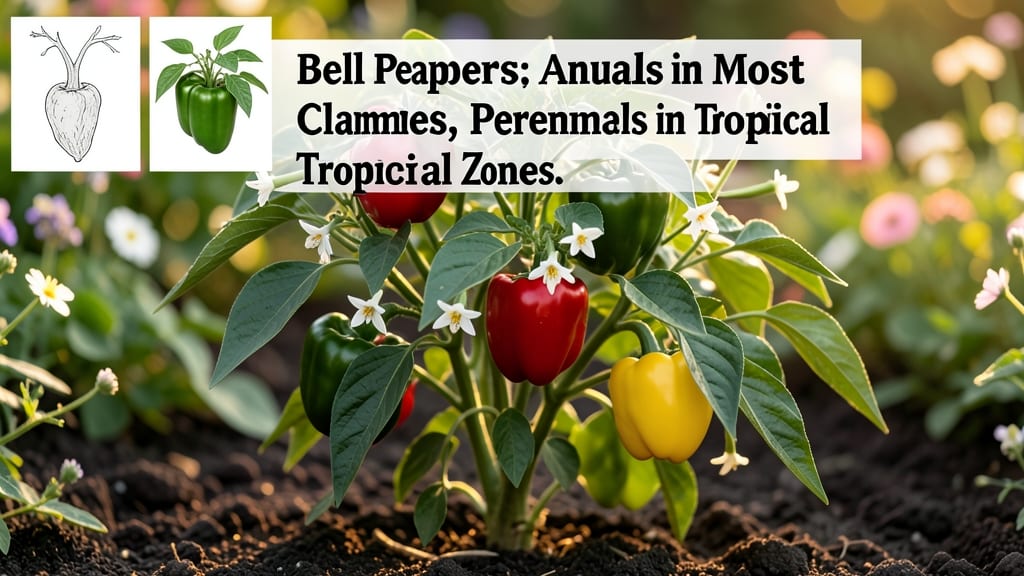
Bell peppers behave as annuals in most temperate climates but can become perennials in frost-free zones with proper care, regrowing each season from the same root system.
This difference comes down to temperature tolerance. 🌱 Bell peppers are tropical plants at heart, so they die back when exposed to frost—their tops freeze, but the roots often survive underground.
In warm climates, they keep producing year after year, while in colder regions, gardeners must treat them as annuals or take extra steps to protect them over winter.
For those in cooler climates, overwintering techniques like potting plants before first frost or using thick mulch can help preserve the root system.
Even if the tops die, the roots may regrow in spring, giving you a head start on the growing season. 🌿 The key is keeping the roots alive through winter so they can sprout new growth when temperatures warm up.
💡 In This Article
- How Climate Affects Bell Pepper Lifespan
- Tips for Overwintering Bell Peppers in Cold Regions
How climate affects bell pepper lifespan
Bell peppers originate from tropical regions, which explains why they thrive as perennials in frost-free zones like USDA Hardiness Zones 10-12 or coastal California. These plants naturally grow year-round when temperatures stay above 50°F (10°C), allowing their root systems to remain active and produce new growth continuously.
The key difference in warmer climates is the absence of winter dormancy—the plant doesn't shut down, so it can keep flowering and fruiting for multiple years.
In colder regions (Zones 5-9), bell peppers act as annuals because frost triggers a shutdown in their growth cycle. When temperatures drop below 32°F (0°C), the plant's above-ground parts freeze and die, but the roots often survive if protected.
This is why gardeners in these zones typically replant each spring—the plant behaves like an annual because its growth cycle resets with warmer weather. The root system may persist underground, but without protection, it won't regenerate into a full plant.
The botanical reason lies in bell peppers' sensitivity to cold stress. Their leaves and stems contain high water content, which freezes and ruptures cell walls at 28°F (-2°C), causing irreversible damage. However, the roots, being deeper and insulated by soil, can endure cooler temperatures.
This is why overwintering techniques focus on preserving the root zone—it's the only part that can survive and potentially regrow in spring. 🌱
Another factor is day length. Bell peppers are short-day plants, meaning they flower and fruit based on daylight hours. In tropical climates, consistent day lengths trigger continuous growth, while in temperate zones, seasonal changes force a pause.
This natural rhythm explains why perennials in warm areas keep producing while annuals in colder regions must restart their cycle each spring.
Consider this comparison: In Miami (Zone 10), a bell pepper plant might live for 3-5 years with proper care, producing fruit year-round. In Chicago (Zone 5), the same plant would die back each winter unless overwintered indoors, effectively resetting its lifespan annually.
The climate dictates whether the plant's energy goes toward survival (perennial) or annual regrowth.
For gardeners in transitional zones (like Zone 8), the decision to treat bell peppers as annuals or perennials depends on how well they can protect the roots.
A single hard frost can kill the plant, but a well-mulched root system might survive to regrow in spring—turning an annual into a semi-perennial with effort. This is where local microclimates and gardening techniques become critical.