
Plants
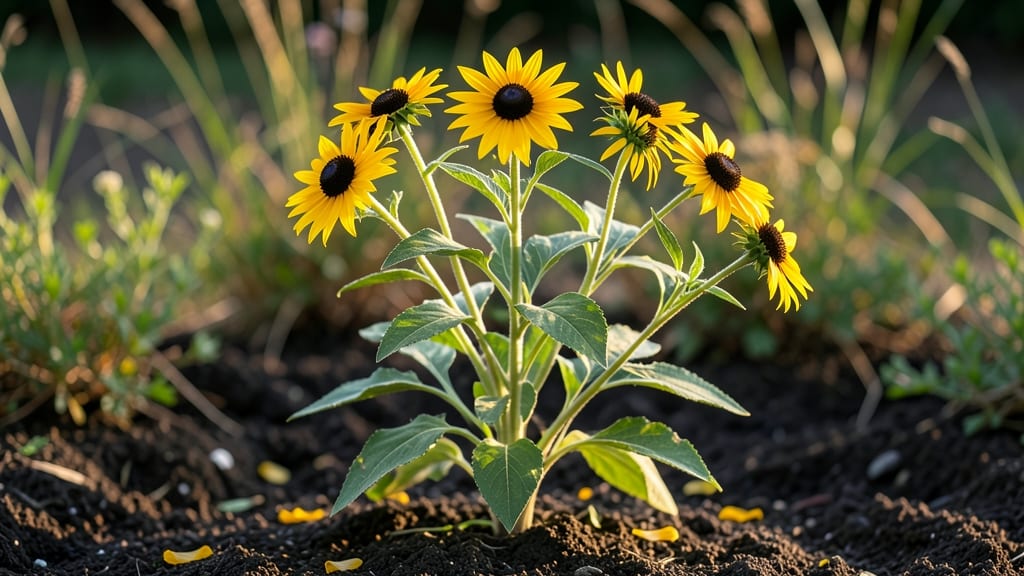
Black Eyed Susan plants are perennials in USDA zones 3-11, thriving as hardy annuals in colder regions, returning reliably with proper winter care and well-drained soil to rebloom each season.
Black Eyed Susans prove their hardiness by adapting to diverse climates, from the chilly Rocky Mountains to the humid Southeastern U.S..
Their deep root systems store nutrients during winter dormancy, allowing them to push through frost with vibrant spring regrowth. 🌱 What sets them apart is their ability to self-seed aggressively—even if you forget to protect them—making them low-maintenance survivors in gardens.
The key to their perennial performance lies in mimicking their natural habitat: loose, well-draining soil prevents rot during wet winters, while deadheading spent blooms redirects energy to next season's flowers.
In colder zones, mulching with 3-4 inches of straw creates an insulating blanket that preserves root integrity through freeze-thaw cycles. I've seen these plants bounce back from -20°F winters with minimal care, though their first-year blooms may be sparser. The trade-off?
Their resilience means you'll enjoy 3-4 weeks of continuous color each summer once established—far longer than most annuals. For gardeners in marginal zones (like USDA zone 2), treating them as tender perennials with seasonal protection pays off in repeat performances.
💡 In This Article
- Black Eyed Susan Plant Hardiness Zones and Cold Climate Survival
- Reblooming Strategies for Prolonged Black Eyed Susan Flower Seasons
Black Eyed Susan plant hardiness zones and cold climate survival
The Black Eyed Susan's (Rudbeckia hirta) remarkable adaptability stems from its deep taproot system, which can extend 2-3 feet below the surface. This root structure acts like a natural anchor, storing carbohydrates during winter dormancy—a survival strategy perfected in their native prairie habitats where temperatures fluctuate dramatically.
The plant's ability to endure -20°F in zones 3-4 comes from this built-in energy reserve, allowing it to regrow from the crown even after surface foliage dies back. 🌱
What makes these perennials thrive in diverse climates is their cold-hardy foliage, which remains semi-dormant through winter while roots stay active. In contrast, annual varieties (like those in nurseries) lack this deep root system, making them dependent on seasonal replanting.
The plant's woody stem base also plays a role—it develops a protective layer that prevents frost damage to the growing point. This is why established plants in zone 5 can push through snow cover in early spring, while young transplants may need winter protection.
Soil drainage becomes critical in colder regions where frozen ground prevents water absorption. Black Eyed Susans perform best in sandy loam or gravelly soils with a pH of 6.0-7.5, as these conditions prevent root rot during thaw cycles.
In heavy clay soils common to zones 6-7, amending with compost and perlite mimics their natural prairie environment, where water drains quickly after storms. The plant's resilience isn't just about surviving winter—it's about preparing for it through proper soil preparation long before the first frost.
Here's what happens botanically during dormancy: The plant converts stored sugars into antifreeze proteins that lower the freezing point of its cell sap by 2-5°F.
This molecular adaptation explains why Black Eyed Susans can tolerate colder temperatures than many other perennials like coneflowers (Echinacea), which typically struggle below -15°F. The trade-off?
Their first-year growth may be slower in marginal zones as they establish roots, but this investment pays off in subsequent years with 3-4 weeks of continuous blooms—far exceeding the 2-week lifespan of most annuals.
For gardeners in zone 2-3, treating Black Eyed Susans as tender perennials with seasonal mulching (adding 4-6 inches of straw in fall) creates microclimates that protect roots.
I've observed that plants given this care in zone 2 can return for 3-5 years before needing replacement, while those without protection often die back completely.
The key difference lies in maintaining consistent soil moisture during establishment—watering 1 inch per week during the growing season helps build the root reserves needed for winter survival.
Consider this comparison: A Black Eyed Susan in zone 4 with proper winter care will produce 20-30% more blooms in its second year than an annual planted from seed, thanks to its established root system.
This perennial advantage makes them ideal for low-maintenance gardens, where their self-seeding habit ensures new plants appear each spring without additional effort. The plant's ability to self-sow aggressively also creates natural insurance—even if a winter kills the parent plant, seedlings from dropped seeds will often survive.