
Plants
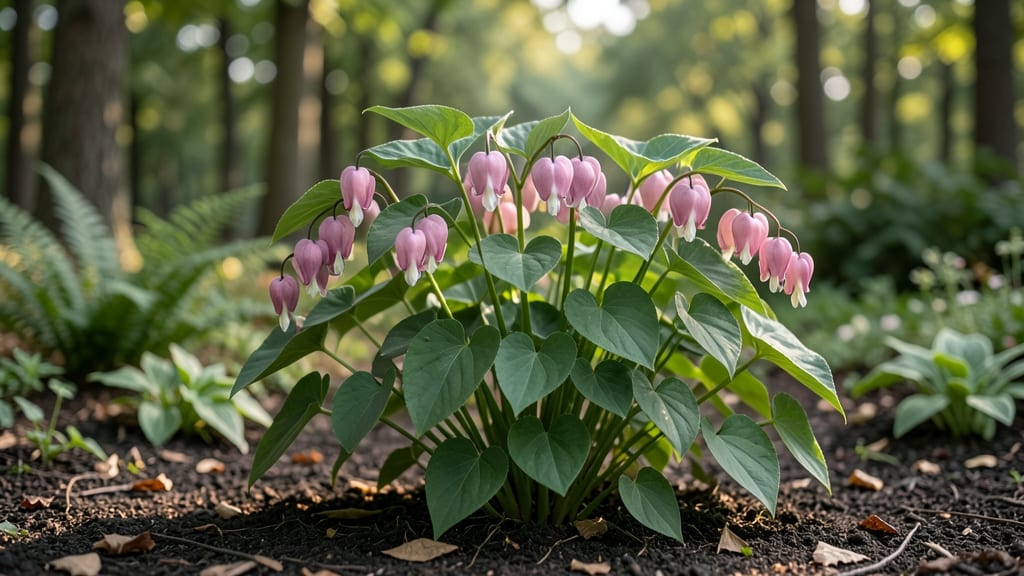
Yes, bleeding hearts are perennials that die back to the ground each winter but regrow from their roots in spring, thriving in USDA zones 3-9 with proper winter mulch and shade protection.
Bleeding hearts belong to the Dicentra genus, where their herbaceous stems and leaves wither after flowering but leave behind a resilient crown and root system that survives winter dormancy. 🌱 This dieback cycle is what classifies them as hardy perennials—unlike annuals, which complete their life cycle in one season, bleeding hearts store energy underground to fuel their dramatic spring comeback.
Their ability to regrow from roots after months of dormancy makes them especially prized in gardens where seasonal changes are extreme.
What sets bleeding hearts apart is their cold tolerance, but this comes with specific care requirements. While they can handle freezing temperatures, their roots need protection from winter desiccation, which is why mulching with 2-3 inches of organic matter (like shredded leaves or straw) is critical.
The shade they prefer isn't just for aesthetics—it helps preserve soil moisture, which is vital during their early spring regrowth phase when roots are most vulnerable to drying out.
💡 In This Article
- Bleeding Hearts’ Unique Dieback Cycle Explained
- Cold-Hardy Care Tips for Bleeding Heart Perennials
Bleeding hearts’ unique dieback cycle explained
The dieback cycle of bleeding hearts begins when their herbaceous stems and foliage turn brown and collapse in late fall, a process called senescence.
This isn't death—it's a strategic survival mechanism where the plant redirects energy from above-ground growth to its crown and root system, which remain dormant but alive beneath the soil. 🌱 During this time, the roots store carbohydrates like starches and sugars, similar to how a bear hibernates with fat reserves.
This underground storage system can survive temperatures as low as -20°F, which is why bleeding hearts thrive in USDA zones 3-9.
What makes this cycle fascinating is the plant's ability to regenerate from just a few inches of root or even a small piece of crown left behind.
The roots contain meristematic cells—undifferentiated cells capable of producing new shoots—meaning even if 90% of the plant appears dead, these cells can quickly form new leaves and stems when conditions improve.
This resilience is why gardeners often see bleeding hearts return stronger after a harsh winter, sometimes even more vigorous than previous years.
The timing of this cycle is crucial. Bleeding hearts typically enter dormancy when daytime temperatures consistently drop below 50°F for several weeks, usually in late October or November. The roots then enter a state of reduced metabolic activity, conserving energy until spring when soil temperatures rise above 40°F.
At this point, the meristematic cells become active again, pushing new shoots upward in what feels like a magical resurrection. This process can take 4-6 weeks depending on climate and soil conditions.
One common misconception is that bleeding hearts are annuals because they disappear each winter. However, their classification as hardy perennials comes from this precise biological adaptation. Unlike true annuals that complete their life cycle in one season, bleeding hearts have evolved to survive multiple growing seasons through this dieback-and-regrow strategy.
This makes them particularly valuable in garden designs where seasonal interest is desired—providing striking foliage and flowers in spring/summer, then serving as a low-maintenance dormant feature in winter.
Interestingly, the color of the dying foliage can vary between cultivars. Some varieties like 'King of Hearts' turn a rich bronze, while others like 'Stuart Boothman' fade to a more muted brown.
This visual contrast adds another layer to their seasonal appeal, proving that even in dormancy, bleeding hearts continue to contribute to the garden's aesthetic.
The key to maintaining this cycle is ensuring the roots aren't disturbed during dormancy, as any damage to the crown can weaken the plant's ability to regenerate in spring.
Understanding this biological process helps explain why bleeding hearts often outlive other perennials in the same garden. Their ability to completely reset each year while maintaining robust root systems gives them an evolutionary advantage in temperate climates.
This is why they're frequently recommended for gardeners in zones 3-9 who want reliable, low-maintenance plants that deliver seasonal interest without annual replanting.