
Orchid Care
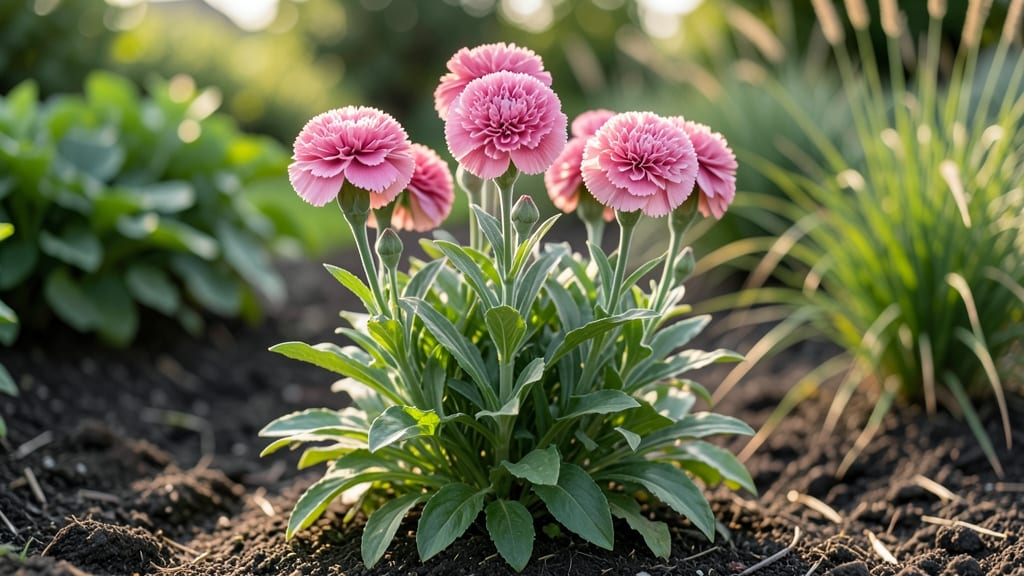
Carnations behave as perennials in mild, frost-free climates but are typically grown as annuals in colder regions where freezing temperatures kill their woody stems and roots. Their survival hinges on winter hardiness and proper seasonal care.
Carnations naturally thrive as perennials in USDA zones 8-11, where they return year after year with proper care. 🌱 The key difference comes from their root systems—perennial varieties develop deeper, more resilient roots that withstand mild winters, while annuals in colder zones lack this hardiness.
Many gardeners in northern climates treat them as annuals because the roots simply can't survive repeated freeze-thaw cycles without protection.
What's fascinating is how their growth habits shift based on temperature. In warm climates, carnations can bloom continuously or seasonally depending on the variety, while in colder regions, they often focus their energy on establishing roots rather than flowering.
This biological adaptation explains why you'll see carnations sold as annuals in garden centers—they're simply not bred for extreme cold tolerance.
💡 In This Article
- Carnation Plant Lifespan: Perennial vs Annual Growth Habits
- Extending Carnation Blooms in Cold Climates: Seasonal Care Tips
Carnation plant lifespan: perennial vs annual growth habits
The fundamental difference between carnations as perennials and annuals comes down to their root structure and temperature tolerance. Perennial carnations develop a robust, woody root system that can survive mild winters in USDA zones 8-11, where temperatures rarely drop below 20°F.
These roots store nutrients and energy, allowing the plant to regrow each spring. In contrast, annual carnations lack this deep root system and simply can't withstand freezing temperatures, which damage their delicate stems and foliage.
Here's where biology gets interesting: carnations have a natural dormancy mechanism triggered by cold.
In warm climates, they enter a resting phase during summer heat rather than winter, conserving energy for future blooms. 🌡️ This adaptation explains why they thrive as perennials in Mediterranean climates but struggle in northern regions where winter lasts 4-6 months.
The key threshold is 15°F-20°F—below this, even perennial varieties risk damage unless protected.
Another critical factor is their growth habit. Perennial carnations often produce multiple stems from the same root base, creating a bushier plant that can recover from winter damage. Annual varieties, bred for quick blooming, focus all their energy on producing flowers rather than establishing resilient roots.
This is why you'll see garden centers selling carnations as annuals—they're simply not bred for the same hardiness as their perennial cousins.
What most gardeners don't realize is that even perennial carnations can revert to annual behavior if exposed to repeated freeze-thaw cycles.
The damage occurs when water in plant cells freezes and expands, rupturing cell walls. 🧊 In zones 7 and below, this typically happens when temperatures drop below 25°F for more than 24 hours. The result?
The plant appears dead, but sometimes the roots survive to regrow in spring—though often weaker than before.
For those curious about the science, carnations belong to the Dianthus genus, which includes many cold-hardy species. Their ability to survive as perennials depends on a combination of genetic hardiness and environmental protection.
Some varieties, like the 'Iceberg' or 'Splash' series, have been selectively bred for better cold tolerance, making them better candidates for perennial growth in marginal climates.
One practical example: In California's coastal areas (zone 9), carnations can bloom continuously with minimal care, while in Minnesota (zone 4), they're typically treated as annuals unless given extensive winter protection. The same species behaves differently based solely on climate! This flexibility makes carnations a fascinating study in plant adaptability.