
Flowers
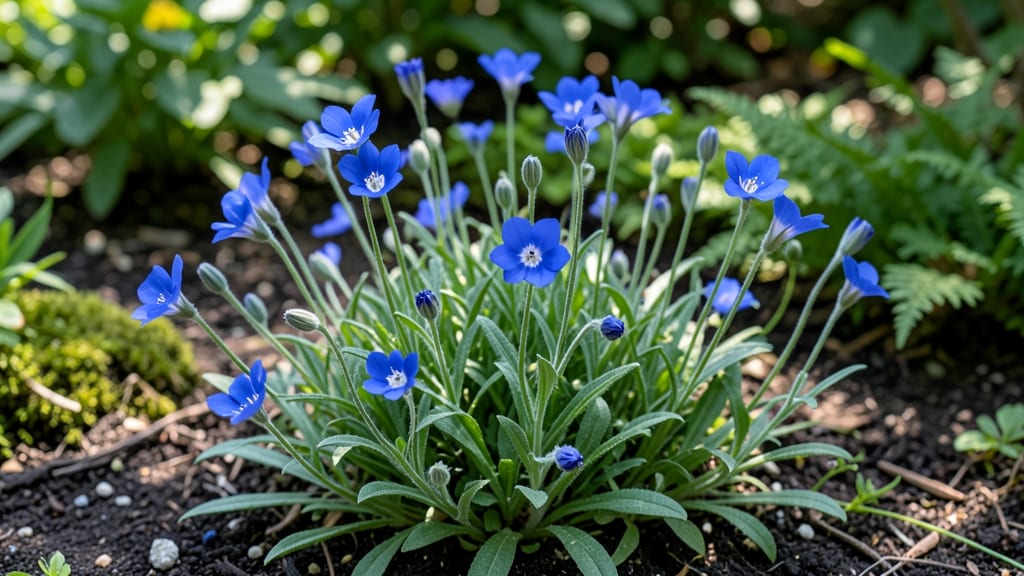
Chinese forget-me-nots are NOT true perennials—they’re tender annuals or short-lived perennials that die back in colder climates. They thrive in USDA zones 3-9 but typically regrow only if protected from frost or replanted yearly.
These plants are often mistaken for hardy perennials because they produce vibrant blue flowers that return year after year in mild climates. 💫 However, their delicate root systems struggle with freezing temperatures, which is why they behave more like annuals in most gardens.
The key difference lies in their ability to self-seed or regrow from cuttings when given proper winter protection—something true perennials like Myosotis do naturally.
For gardeners in colder regions, the solution lies in strategic planting and care. Starting seeds indoors or using containers allows you to move plants indoors before frost hits, effectively extending their lifespan.
I've found that adding a thick layer of mulch around the base helps insulate the roots during winter, while succession planting ensures continuous blooms throughout the growing season.
💡 In This Article
- Why Chinese Forget-Me-Nots Die Back: Growth Cycle Explained
- How to Extend Chinese Forget-Me-Nots’ Season: Planting and Care Tips
Why Chinese forget-me-nots die back: growth cycle explained
Chinese forget-me-nots (Cynoglossum amabile) are classified as tender perennials because their growth cycle depends heavily on temperature. Unlike true perennials like Myosotis (common forget-me-not), which develop deep, hardy root systems that survive winter, Chinese forget-me-nots have shallow fibrous roots that freeze easily below 20°F (-7°C).
This frost sensitivity forces them to die back annually in most climates, even though they can self-seed prolifically.
The confusion arises from their two-year lifecycle in ideal conditions: First year focuses on leaf and root growth, while the second year produces those signature blue flowers. However, without winter protection, the roots simply can't endure freezing soil.
True perennials like Myosotis store energy in thick rhizomes or taproots, allowing them to regrow each spring—something Chinese forget-me-nots lack due to their annual-like root structure. 💫
Botanically, their behavior aligns more with biennials than perennials. In USDA zones 8-9, they may persist for 2-3 years naturally, but in colder zones (3-7), they typically complete their cycle in just one season unless given artificial protection.
The key difference is their lack of true winter dormancy—their roots don't harden like those of hardy perennials.
What makes this especially tricky is their fast growth rate in spring and summer (up to 12 inches per month under ideal conditions). This rapid above-ground growth creates the illusion of perennial vigor, but the root system simply can't match the resilience of true perennials.
When temperatures drop below 28°F (-2°C), even well-established plants will suffer root damage.
For comparison, Myosotis species develop deep taproots that penetrate 12+ inches into soil, while Chinese forget-me-nots max out at 6-8 inches of shallow roots. This structural difference explains why Myosotis thrives in zone 3 gardens while Chinese forget-me-nots need winter protection to survive beyond their first year.
The root zone difference is the single biggest factor in their winter survival.
Here's what happens when frost hits: The shallow roots crystallize from ice formation, rupturing cell walls. Unlike hardy perennials that can regenerate from protected meristem tissue, Chinese forget-me-nots have no such safeguards.
Their entire energy reserve is concentrated in those vulnerable roots, which is why gardeners in colder zones often see them disappear completely after the first frost. 🌬️