
Plants
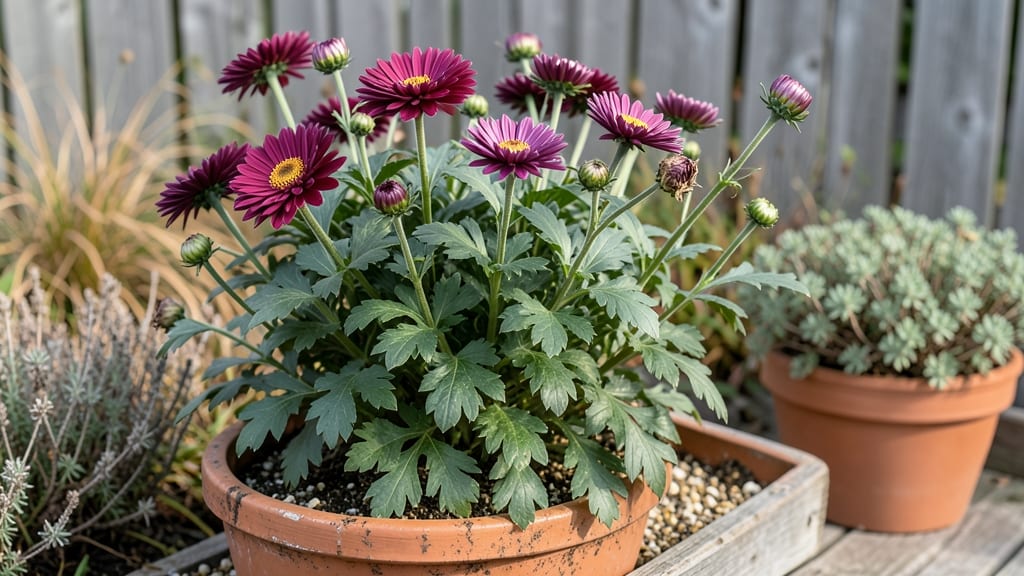
Chrysanthemums are perennials in USDA Zones 5-9, thriving as hardy plants when given proper winter protection, though many gardeners treat them as annuals due to their seasonal blooming cycle and frost sensitivity. Some varieties, like 'Hardy' or 'Korean' types, survive colder climates better than others.
Chrysanthemums can live for years if you protect them through winter, but their perennial nature depends heavily on your climate zone. 🌱 In colder regions like Zone 5, they'll die back to the ground but regrow from their roots each spring—if you give them enough insulation.
The key difference between treating them as perennials or annuals comes down to effort: while some gardeners replant new mums each year for consistent blooms, others invest in winter care to enjoy the same plants returning season after season.
What many don't realize is that even in colder zones, certain chrysanthemum varieties have adapted to survive temperatures down to 10°F with proper preparation. The 'Hardy' series, for example, can withstand winter conditions that would kill more delicate varieties.
This makes them perfect for gardeners who want perennial benefits without the annual replanting hassle.
💡 In This Article
- Chrysanthemum Cold-Hardiness by USDA Zone
- How to Overwinter Chrysanthemums for Reblooming
Chrysanthemum cold-hardiness by USDA Zone
The cold-hardiness of chrysanthemums hinges on their root systems and how they adapt to freezing temperatures.
Most varieties can tolerate brief exposures to 20°F without damage, but prolonged cold below 10°F will kill the foliage and even damage roots. 🌡️ The key difference between perennials and annuals lies in their ability to regenerate from protected root crowns—where the stem meets the root—rather than from seeds.
In USDA Zone 9, where winters rarely drop below 20°F, chrysanthemums naturally overwinter with minimal care, often blooming again in fall.
In colder climates like Zone 5, where winter temperatures can plunge to -15°F, the story changes dramatically. Here, only specialized varieties like 'Hardy Mums' or 'Korean' types (e.g., Chrysanthemum × koreanum) survive reliably.
These cultivars have evolved thicker root systems and deeper dormancy cycles, allowing them to endure frost penetration up to 4-6 inches below soil level. For comparison, standard garden mums in Zone 5 will typically die back completely without protection, but their roots may still survive if insulated properly.
Mulching is where science meets practical gardening. A 4-6 inch layer of organic mulch (straw, leaves, or wood chips) acts as an insulating blanket, maintaining soil temperatures 5-10°F warmer than ambient air. This buffer zone prevents the ground from freezing solid, which would kill the root crowns.
In extreme cases (Zone 4 or colder), gardeners use additional techniques like covering plants with burlap or even moving potted mums to unheated garages—though this requires careful monitoring to avoid rot from excess moisture.
What most gardeners overlook is how soil composition affects cold tolerance. Sandy soils drain quickly but offer little insulation, while clay or loamy soils retain warmth longer. Amending garden beds with compost before winter improves both drainage and heat retention, creating a microclimate that protects chrysanthemum roots.
The root crown itself should remain 2-3 inches below soil level—any shallower, and frost will penetrate directly to the growth point.
Consider these cold-hardiness thresholds by zone:
- Zone 9: No winter protection needed; mums survive 20°F naturally
- Zone 7-8: Light mulch (2-3 inches) protects against 15°F dips
- Zone 5-6: Heavy mulch (4-6 inches) + burlap wrap for 10°F tolerance
- Zone 4 or colder: Only hardy varieties survive; container overwintering required
The science behind this involves a plant's ability to enter dormancy—a state where metabolic activity slows dramatically. Chrysanthemums achieve this by converting starches in their roots into sugars, which act as antifreeze, preventing cell damage.
However, this natural process only works if the roots aren't stressed by fluctuating temperatures or poor soil conditions. 🌱