
Plants
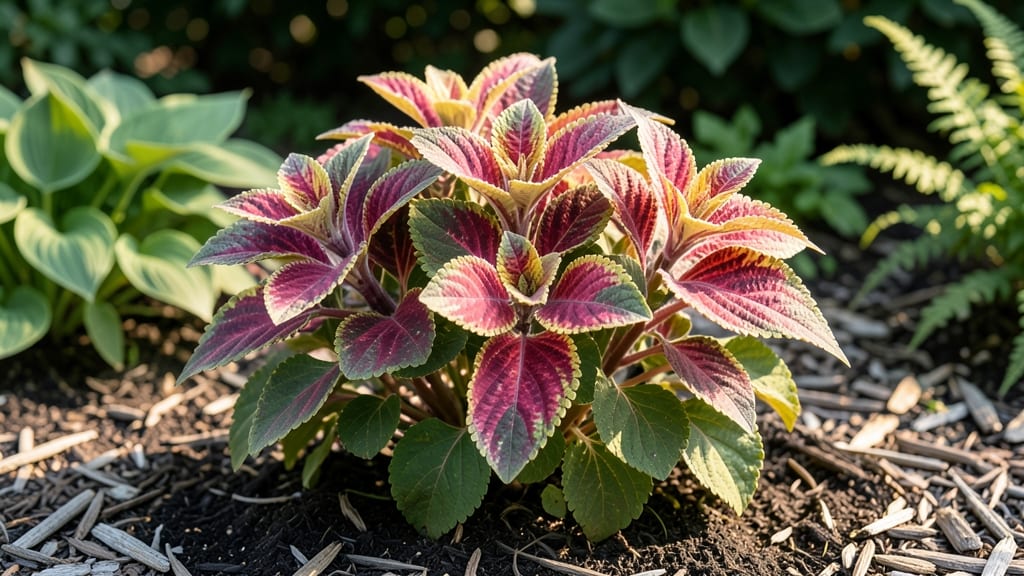
Coleus plants are not true perennials in cold climates but thrive as tender perennials in USDA Zones 10-12, where frost never occurs. In colder regions, they’re grown as annuals or overwintered indoors with proper care to preserve their vibrant foliage.
Coleus plants originate from tropical regions, which means their natural resilience stops at 32°F—any frost will damage their delicate leaves and roots. 🌿 In warmer climates like Zones 10-12, they grow continuously as perennials, but outside those zones, gardeners must treat them as seasonal plants.
The key to keeping them alive year-round in colder areas lies in mimicking their ideal tropical environment indoors, with bright indirect light and consistent moisture.
If you're wondering how to extend their lifespan beyond one season, the secret is in careful indoor care. I’ve found that placing them near a south-facing window and maintaining 50-60% humidity helps prevent the leggy growth that often plagues overwintered coleus.
Pruning back overgrown stems in early spring gives them a fresh start when you move them back outside.
💡 In This Article
- Why Coleus Survive as Tender Perennials in Warm Climates
- How to Overwinter Coleus in Cold Regions for Repeated Growth
Why coleus survive as tender perennials in warm climates
Coleus plants, native to Indonesia and tropical regions, have evolved to thrive in warm, humid environments where temperatures rarely drop below 50°F.
Their tender perennial status in USDA Zones 10-12 stems from their inability to tolerate frost—any exposure to 32°F or colder triggers ice crystal formation in their cells, causing irreversible damage to both leaves and roots.
The plant's shallow root system, adapted for quick nutrient absorption in tropical soils, lacks the deep anchoring needed to survive freezing ground temperatures.
What makes coleus unique is their rapid growth cycle. In ideal conditions, they can grow up to 6-12 inches per month, producing vibrant foliage through continuous photosynthesis.
This growth spurt requires consistent warmth and moisture, which is why they flourish in Zones 10-12 where average winter temperatures stay above 40°F.
The plant's leaves contain high levels of anthocyanins, pigments that give them their striking colors, but these pigments are also sensitive to cold—exposure to frost causes them to break down, leading to brown, mushy leaves.
The key to their perennial status lies in their ability to regenerate quickly under optimal conditions. Unlike true perennials that develop hardy root systems, coleus rely on their above-ground growth to survive. In frost-free zones, they maintain active growth year-round, producing new leaves continuously.
This adaptability is why they're often used as landscape plants in warm climates—their vibrant colors provide year-long interest without the need for seasonal replanting.
However, this tropical nature comes with limitations. Coleus plants cannot develop cold-hardiness through acclimation like some other perennials. Their cellular structure lacks the protective mechanisms (like antifreeze proteins) found in cold-hardy plants.
Even a light frost can cause leaf scorch, while prolonged exposure to 28°F or below will kill the plant entirely. This is why gardeners in colder regions must treat them as annuals or take special measures to overwinter them indoors.
Consider this comparison: While a true perennial like hosta can survive -10°F winters thanks to its underground rhizomes, coleus will suffer leaf damage at just 35°F. The plant's entire life cycle is geared toward warm environments, making it highly sensitive to temperature drops.
This sensitivity explains why coleus thrive as perennials only in frost-free zones—their survival depends entirely on maintaining tropical-like conditions throughout the year.
For those living outside Zones 10-12, understanding this tropical nature is crucial. It means coleus can't be left outdoors during winter, even in partially hardy zones.
The plant's inability to tolerate cold is what transforms it from a perennial in warm climates to an annual in colder regions—unless proper indoor care is provided to mimic its natural environment.