
Orchid Care
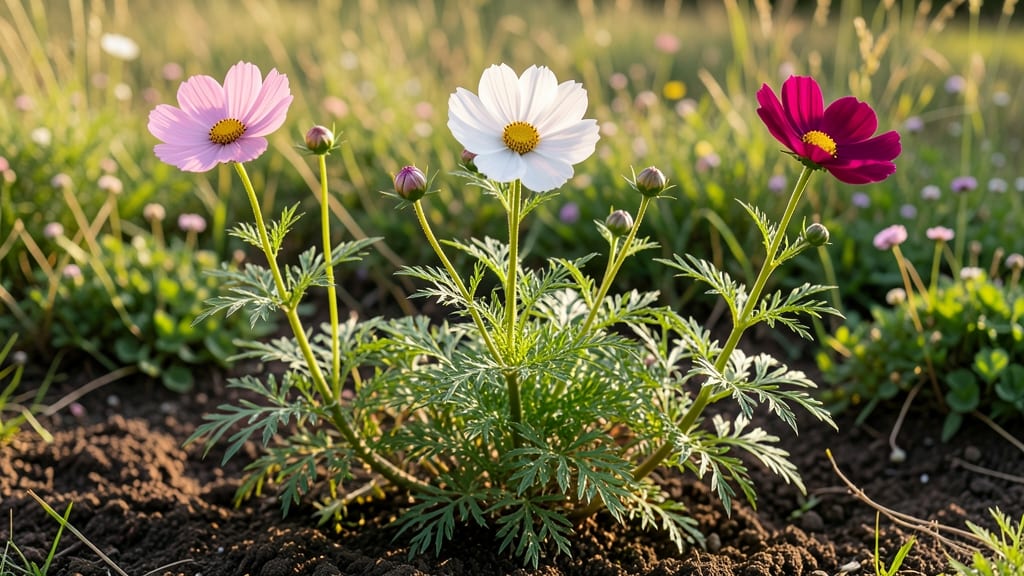
Whether cosmos are annuals or perennials depends on your climate: they act as annuals in most regions, completing their life cycle in one season, but their prolific self-seeding often brings them back naturally. In warmer zones (USDA 9-11), they may persist as short-lived perennials with reduced winter dieback.
Cosmos thrive as one-season wonders in cooler climates, where frost signals the end of their growth cycle. 🌱 However, their ability to scatter seeds widely means they frequently return the next year as "volunteers," creating natural colonies.
In milder winter regions, some varieties even survive light frost, acting more like perennials by regrowing from their base. The key difference lies in temperature sensitivity—most cosmos simply can't tolerate prolonged freezing, which is why gardeners in colder zones rely on their self-sowing habits rather than winter hardiness.
This dual nature makes cosmos incredibly low-maintenance. Deadheading spent blooms encourages more flowers and seed production, while leaving some seed heads can boost next year's population. In frost-free areas, mulching helps protect the base through mild winters, though even there, cosmos rarely live beyond 2-3 years.
Their adaptability is what makes them such garden favorites—whether they're annuals or perennials depends on where you grow them.
💡 In This Article
- Why Cosmos Die Back: Life Cycle and Climate Dependence
- Encouraging Cosmos to Return Year After Year
Why cosmos die back: life cycle and climate dependence
Cosmos belong to the Asteraceae family and exhibit a frost-sensitive growth pattern that determines their annual or short-lived perennial behavior. Their life cycle is tightly linked to temperature: in colder climates (USDA zones 1-8), they complete their entire growth cycle—from seed germination to flowering—in just 90-120 days.
When frost arrives, their tender stems and leaves blacken, but the roots often remain viable for a short time, producing seeds before fully dying back. This rapid cycle is why they're classified as annuals in most regions.
The key factor is their cold tolerance threshold. Cosmos can handle light frosts down to 25-28°F for brief periods, but prolonged exposure below 20°F kills their foliage and roots.
In warmer zones (USDA 9-11), where winter temperatures rarely drop below 30°F, some cosmos varieties develop a woody base that persists through mild winters, allowing them to regrow from the same root system. This behavior mimics perennials, though they rarely live beyond 2-3 years even in ideal conditions. 🌿
Botanically, this dual behavior stems from their native habitat: cosmos originated in Mexico and Central America, where they evolved to thrive in warm, dry climates with distinct wet/dry seasons. Their annual growth pattern in cooler climates is essentially a survival adaptation—producing seeds quickly before frost arrives.
The self-seeding mechanism ensures genetic continuity even when the parent plant dies. In milder climates, this adaptation becomes less critical, allowing some plants to persist year-to-year.
What most gardeners notice is the visual dieback pattern: leaves yellow and wilt when temperatures drop below 40°F at night, followed by complete blackening at 32°F. The roots may remain alive for 1-2 weeks after frost, during which they produce seed pods.
This delayed response explains why cosmos often return the following spring even after seemingly dying completely. The seed viability remains high for 2-3 years when stored properly, contributing to their reputation as "self-sowing" plants.
Comparing cosmos to true perennials like lavender or hostas highlights their unique position. While perennials develop woody stems or underground storage organs (rhizomes, tubers) that survive winter, cosmos rely on seed production and rapid regrowth.
Their stems are herbaceous, not woody, and their root systems are fibrous rather than deep and persistent. This structural difference explains why they can't endure harsh winters like true perennials, yet their seedling vigor makes them behave similarly in milder conditions. 🌱
The most critical takeaway is that climate dictates their classification. In zones with 100+ frost-free days, cosmos may act as short-lived perennials, while in colder regions, they complete their entire lifecycle annually.
This adaptability is why they're such versatile garden plants—whether they're annuals or perennials depends entirely on your local winter conditions and how well you manage their growing environment.