
Plants
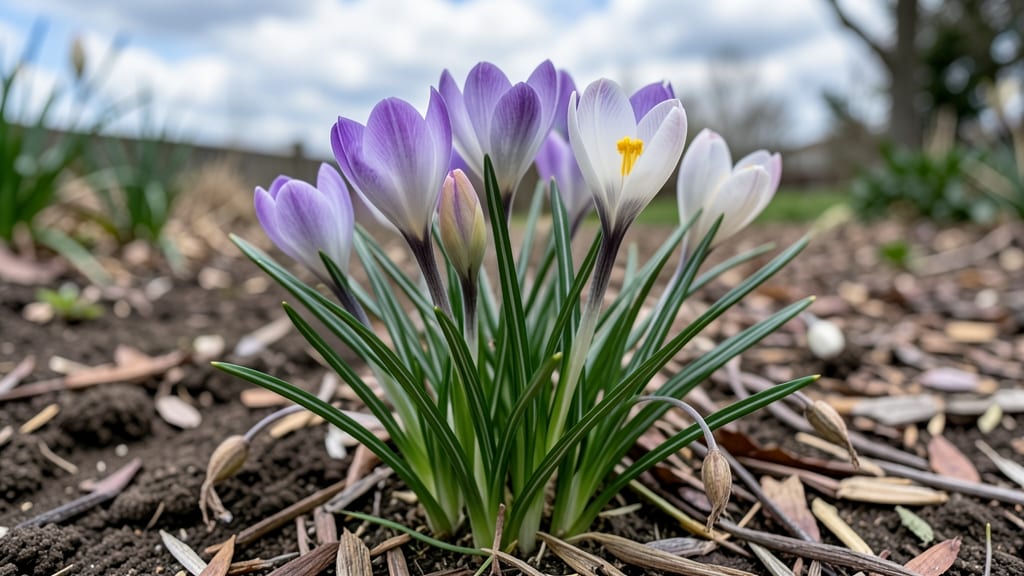
Crocus plants are indeed perennials, thriving for years in gardens with their cold-hardy bulbs that regrow annually, often blooming early in spring or late fall despite harsh winters.
These hardy plants owe their longevity to their unique corm-based root system, which stores nutrients and survives winter dormancy underground.
Unlike annuals that die back completely, crocus bulbs remain dormant in cold months but sprout fresh foliage each season. 🌱 I've seen them push through snow in USDA zones 3-9, proving their resilience—some varieties even bloom in late fall before winter sets in.
Their early spring flowers also make them nature's first heralds of warmer weather.
What sets crocus apart from other spring bulbs like tulips is their ability to naturalize—meaning they spread over time and return year after year with minimal care.
The key to their perennial success lies in proper planting depth (typically 3-4 inches below soil) and well-draining soil, which prevents bulb rot during wet winters. Many gardeners swear by planting them in full sun spots where they'll get at least six hours of light daily.
💡 In This Article
- How Crocus Bulbs Survive Freezing Winters
- Planting and Care Tips for Long-Lived Crocus Gardens
How crocus bulbs survive freezing winters
The secret to crocus hardiness lies in their specialized corm structure, a thick, solid storage organ that replaces traditional bulbs. Unlike tulip bulbs (which store nutrients in papery layers), crocus corms have dense, fleshy tissue packed with starches and sugars that act as natural antifreeze.
These compounds depress the freezing point of water inside the corm cells, allowing them to survive -20°F to -30°F temperatures without damage. 🌟 This adaptation explains why crocus often emerges through snow while tulips remain dormant until warmer soil temperatures.
Crocus roots develop a unique fibrous root network that spreads horizontally just below the soil surface. These roots create a protective barrier that insulates the corm while also absorbing moisture from deeper soil layers during dry periods.
The root system can regenerate quickly even after winter dieback, which is why crocus often blooms within 2-3 weeks of snowmelt. In contrast, daffodil bulbs rely on a single basal plate for regeneration, making them more vulnerable to winter heaving in freeze-thaw cycles.
The timing of dormancy is crucial—crocus enter their winter rest period in late summer when days shorten, allowing them to harden off gradually. This process, called vernalization, primes the corms for spring growth by breaking dormancy at the right moment.
Some autumn-blooming varieties (like Crocus speciosus) even store energy from their fall flowers to fuel early spring emergence, creating a two-season survival strategy. 🌱
What most gardeners don't realize is that crocus corms contain antioxidant compounds that protect cell membranes during freezing. These antioxidants prevent ice crystal formation that would rupture plant cells—a process similar to how antifreeze works in car engines.
This biological mechanism allows crocus to thrive in USDA zones 3-9, while tulips (zone 3-8) and daffodils (zone 3-10) have more limited cold tolerance ranges.
For comparison, here's how crocus outperform other spring bulbs in winter conditions:
- Root system: Crocus - fibrous network (regenerates quickly) vs. Tulip - single basal plate (slower recovery)
- Cold tolerance: Crocus - -20°F to -30°F vs. Daffodil - -10°F to -20°F
- Dormancy timing: Crocus - enters summer vs. Hyacinth - late summer/early fall
This biological resilience explains why crocus often appear as nature's first spring blooms—sometimes even pushing through snow. The combination of their corm structure, fibrous roots, and natural antifreeze compounds creates a survival package that's far more robust than most gardeners realize. 💫