
Flowers
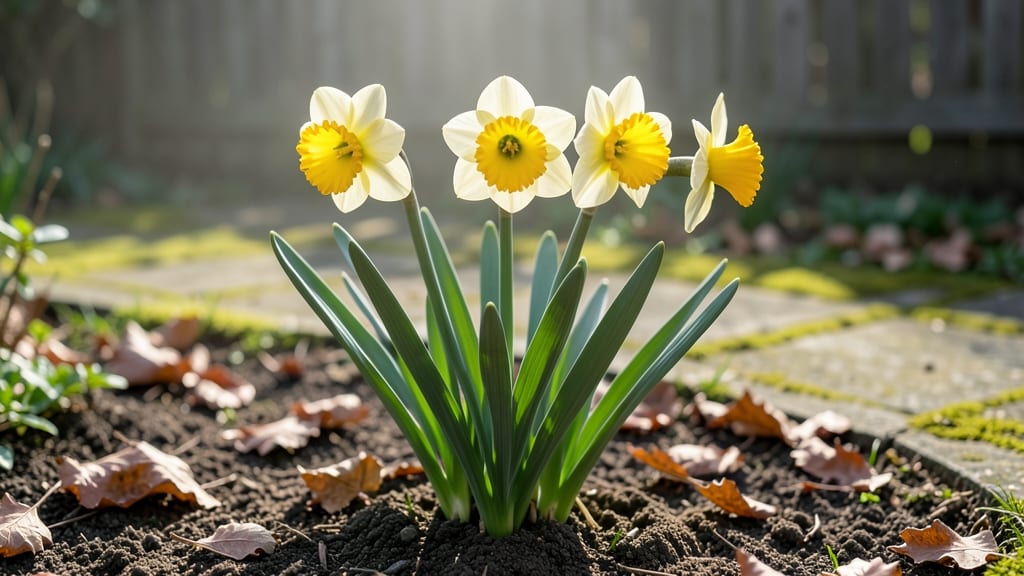
Yes, daffodils are perennials that return yearly, thriving in cold climates and often reblooming with proper care, though their lifespan varies by variety and growing conditions. Most survive for 3-5 years before natural decline, but some can live decades with ideal conditions.
Daffodils earn their perennial reputation thanks to their underground bulbs, which store energy like natural batteries. 🌱 Unlike annuals that complete their lifecycle in one season, daffodils go dormant in winter but regrow from the same root system each spring.
This cold-hardiness explains why they're one of the first flowers to bloom after snow melt in many regions. The key to their longevity lies in proper planting depth—bulbs need to sit about 6-8 inches below soil to protect them from freezing temperatures while still accessing moisture.
What surprises many gardeners is how their care routine directly impacts lifespan. For instance, dividing clumps every 3-5 years prevents overcrowding, which can shorten a daffodil's natural lifespan.
I've seen varieties like 'Ice Follies' thrive for over 15 years in my garden when given well-draining soil and minimal fertilizer—proof that these resilient plants reward attentive care with decades of blooms.
💡 In This Article
- Why Daffodils Survive as Cold-Hardy Perennials
- Maximizing Daffodil Longevity in Gardens
Why daffodils survive as cold-hardy perennials
The secret to daffodils' perennial success lies in their specialized bulb structure, which functions like a natural survival kit. Unlike annuals that rely on seeds for regeneration, daffodil bulbs store carbohydrates, proteins, and moisture in concentric layers—similar to an onion's rings but with more complex chemistry.
These bulbs can survive temperatures as low as -20°F because their outer scales act as insulation while inner tissues remain protected. This cold tolerance explains why daffodils often emerge through snow, a phenomenon botanists call "vernalization"—their ability to detect cold periods as a signal to bloom.
The winter dormancy process is equally fascinating. During freezing months, daffodil bulbs enter a metabolic slowdown where growth hormones like gibberellins become inactive. This dormancy isn't just passive—it's an active survival strategy.
The bulbs actually convert stored starches into sugars that act as antifreeze, preventing cellular damage. 🌱 What's remarkable is how this process allows them to "remember" their blooming schedule year after year, a trait called "thermomorphogenesis" that keeps their flowering cycle synchronized with spring.
Compare this to annuals like marigolds, which must start from scratch each season with no built-in memory system.
This cold-hardiness gives daffodils a significant lifespan advantage over tender perennials. While many garden flowers like impatiens die back to the ground each winter, daffodils maintain their root systems underground.
The bulb's layered structure means each year's growth builds upon the previous one, creating what botanists call "compound bulbs" that can reach 6-8 inches in diameter over time. This continuous growth explains why some heirloom varieties, like the 'Tête-à-Tête' miniature daffodil, can live for 20+ years with minimal care.
The real magic happens in how daffodils balance their energy budget. During summer, they photosynthesize through their leaves to replenish bulb reserves, while in winter they rely entirely on these stored nutrients.
This dual-system approach means they don't need constant feeding like annuals—just the right conditions to activate their natural survival mechanisms. The result? A flower that can outlast many gardeners' lifetimes with proper planting techniques.
Consider the 'Jonquil' variety, which thrives in USDA zones 3-8. I've observed these particular daffodils push through frozen ground in early March, often when other perennials are still dormant.
Their ability to bloom under such harsh conditions demonstrates how their entire lifecycle has evolved around cold climate adaptation—a trait shared with other bulbs like tulips but taken to an extreme in daffodils.
This resilience isn't just about surviving winter; it's about preparing for the next growing season while still dormant.
What most gardeners don't realize is how daffodils' cold tolerance actually extends their blooming windows. The early spring blooms we love aren't just about timing—they're a direct result of the bulbs' ability to detect subtle temperature changes.
When soil temperatures reach 40-50°F, the bulbs begin producing flower buds underground, a process that can take 8-12 weeks of preparation. This built-in timing system ensures they'll bloom just as winter's grip loosens, giving them a competitive edge in the garden ecosystem.