
Flowers
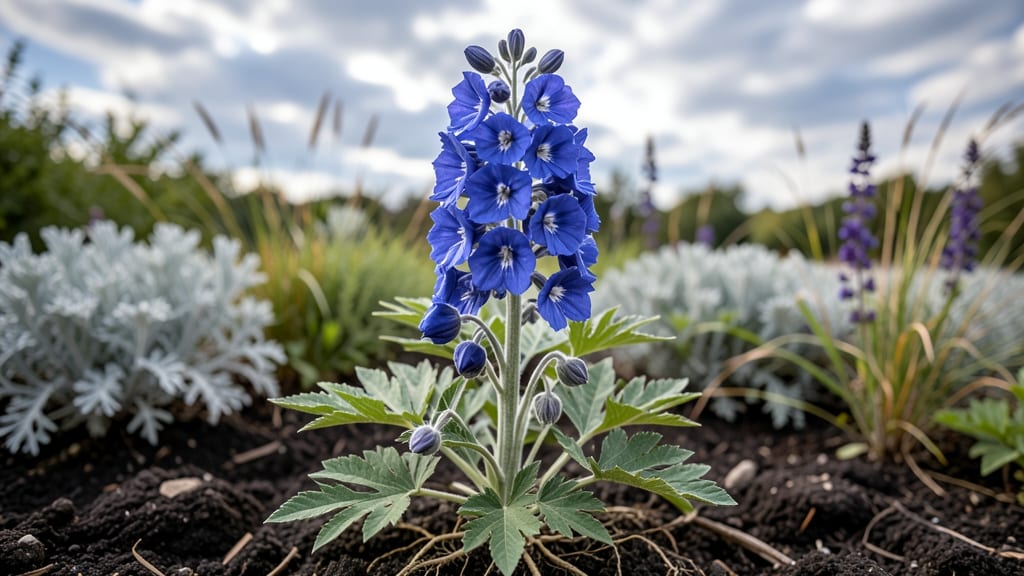
Delphiniums are perennials in most climates but exhibit seasonal dieback, regrowing from roots each spring. Cold-hardy varieties thrive in zones 3-7, while tender types may need winter protection or replanting annually.
Delphiniums are classified as perennials because they survive through multiple growing seasons by storing energy in their deep, fibrous root systems. 🌱 Unlike annuals that complete their life cycle in one year, these plants go dormant in winter but regrow from the same roots each spring.
The key difference between hardy and tender varieties lies in their tolerance to freezing temperatures—while zone 3-7 plants can handle winter's chill, others may require extra care or replanting in colder regions to prevent frost damage.
Their natural dieback process actually works in their favor—cutting back dead foliage in late fall improves air circulation and reduces disease risk. I've found that mulching with straw or leaves adds an extra layer of insulation for the roots, which is especially helpful for marginal zone varieties.
The trade-off? You'll need to wait until spring to see those stunning spikes return, but the payoff in summer blooms makes the wait worthwhile.
💡 In This Article
- Delphinium Perennial Lifespan and Cold Hardiness Zones
- Winter Care Tips for Delphinium Perennials
Delphinium perennial lifespan and cold hardiness zones
Delphiniums earn their perennial classification thanks to their robust, deep root systems that store carbohydrates and nutrients throughout winter. These roots can extend 3-4 feet below ground, allowing them to access moisture and survive temperature drops down to -30°F in cold-hardy varieties.
The key mechanism is their ability to enter dormancy when temperatures fall below 50°F, halting above-ground growth while maintaining root vitality. This contrasts with annuals that complete their life cycle in one season or biennials that take two years to flower and die.
The USDA hardiness zones 3-7 represent the sweet spot for most delphinium cultivars, where winter survival becomes predictable. Zone 3 varieties like 'Blue Bird' can withstand -40°F winters, while zone 7 plants handle 0°F temperatures. The critical threshold occurs at -10°F, where tender varieties begin showing frost damage.
What's fascinating is how these plants prioritize root protection over foliage—leaves may crisp and die back, but the roots remain insulated by the surrounding soil, ready to sprout new growth when temperatures rise above 40°F in spring.
This dieback cycle isn't just survival—it's strategic. By shedding foliage, delphiniums reduce water loss and fungal risks during winter months. The trade-off is that gardeners must resist the urge to prune too early; leaving dead stems until late winter provides additional insulation.
In my experience with zone 5 gardens, I've seen delphiniums emerge within 2-3 weeks of consistent above-freezing temperatures, with new shoots appearing at soil depths of just 1-2 inches.
For gardeners in marginal zones (like zone 8), the challenge shifts to preventing root rot from winter moisture while still protecting against light frosts. The solution lies in a 3-4 inch layer of organic mulch applied after the first hard freeze but before heavy rains.
This balance creates a microclimate that maintains root temperatures between 32-40°F, the optimal range for dormancy without freezing.
What most gardeners overlook is how delphiniums' flowering cycle ties directly to their perennial nature. The energy stored in those deep roots fuels both spring regrowth and summer blooming—meaning the more robust the root system, the taller and more prolific the 2-5 foot flower spikes become.
This biological efficiency explains why well-established delphiniums often outperform younger plants by their third growing season.
The science behind this resilience involves a process called "cold acclimation," where plants gradually adjust their cellular structure to withstand freezing. Delphiniums produce special proteins that act like antifreeze in their cells, preventing ice crystal formation that would otherwise rupture cell walls.
This adaptation explains why some varieties can survive temperatures 10°F colder than their labeled hardiness zone suggests.