
Plants
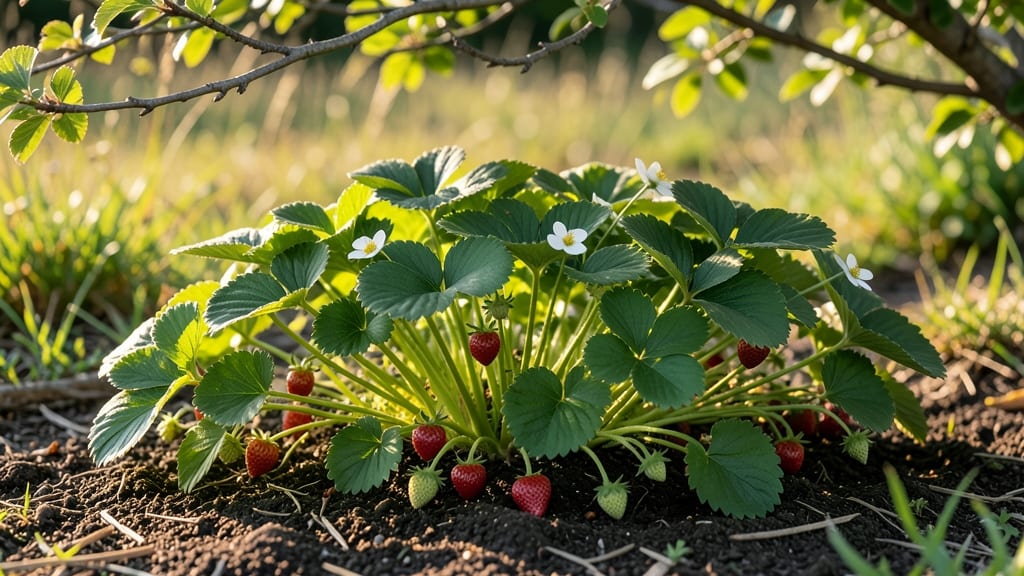
Everbearing strawberries are indeed perennial plants, but they follow a predictable decline pattern every 2-3 years that requires strategic renewal. This natural cycle affects their fruit production and plant health, making replanting crowns or runners essential for maintaining a productive patch.
This perennial nature means your strawberry plants won't disappear after one season, but their energy reserves deplete over time. 🌱 The dieback cycle happens because the plant focuses its resources on producing fruit rather than maintaining strong roots and crowns.
Unlike June-bearing varieties that produce once and then decline, everbearing types continue fruiting throughout the season—until their vigor wanes after 2-3 years. Renewal isn't just about getting more berries; it's about giving your plants the fresh start they need to thrive for another productive cycle.
When you notice reduced fruit size or fewer berries, that's your cue to act. The best time to renew is in early spring or fall, when you can divide the crowns and replant the healthiest sections.
This process not only revitalizes your patch but also prevents disease buildup in the soil. Think of it like giving your strawberries a fresh plot of land where they can spread out and grow strong again.
💡 In This Article
- The Science Behind Strawberry Dieback and Perennial Growth
- Renewing Everbearing Strawberry Patches: Step-by-Step Guide
The science behind strawberry dieback and perennial growth
The perennial nature of everbearing strawberries stems from their biological design to regenerate through crowns—the thickened base where leaves and roots meet. Unlike annuals that complete their life cycle in one season, these plants store energy in their crowns during dormancy, allowing them to sprout fresh growth each spring.
However, this system has limits: after 2-3 years of continuous fruiting, the crowns become overcrowded and depleted of nutrients, triggering the dieback cycle.
What happens internally? The plant's hormonal balance shifts as it prioritizes fruit production over root and crown maintenance. Gibberellins (growth hormones) surge during flowering, while auxins (root development hormones) decline. This creates a vicious cycle: fewer roots mean less water and nutrient uptake, which further stresses the plant.
The crowns also become congested, with individual plants competing for space and resources, leading to smaller berries and reduced yields. 🌱
This decline differs sharply from June-bearing varieties, which produce one massive harvest then decline. Everbearers fruit continuously but at lower volumes each season, making their energy depletion more gradual.
Their perennial nature means they can technically live for decades if renewed, but without intervention, the dieback becomes permanent after 3-4 years due to accumulated stress and disease pressure in the soil.
The crown plays a crucial role in renewal. Each crown contains dormant buds that can sprout new plants when separated and replanted. This natural regeneration system is why gardeners can propagate everbearing strawberries so easily—simply by dividing the crowns.
The key is timing: when the plant senses stress (like overcrowding or nutrient depletion), it signals these buds to activate, creating new growth points ready for transplantation.
Soil health also factors into this cycle. Over time, the same planting area accumulates pathogens and depletes organic matter, further weakening the plants. The root zone becomes compacted, reducing oxygen availability to the roots—a critical factor in strawberry health.
This is why rotating or renewing your patch isn't just about the plants but also about giving the soil a chance to recover its vitality for the next generation of berries.
Consider this: a single everbearing strawberry plant can produce 50-100 runners in ideal conditions, but these become a liability if left unattended. Each runner represents a potential new plant, but without proper spacing and care, they compete with the mother plant for resources, accelerating the dieback.
The solution lies in understanding this natural lifecycle and working with it rather than against it.