
Flowers
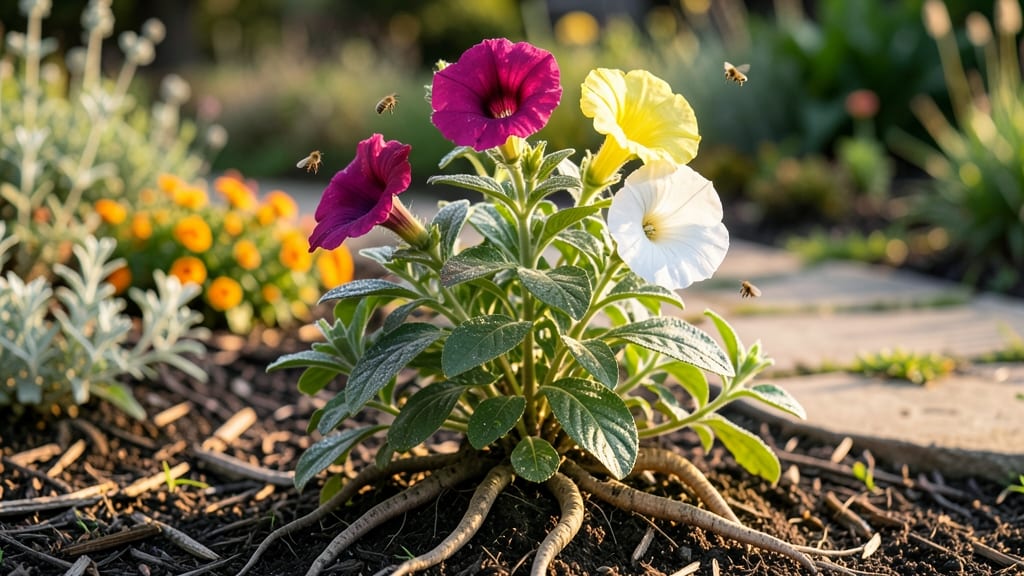
Four o’clock flowers (Mirabilis jalapa) are not true perennials in most climates—they’re tender annuals or short-lived perennials, dying back to the ground in cold weather but often resprouting from roots if conditions are mild. They thrive in USDA zones 9-11 as perennials but regrow yearly in cooler zones from seed or tubers.
These vibrant plants behave like perennials in warm climates because their thick, tuberous roots store energy to regrow each spring. 🌱 In colder regions, though, they typically act as annuals since the roots don't always survive harsh winters.
The key difference lies in their underground storage system—unlike true perennials that maintain woody stems, four o'clocks rely on these tubers for regeneration. This explains why they might return year after year in mild winters but often need replanting in colder zones.
What's fascinating is how some gardeners in marginal zones (like zone 8) successfully overwinter them by mulching heavily or digging up tubers to store indoors. This practice turns what would normally be an annual into a semi-perennial experience.
The plant's ability to self-seed also contributes to its persistence in gardens, even when the roots don't fully survive winter.
💡 In This Article
- Four O’Clock Flower Lifespan: Annual vs Perennial Behavior
- Extending Four O’Clock Blooms: Planting and Care Tips for Year-Round Growth
Four o’clock flower lifespan: annual vs perennial behavior
The botanical distinction between annuals and perennials comes down to their survival strategies. Four o’clocks (Mirabilis jalapa) produce thick, fleshy tubers—underground storage organs that store nutrients and energy—rather than developing woody stems like true perennials.
These tubers can survive mild winters in zones 9-11, allowing the plant to regrow from the same root system each spring. 🌱 This is why they behave like perennials in frost-free climates, but the key difference is their lack of persistent above-ground growth structures.
In colder zones (8 or below), the tubers often fail to survive winter exposure, especially when temperatures drop below 20°F for extended periods. The plant’s natural response is to die back completely, leaving only seeds behind.
This is why gardeners in these regions typically treat them as annuals—planting fresh seeds or tubers each spring. Interestingly, some cultivars, like 'Variegata' or 'Alba', show slightly better cold tolerance due to their thicker tuber development, but they’re still not true perennials.
The "self-perennialize" effect in mild climates happens because the tubers remain dormant but viable through winter. When spring temperatures rise above 50°F, these tubers sprout new shoots, creating the illusion of perennial behavior.
This process relies on the plant’s ability to store 20-30% starch reserves in its tubers—similar to potatoes—rather than maintaining living tissue year-round like true perennials such as peonies or hostas.
What most gardeners don’t realize is how soil conditions affect tuber survival. Well-draining soil prevents rot, while heavy clay can suffocate the tubers during wet winters.
In zones 8-9, adding a 4-6 inch layer of mulch (straw or shredded leaves) can raise soil temperatures by 5-10°F, protecting tubers from freeze-thaw cycles that cause fatal cracking. This simple technique turns what would be an annual into a semi-perennial in marginal climates.
Another fascinating mechanism is the plant’s ability to produce secondary tubers—smaller storage organs that form along the root system. These act as insurance, allowing the plant to regenerate even if the primary tuber is damaged.
This adaptation explains why four o’clocks often return year after year in gardens, even when they’re not technically perennials. The trade-off? Their lack of true perennial structures means they’re more vulnerable to winter dieback than plants with woody stems or rhizomes.
For visual comparison, imagine a true perennial like a daylily, which maintains its root system year-round and sprouts fresh foliage each spring. Four o’clocks, by contrast, are more like gladioli—they rely entirely on their underground storage organs for regeneration.
The difference becomes clear when you dig up the tubers: a daylily’s roots look fibrous and alive, while four o’clock tubers appear dormant and potato-like until spring warmth triggers regrowth. ✨