
Plants
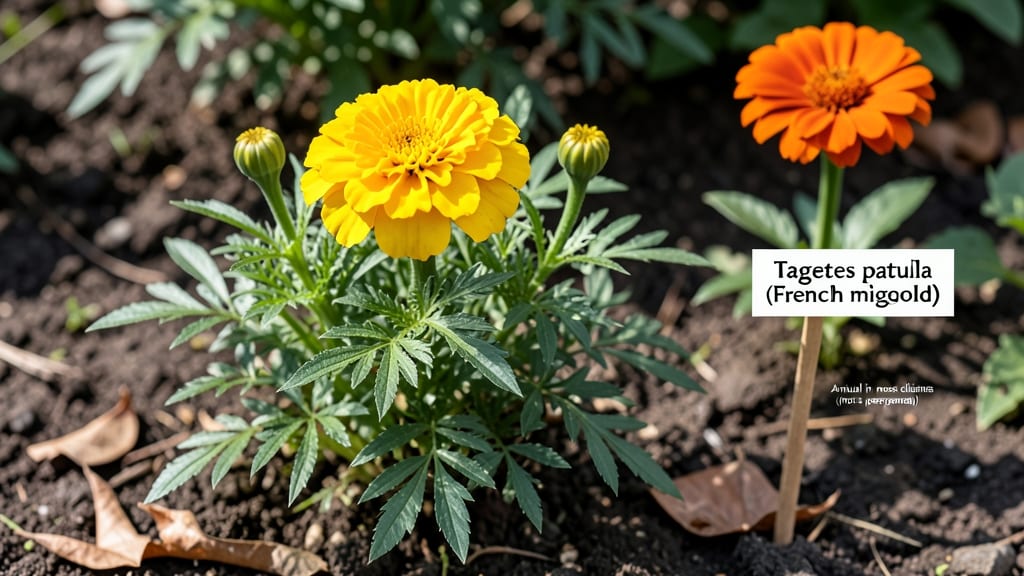
French marigolds aren't true perennials in most climates, though they may regrow from their root systems in warmer zones (USDA 9-11). In colder regions, they're treated as annuals, needing yearly replanting for reliable blooms.
French marigolds' perennial behavior depends entirely on winter temperatures. 🌱 In zones 9-11, their deep taproots survive frost, allowing them to resprout each spring. However, below zone 8, even a light freeze can kill the crown, making them act like annuals.
The key difference lies in their root hardiness—while the roots may persist in mild winters, the plant's top growth is highly frost-sensitive. This explains why gardeners in colder zones often treat them as seasonal plants despite their potential to return naturally in warmer areas.
What this means for your garden is simple: if you're in a colder climate, plan to replant each spring for consistent color. But if you're in a frost-free zone, you might get lucky with spontaneous regrowth—though it's never guaranteed.
The plant's ability to return depends on how well the roots insulated against winter chill, which is why mulching becomes crucial in marginal zones.
💡 In This Article
- French Marigold Cold Hardiness: USDA Zones and Winter Survival
- Extending French Marigold Lifespan: Overwintering Tips for Cold Climates
French marigold cold hardiness: USDA zones and winter survival
French marigolds (Tagetes patula) thrive in warm climates but struggle with frost due to their tropical origins. Their survival hinges on root hardiness—while the roots can tolerate brief cold snaps down to 25°F, the plant's crown (where new growth emerges) freezes at just 32°F.
This explains why they behave as perennials in USDA zones 9-11, where winter temps rarely drop below 40°F. In these zones, the roots remain dormant but viable, ready to sprout when soil warms in spring.
The critical threshold is 10°F10°F consistently.
French marigolds' winter behavior differs from African marigolds (Tagetes erecta), which have thicker stems and slightly better cold tolerance. The key distinction is French marigolds' delicate foliage and shallow root systems—both freeze easily.
In colder zones, their annual treatment isn't just practical; it's necessary for reliable blooms. Without protection, even a 20°F night can wipe out a season's growth, leaving gardeners starting fresh each spring.
What most gardeners miss is how mulch depth affects survival. A 4-6 inch layer of straw or leaves can raise soil temps by 5-10°F, potentially protecting roots in marginal zones. However, this only buys a few degrees—enough to extend the season but not replace true winter hardiness.
The plant's natural dormancy strategy relies on heat, not cold, making it ill-suited for temperate climates where frost is inevitable.
Consider this comparison: A French marigold in zone 9 might regrow from roots after 50°F soil temps return, while one in zone 7 would need 60°F soil to sprout—if the roots survived at all.
This explains why zone 9 gardeners often see "volunteer" plants popping up, while zone 7 gardeners must replant annually. The difference isn't just about temperature; it's about how long the soil stays cold enough to stress the roots.
For gardeners pushing the limits, selecting varieties like 'Bonanza Yellow' or 'Vanilla Twist' offers slightly better cold tolerance, but no French marigold is truly winter-hardy.
The plant's survival strategy—relying on root persistence rather than cold resistance—makes it a borderline perennial at best. 🌱 This is why landscape designers in colder zones often pair French marigolds with true perennials like zinnias or cosmos, which handle frost better.