
Orchid Care
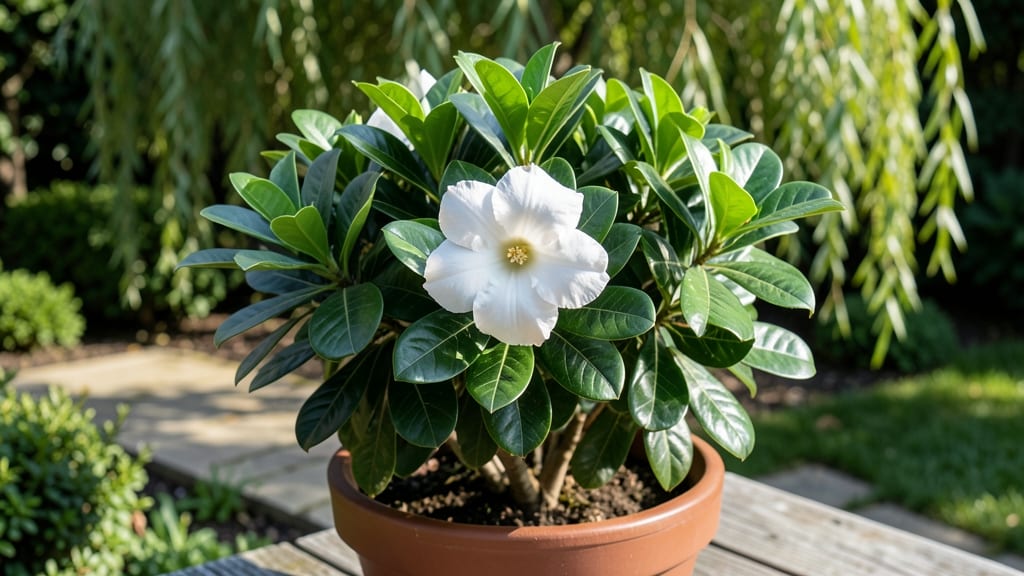
Gardenias behave as perennials in warm climates but function like annuals in colder regions, where frost below 20°F (-6°C) causes foliage loss and potential dieback. With proper winter care, they often regrow vigorously in spring.
This behavior stems from gardenias being tropical natives, adapted to USDA hardiness zones 10-12 where they thrive year-round. 🌿 In colder zones (7-9), their above-ground growth dies back annually, but the roots often survive underground.
The key distinction lies in temperature tolerance—perennial gardenias in warm areas maintain growth year-round, while those in colder climates rely on dormant root systems to bounce back each spring.
What makes this interesting is how gardeners can manipulate this cycle through techniques like heavy mulching or container overwintering. I've seen gardenias in zone 7 completely defoliate by December only to burst with new growth by April—proof that with the right care, they can outsmart their climate limitations.
💡 In This Article
- Gardenia Cold Hardiness and Perennial vs Annual Behavior
- Winter Care Tips to Protect Gardenias in Cold Climates
Gardenia cold hardiness and perennial vs annual behavior
Gardenias belong to the botanical family Rubiaceae and are native to tropical and subtropical regions of Asia, Africa, and Australia. Their perennial classification comes from their ability to regrow from dormant roots in ideal conditions—specifically, when winter temperatures stay above 20°F (-6°C).
In their native tropical environments (USDA zones 10-12), gardenias maintain evergreen foliage year-round, growing continuously as true perennials. The key difference lies in their growth habit: tropical gardenias never experience true dormancy, while those in colder climates enter a survival mode when temperatures drop.
The frost sensitivity stems from their thin, delicate leaves which contain high moisture content—similar to how tropical plants like hibiscus react to cold. When temperatures fall below 32°F (0°C), cell membranes within the leaves begin to rupture, causing immediate wilting.
Below 20°F (-6°C), the damage extends to the stems, and the plant may appear completely dead above ground. However, the root system often remains viable if protected, allowing regrowth when temperatures rise in spring.
This is why gardenias in zones 7-9 behave like annuals—they die back annually but persist through their roots.
USDA hardiness zones provide a clear framework for understanding this behavior. Gardenias thrive naturally in zones 10-12 where they're perennials, but in zones 7-9, they require winter protection to survive.
The transition zone (zone 8) offers the most flexibility—some gardenias may survive winters with minimal protection, while others need careful overwintering. What's fascinating is how this mirrors other tropical plants like citrus or bougainvillea, which also rely on root systems to persist through cold snaps.
The difference is that gardenias are more sensitive to cold than many of these relatives.
Here's what happens at the cellular level: Cold temperatures cause water within gardenia cells to crystallize, damaging cell walls and disrupting metabolic processes. This is why mulching becomes critical—it acts as an insulating blanket that maintains soil temperatures around the roots, preventing this cellular damage.
In contrast, tropical gardenias have evolved with consistent warmth, so their cells lack the protective mechanisms found in cold-hardy perennials like roses or peonies. The result is that gardenias in cold climates must be treated as annuals unless given special winter care.
Consider this comparison: A gardenia in Florida (zone 10) grows continuously with no winter dormancy, while one in New York (zone 6) would die back completely without protection. The same species behaves differently based solely on climate.
This adaptability is what makes gardenias so rewarding for gardeners in colder regions—they can still thrive if you understand and work with their natural limitations. The key is protecting that root system, which is often the only part of the plant that survives the winter chill.
What most gardeners don't realize is that gardenias have a remarkable ability to regenerate from just a small section of healthy root. Even if the above-ground growth is completely lost, the roots can produce new shoots when spring temperatures reach 55°F (13°C) consistently.
This resilience is why proper winter care isn't just about survival—it's about setting the stage for a stronger, more vigorous plant in the following growing season. 🌱