
Plants
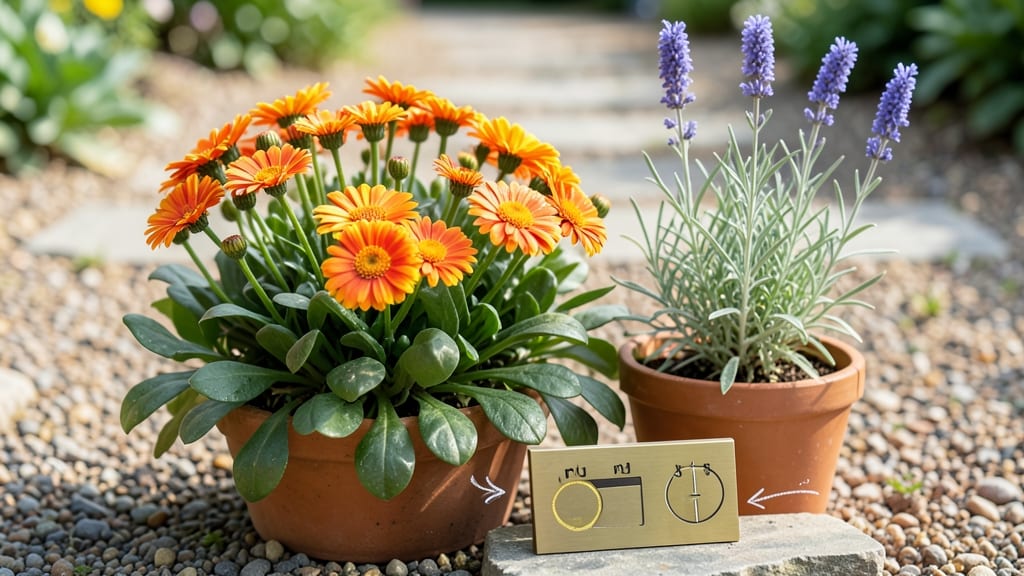
Gazania plants aren't true perennials in most regions but act like tender perennials, dying back each frost and returning from seed or roots in warmer climates like USDA zones 8-11. Their seasonal cycle depends on winter survival and proper care.
Gazania plants behave like annuals in colder climates because they can't withstand frost—their delicate foliage and stems freeze at temperatures below 30°F. 🌱 Unlike hardy perennials such as coneflowers, they reset their growth cycle each spring, either from stored roots or fresh seeds.
In frost-free zones (USDA 8-11), they naturally regrow year after year, making them act like perennials despite their botanical classification.
This dieback behavior isn't a flaw—it's an adaptation that lets gazanias thrive in dry, sunny conditions. Their ability to self-seed means they'll often return thicker each year if left undisturbed.
For gardeners in colder areas, overwintering strategies like cutting back plants before frost or growing them in containers you can move indoors can help preserve them.
💡 In This Article
- Why Gazanias Die Back in Cold Weather
- How to Extend Gazania Growth Beyond One Season
Why gazanias die back in cold weather
Gazania plants shut down completely when temperatures drop below 30°F because their native South African habitat experiences hot, dry summers and mild winters—not freezing conditions. The cold triggers a survival mechanism where the above-ground foliage and stems freeze and die, but the roots or seeds remain dormant until warmth returns.
This is why they behave like annuals in colder climates, unlike true perennials such as coneflowers, which store energy in underground rhizomes to regrow through frost.
The key difference lies in their frost tolerance threshold.
Gazanias lack the protective mechanisms of hardy perennials—their cell membranes can't withstand ice crystal formation, which ruptures plant tissues. 🌡️ For comparison, salvias (another drought-tolerant plant) can survive down to 10°F with proper mulching, while gazanias begin showing frost damage at 32°F.
Their delicate stems contain high moisture content, making them particularly vulnerable to freezing.
What's fascinating is how gazanias reset their growth cycle each spring. In frost-free zones (USDA 8-11), they naturally regrow from the same roots, creating the illusion of perennial behavior. But in colder regions, they must rely on either stored root energy or fresh seeds to restart.
This annual dieback isn't a failure—it's an evolutionary adaptation that conserves energy in unpredictable climates where winter survival isn't guaranteed.
Botanists classify gazanias as "tender perennials" because they can live multiple years in ideal conditions, but their lifespan hinges on avoiding frost. The plants' shallow root systems (typically 6-12 inches deep) make them especially sensitive to temperature fluctuations.
When nighttime lows drop below 35°F consistently, even young plants will suffer irreversible damage.
One visual clue to their frost sensitivity is how the leaves curl and darken before dying—this is their way of minimizing water loss as they prepare for dormancy. Unlike hardy perennials that develop protective woody stems, gazanias remain soft and herbaceous year-round, which explains why they can't survive winter exposure.
Their bright, daisy-like flowers are actually a seasonal adaptation to attract pollinators during their short growing window.
For gardeners in transitional zones (USDA 7), this dieback behavior means gazanias often return thicker each year through self-seeding, creating natural colonies.
The trade-off is that you lose the established plant's structure, but you gain a fresh crop of vibrant blooms each spring—nature's way of ensuring survival through propagation rather than persistence.