
Orchid Care
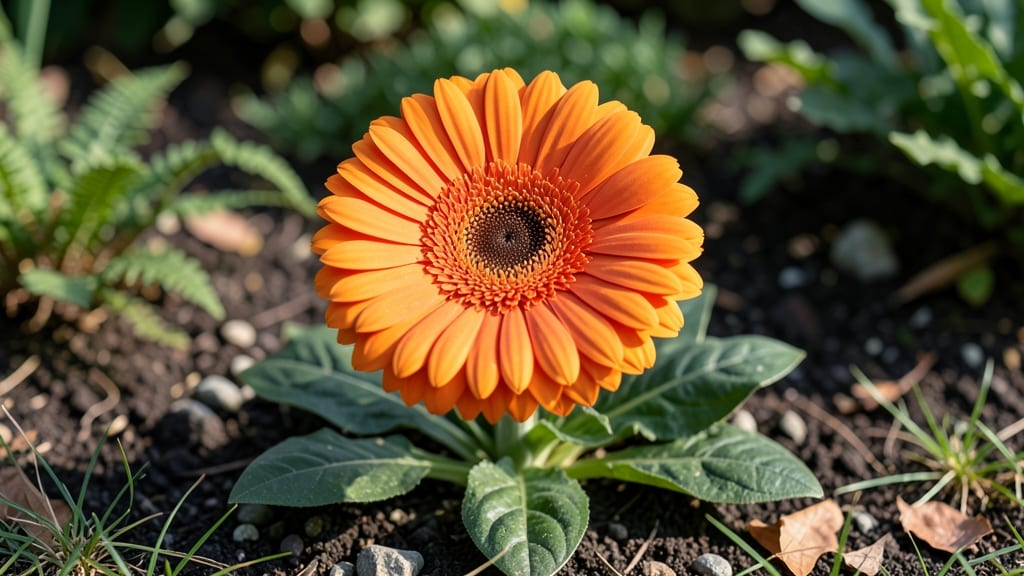
Gerber daisies behave as perennials in frost-free zones like USDA 10-11 but are typically grown as annuals in colder climates (zones 7-9), since freezing temperatures kill their tops and roots struggle to survive winter dormancy.
This distinction comes down to their native habitat—Gerber daisies evolved in South Africa's warm climate, where they naturally thrive year-round. 🌡️ In colder regions, gardeners often replant new tubers each spring because the original plants rarely recover from frost damage.
The key difference? In warm zones, their deep root systems stay active through winter, while in colder areas, they need protection or replanting to continue blooming.
What's interesting is how their growth habit changes with climate: in warm zones, they'll often rebloom spontaneously, while in cooler areas, they typically produce one big flush of flowers before fading. This makes them perfect for container gardening in cold regions—just move pots indoors before the first frost!
💡 In This Article
- Gerber Daisy Climate Tolerance and Zone Requirements
- Extending Gerber Daisy Blooms: Season-Long Care Tips
Gerber daisy climate tolerance and zone requirements
Gerber daisies thrive as perennials in frost-free regions like USDA zones 10-11 because their tuberous root systems naturally store energy for continuous growth. These roots can withstand temperatures down to 30°F for short periods, but prolonged exposure to freezing (28°F or lower) causes irreversible damage.
The key difference lies in their growth cycle: in warm climates, they maintain active roots year-round, producing new shoots from the same tubers season after season.
In colder zones (7-9), the above-ground foliage dies back when temperatures drop below 40°F, but the real issue is the roots' inability to survive winter dormancy. Unlike true perennials that develop hardy crowns, gerber daisy tubers lack sufficient insulation to protect against frost penetration.
This is why gardeners in these zones often treat them as annuals—replanting fresh tubers each spring yields more reliable blooms than attempting to overwinter existing plants.
The science behind this involves the plant's native South African habitat, where temperatures rarely dip below 50°F. Gerber daisies evolved without needing cold-hardiness adaptations, making them particularly vulnerable to 32°F or colder conditions.
Even a light frost can kill emerging shoots, while heavy freezes may damage the root system's ability to regenerate. 🌡️ This explains why you'll see them flourishing in coastal California gardens (zone 10) but struggling to return in Chicago (zone 5) without special protection.
What most gardeners don't realize is that gerber daisies have a unique survival mechanism in warmer climates: their tubers can remain dormant yet viable for months, ready to sprout when conditions improve.
In zone 9, for example, they might survive mild winters if mulched heavily, but true perennial behavior only occurs in zones where winter temperatures never drop below 35°F for extended periods. This threshold explains why even "cold-hardy" gerber daisy varieties rarely perform well north of zone 9.
For those in transitional zones (8-9), the solution often lies in container growing. Potted gerber daisies can be brought indoors before the first frost (32°F) and stored in a cool (50-60°F), dark place until spring.
The container's portability gives you control over temperature exposure that garden beds can't match. This approach effectively turns a "one-season" plant into a repeat performer with minimal effort.
Consider this comparison: in zone 11, a single planting might produce blooms for 10+ years with proper care, while in zone 7, you'd typically replant annually. The difference comes down to 1,200+ hours of winter chill exposure that gerber daisies simply can't tolerate.
This biological limitation is what makes their classification as "perennial" or "annual" so climate-dependent.