
Plants
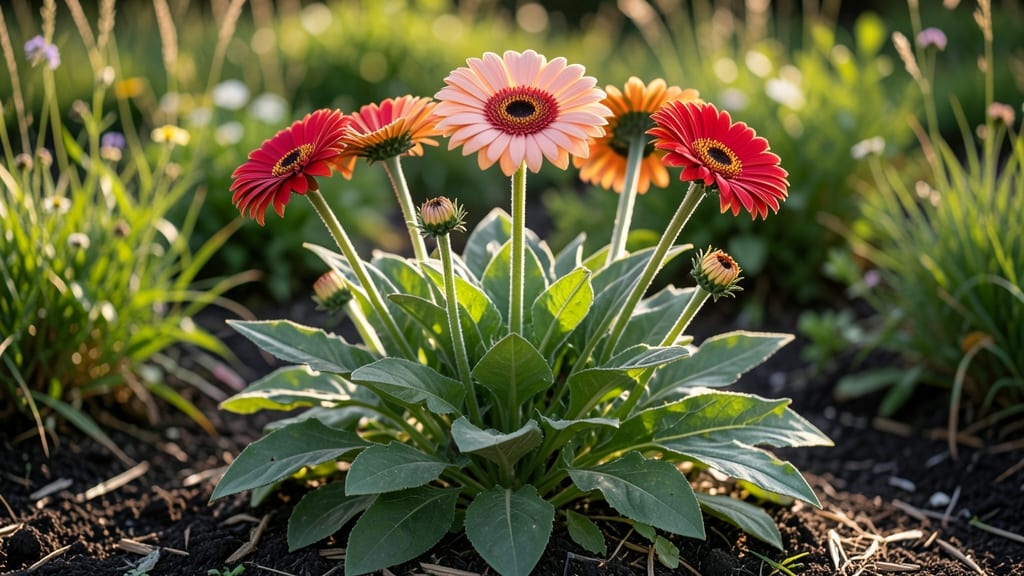
Gerberas aren't perennial in most climates—they die back to the ground each winter in zones 8–11 and are often grown as annuals in colder areas, though some hardier varieties can survive mild winters with protection.
Gerberas behave more like tender perennials because their fleshy roots and tubers freeze at temperatures below 25°F.
Unlike hardy perennials that regrow from deep root systems, gerberas rely on protected tubers or stored crowns to regenerate in spring. 🌱 This is why gardeners in colder zones either dig up tubers for indoor storage or treat them as seasonal plants. The good news?
With proper overwintering techniques—like mulching or frost blankets—you can coax them back to life each year.
Some varieties, like Gerbera jamesonii, are slightly more cold-tolerant, but even these need shelter during harsh winters. The key to extending their lifespan lies in protecting their root systems from freezing, which is why many gardeners opt for container growing in colder regions.
This way, you can move them indoors before the first frost hits.
💡 In This Article
- Why Gerberas Die in Cold Climates: Root and Temperature Limits
- How to Overwinter Gerberas in Cold Zones: Step-by-Step Survival Tips
Why gerberas die in cold climates: root and temperature limits
Gerberas aren't built for freezing temperatures because their thick, fleshy roots and tubers lack the protective insulation found in hardy perennials like peonies or hostas. These roots freeze solid at below 25°F, turning mushy and black when exposed to prolonged cold.
Unlike woody perennials that regrow from deep, protected root systems, gerberas rely on their above-ground crowns and shallow tubers—which are highly vulnerable to frost damage. 🌡️ This is why they’re classified as tender perennials in gardening terms: they survive only in zones where winter temps rarely drop below freezing.
Their tuberous growth habit is actually an adaptation for drought-prone, warm climates (their native South Africa), not cold winters. When temperatures dip below 32°F, the cell membranes in gerbera roots rupture, and the stored nutrients meant for spring regrowth get lost.
Even a single hard freeze can kill the plant back to the ground, leaving gardeners to start over each season unless they take special steps. Compare this to hardy perennials like lavender, which can handle 10°F or lower—gerberas simply aren’t wired for that kind of resilience.
What makes this worse is their slow regrowth in spring. Unlike perennials that burst back to life within weeks of thawing, gerberas need 60-90 days of consistent warmth (above 50°F) to coax their tubers into producing new shoots.
This delayed recovery is why many gardeners in colder zones treat them as annuals—it’s often easier to replant from seed or cuttings than to nurse them through a risky overwintering process. 🌱 The trade-off? Their vibrant blooms are worth the effort if you’re willing to put in the work.
Here’s the science behind their fragility: gerbera roots contain high moisture content (up to 80% water), which makes them prone to ice crystal formation during freezes. These crystals puncture cell walls, causing irreversible damage.
Meanwhile, their delicate foliage (which dies back in winter) lacks the protective hairs or waxy coatings found on cold-hardy plants. Even a light frost can turn their leaves to mush, signaling the start of decline.
This is why gardeners in zones 7 and below rarely risk leaving gerberas in the ground over winter.
One exception? Gerbera jamesonii varieties like ‘Terry’ or ‘Marmalade’ have slightly thicker tubers and can tolerate brief dips to 20°F if protected. But even these need heavy mulching (at least 6 inches of straw or leaves) to survive.
The mulch acts as an insulator, maintaining soil temps 5-10°F warmer than ambient air. Without it, the roots freeze solid, and the plant is doomed. 🌡️ This is why container-growing gerberas is often the smarter choice in colder climates—you can move them indoors before the first frost.
The bottom line? Gerberas thrive as seasonal splashes of color in warm zones but require active intervention to survive winters elsewhere. Their lack of cold hardiness isn’t a flaw—it’s a trait shaped by their native habitat.
Understanding this helps you decide whether to treat them as annuals, tender perennials, or (with effort) reblooming survivors. The choice is yours, but the biology is clear: these beauties aren’t built for frost. ❄️