
Vegetables
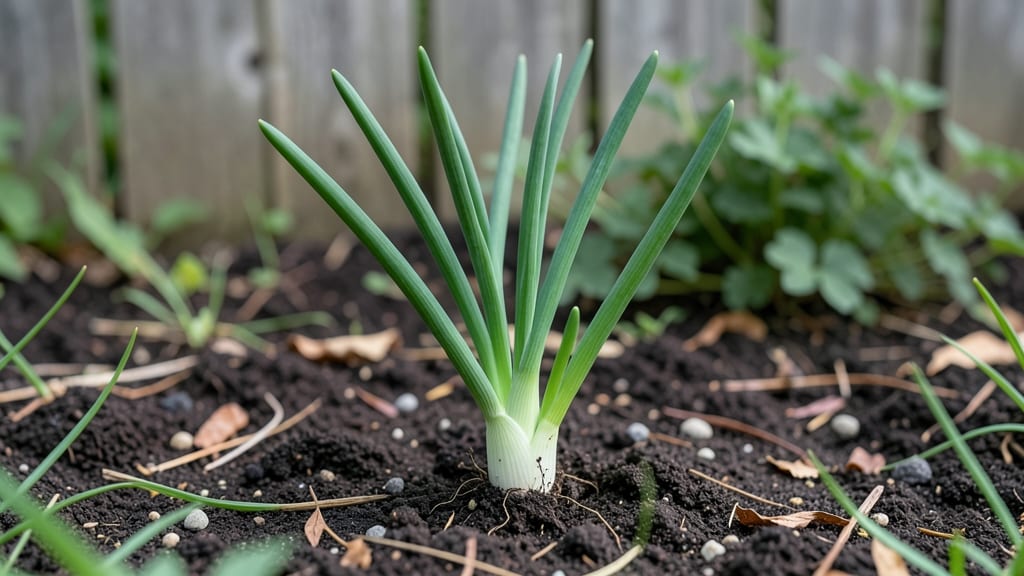
Green onions are perennials because their underground bulbs store energy and nutrients, allowing them to regrow from the same root system year after year in ideal conditions—though they may die back in freezing climates without protection.
This perennial behavior comes from their underground bulb structure, which acts like a natural storage unit. 🌱 Unlike annuals that complete their life cycle in one season, green onions send out new shoots from the same root system when conditions are right.
The key is keeping them in well-draining soil with consistent moisture—this helps the bulb maintain its energy reserves. In colder regions, gardeners often use mulch or grow them in containers to protect the roots during winter, ensuring they bounce back when spring arrives.
What makes this especially handy for home gardeners is how minimal care these plants require once established. You can harvest the green tops repeatedly without harming the bulb, and with proper protection, they'll keep producing for years.
I've seen green onions in my garden return stronger each spring after being cut back multiple times the previous season—proof that their perennial nature makes them one of the most resilient vegetables to grow.
💡 In This Article
- Why Green Onions Regrow from Underground Bulbs
- How to Overwinter Green Onions for Year-Round Harvests
Why green onions regrow from underground bulbs
The secret behind green onions' perennial nature lies in their specialized underground bulb structure, which functions like a biological battery. This bulb isn't a true onion (which is a modified leaf), but rather a swollen stem base that stores carbohydrates, proteins, and water.
When you harvest the green shoots, the bulb remains intact below ground, containing meristematic tissue—a type of plant stem cell that can differentiate into new growth when conditions are favorable. This tissue remains dormant during harsh seasons but reactivates with warmth and moisture.
The regrowth process begins when the bulb receives consistent moisture (about 1-1.5 inches per week) and temperatures above 50°F. The meristematic cells near the bulb's base divide rapidly, pushing new shoots upward through the soil.
Unlike annuals that die after flowering, green onions continue this cycle because their bulbs act as a nutrient reservoir. Studies show that well-established green onions can maintain this regrowth for 3-5 years with proper care, making them one of the most resilient vegetables for continuous harvests.
Light exposure plays a crucial role in this process. Green onions need 6-8 hours of sunlight daily for optimal growth, but their bulbs can survive in partial shade. The key is balancing light with moisture—the bulb needs enough water to fuel regrowth but not so much that it rots.
In my garden, I've noticed that bulbs planted in loamy soil with 10-20% organic matter regrow most vigorously, as this texture provides both drainage and moisture retention. The bulb's outer layers also protect the meristem from temperature fluctuations.
What's fascinating is how this perennial behavior differs from true onions. While storage onions (like yellow or red onions) focus on bulb expansion for storage, green onions prioritize shoot regrowth.
Their bulbs remain relatively small (1-2 inches in diameter) because their energy is directed toward producing new green tops rather than storing large quantities of food.
This adaptation makes them ideal for repeated harvesting—you can cut the greens back to 1-2 inches above the bulb and they'll regrow in 2-3 weeks.
Temperature extremes are the main threat to this cycle. When soil temperatures drop below 32°F, the meristematic tissue can become dormant or even die if exposed to prolonged freezing. This is why gardeners in colder climates use mulch (straw or leaves, 2-3 inches thick) to insulate the bulbs.
The mulch creates a 5-10°F warmer microclimate around the roots, preventing freeze-thaw cycles that can damage the delicate regrowth tissue. In my Zone 5 garden, I've successfully overwintered green onions by covering them with mulch and a layer of burlap, allowing them to emerge as early as late March.
The bulb's ability to regenerate also explains why green onions often appear in wild or neglected garden beds—they can survive being buried under other plants or even lightly trampled.
Their resilience makes them perfect for interplanting with other vegetables like carrots or lettuce, where they won't compete for space but will continue producing greens throughout the growing season. This hardiness is what makes them a gardener's favorite—minimal effort yields continuous harvests with almost no maintenance required once established.