
Trees
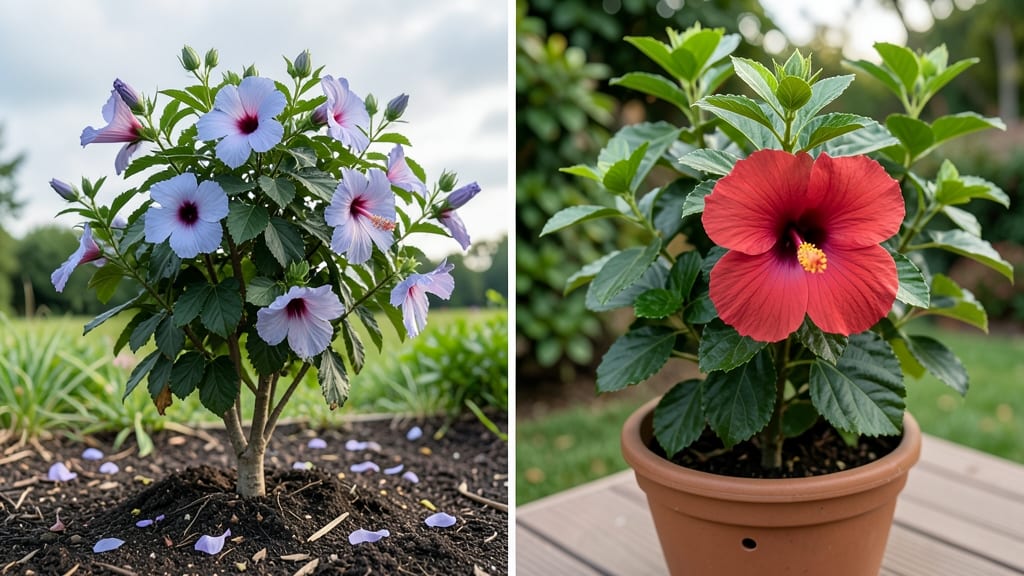
Hibiscus trees are perennials in warm climates like USDA Zones 9-11, where they thrive year-round, but in colder regions, they die back annually and must be replanted or overwintered indoors. Tropical hibiscus varieties are especially sensitive to frost.
Hibiscus trees are perennials in their natural tropical and subtropical habitats, meaning they can regrow from their roots each season. 🌿 In warmer climates, they maintain their foliage year-round, but when temperatures drop below 30°F, the plant's cells rupture from frost damage.
This is why hibiscus trees in colder regions need special care—whether through overwintering indoors or protecting them with mulch and insulation. The key difference lies in their hardiness: while some varieties can tolerate brief cold snaps, tropical hibiscus simply can't survive extended freezing temperatures.
What's interesting is how hibiscus trees adapt to seasonal changes. In colder zones, they enter a dormant state, shedding leaves but keeping their root systems alive. With proper protection, they can bounce back in spring, proving they're perennials in spirit—just not in every climate.
This makes them a rewarding plant for gardeners willing to put in the effort to extend their growing season.
💡 In This Article
- Hibiscus Tree Hardiness Zones and Cold Survival
- Overwintering Hibiscus Trees in Cold Climates
Hibiscus tree hardiness zones and cold survival
Hibiscus trees thrive as perennials in USDA Zones 9-11 because their biological systems are finely tuned to tropical and subtropical climates. When temperatures drop below 30°F, the plant's cells begin to rupture due to ice crystal formation within their vascular tissues.
This frost damage occurs because hibiscus cells contain 80-90% water, making them highly susceptible to freezing. The cell walls, while strong, can't withstand the expansion pressure created by ice crystals forming inside the cell structure.
The science behind their cold sensitivity lies in their evolutionary adaptation.
Tropical hibiscus varieties have never encountered prolonged cold, so they lack the genetic mechanisms for cold acclimation found in temperate perennials like roses or peonies. 🌡️ In contrast, these hardier plants can produce protective proteins that stabilize cell membranes during freezing.
Hibiscus trees, however, enter a state of shock when exposed to 28°F or lower, with leaves turning black and stems becoming brittle within hours.
What makes hibiscus unique is their ability to regenerate from their root crown even after severe dieback. In their native zones, they maintain continuous growth through warm winters, but in colder regions, they must rely on human intervention to survive.
The root system remains viable down to 20°F if protected, which explains why gardeners can often revive hibiscus even after above-ground parts have frozen solid. This root resilience is why they're considered perennials in spirit—just not in every climate.
Consider these key factors when evaluating hibiscus hardiness:
- Zone 9-11: Fully hardy perennials with no winter protection needed
- Zone 8: Can survive brief cold snaps but needs mulch protection
- Zone 7 and below: Requires overwintering indoors or heavy insulation
- Tropical varieties: Most sensitive, often die back completely without protection
The transition temperature where hibiscus begin showing stress is around 45°F—this is when growth slows dramatically. At 50°F, they may drop leaves preemptively to conserve energy, a survival mechanism that becomes critical when nights remain cold for extended periods.
This physiological response explains why hibiscus in marginal zones often look half-dead by winter, even when roots remain alive below ground.
What most gardeners don't realize is that hibiscus trees can actually benefit from a period of cooler temperatures in late fall. When daytime highs reach 65-70°F and nights drop to 55°F, the plant signals its roots to prepare for dormancy by storing carbohydrates.
This natural process helps them withstand brief cold snaps, but it's no match for prolonged freezing. The key to successful overwintering lies in mimicking this natural cycle while providing artificial protection against extended cold.