
Plants
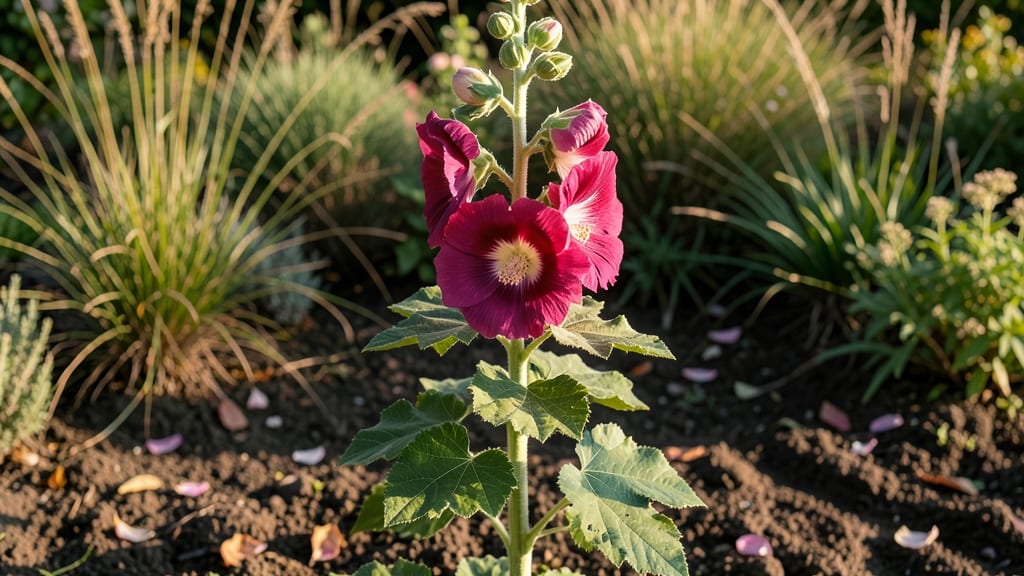
Hollyhocks are perennials in USDA zones 3-9 but often die back to the ground in winter, regrowing from their roots each spring with proper care and cold hardiness adjustments.
Hollyhocks thrive as hardy perennials because their deep root systems store energy for regrowth, even after above-ground stems freeze back in colder climates. 🌱 In zones 3-9, they enter dormancy when temperatures drop below 20°F, only to burst back with vibrant blooms once spring arrives.
The key to their survival lies in protecting those roots—mulching heavily in late fall and avoiding early pruning can make all the difference between a plant that fades and one that flourishes year after year.
What sets hollyhocks apart is their adaptability—while they're technically perennials, their growth patterns vary dramatically by region. In milder zone 9 areas, they might maintain some foliage year-round, while zone 3 gardeners treat them more like biennials, needing extra winter protection.
The secret to extending their lifespan is understanding this cycle: cut back dead stems in late winter, but leave the base intact to preserve next year's blooms.
💡 In This Article
- Hollyhock Cold Hardiness and Winter Survival Strategies
- Extending Hollyhock Lifespan: Pruning, Mulching, and Zone Adaptations
Hollyhock cold hardiness and winter survival strategies
Hollyhocks enter dormancy through a biological process called cold acclimation, where their cells produce protective proteins and sugars that act like antifreeze. When temperatures drop below 20°F, the above-ground stems freeze and turn brown, but the roots remain alive underground, storing carbohydrates for regrowth.
This is why they're classified as perennials—they survive winter through their robust root systems, which can extend 12-18 inches deep into the soil.
The USDA zone system directly impacts their survival: in zone 3 (with winters reaching -40°F), hollyhocks need heavy mulching (at least 4-6 inches of straw or leaves) to insulate roots. In contrast, zone 9 plants may only experience light frosts, allowing them to maintain some winter foliage.
The critical difference lies in how quickly they can rebound—zone 3 varieties often regrow 4-6 weeks earlier than zone 9 counterparts due to their adapted dormancy cycles.
What most gardeners miss is that hollyhocks' cold tolerance varies by cultivar. Tall varieties like 'Black Prince' (up to 7 feet) are more prone to wind damage in winter, while shorter types like 'Chater's Double' handle cold better.
The stems' woody texture provides some natural insulation, but their hollow centers can trap moisture, leading to rot if not properly pruned. This is why late-winter cleanup (after last frost date) is essential—removing dead stems prevents fungal growth while preserving the root system.
Interestingly, hollyhocks exhibit a phenomenon called vernalization, where exposure to cold temperatures actually triggers their spring blooming cycle. This means the colder the winter, the more vigorous their regrowth—though this only works if the roots survive.
In zone 4-5, where winters dip to -20°F, gardeners often use burlap wraps around the base to create an extra insulating barrier, mimicking the natural snow cover that protects wild hollyhock relatives in their native European habitats.
One common misconception is that hollyhocks "die" in winter, but they're actually in a state of physiological dormancy—their metabolic processes slow dramatically to conserve energy. The roots continue to respire at a minimal level, maintaining just enough cellular activity to stay alive.
This is why even after a -30°F night in zone 3, hollyhocks can still produce blooms the following summer, provided their roots weren't damaged by poor drainage or rodent activity.
For gardeners in marginal zones (like zone 8b where winters occasionally drop below 10°F), the solution is often microclimate manipulation.
Planting hollyhocks near south-facing walls or using cloche protection during extreme cold events can make the difference between a plant that survives and one that doesn't. The key measurement here is root zone temperature—keeping it above 10°F is critical for perennial behavior.