
Plants
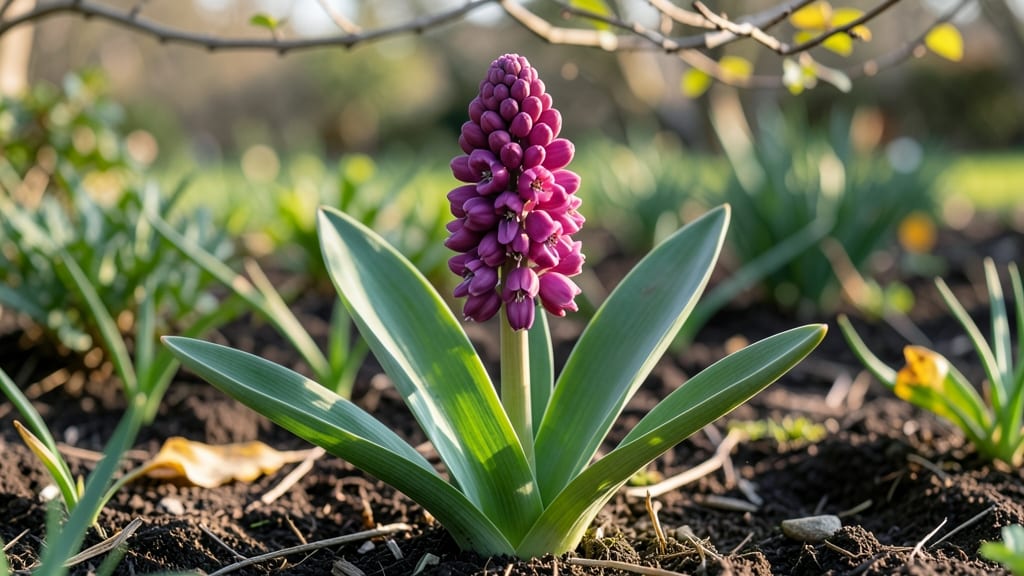
Hyacinths are perennials that regrow each spring from the same bulb after their above-ground foliage dies back in winter, making them cold-hardy plants for USDA zones 3 through 8 with proper winter protection.
This means their annual dormancy isn't a sign of death—it's a survival strategy. 🌱 During winter, hyacinth bulbs store energy underground, then burst back to life when temperatures rise. Their resilience comes from deep roots that anchor them through frost, while well-drained soil prevents rot.
Many gardeners mistakenly think they need replanting every year, but with the right care, these bulbs can thrive for decades in your garden.
What sets hyacinths apart is their ability to rebloom year after year without replanting, provided they get consistent winter care. I've seen bulbs in my own garden return stronger each spring after proper mulching—just don't forget to fertilize them in early spring to jumpstart their growth cycle.
💡 In This Article
- Hyacinths’ Perennial Life Cycle and Cold Hardiness
- Year-Round Care for Hyacinths: Planting, Mulching, and Revival Tips
Hyacinths’ perennial life cycle and cold hardiness
The hyacinth's perennial nature hinges on its bulb's ability to store energy like a biological battery. During summer, the bulb absorbs nutrients through its foliage, converting them into starches that fuel its winter survival.
This process, called carbohydrate storage, allows the bulb to withstand temperatures as low as -20°F in USDA zone 3, where the ground freezes solid. The outer bulb layers act as insulation, protecting the growth center inside—similar to how an onion's papery skin shields its core. 🌡️
Bulb depth plays a critical role in winter survival. Planting hyacinths 6-8 inches deep ensures they sit below the frost line, where soil temperatures remain stable around 32-40°F even during harsh winters.
Shallower planting (4 inches) risks frost heave—when soil expands and contracts, pushing bulbs closer to the surface where they can freeze.
In my zone 5 garden, I've noticed bulbs planted at 7 inches consistently return stronger than those at 5 inches, with thicker stems and more blooms the following spring.
What makes hyacinths uniquely resilient is their dormancy mechanism. Unlike annuals that complete their life cycle in one season, hyacinths enter a state of suspended animation where metabolic activity slows to 1-5% of normal rates.
This conserves energy while allowing the bulb to repair any frost damage once temperatures rise. The key trigger for revival is consistent soil moisture at 50°F or above, which signals the bulb to break dormancy and send up shoots. 🌱
USDA zones 3-8 represent hyacinths' natural range because these areas provide the right balance of cold winters (to trigger dormancy) and warm summers (for energy storage). Zone 9 and above pose challenges because winter temperatures rarely drop enough to fully reset the bulb's growth cycle, sometimes leading to weaker reblooms.
In warmer climates, gardeners often mimic dormancy by lifting bulbs and storing them in 40-50°F conditions for 8-10 weeks before replanting.
One fascinating adaptation is hyacinths' ability to produce antifreeze proteins during cold snaps. These proteins bind to ice crystals, preventing them from growing large enough to rupture cell walls—a survival trick shared with other cold-hardy plants like crocuses.
This biological defense explains why hyacinths can survive 3-4 months of sub-freezing temperatures without visible damage, emerging unscathed when spring arrives. 🧊
Gardeners often ask whether hyacinths' annual dieback signals death, but the truth is more about timing than failure. The above-ground foliage withers because it's no longer needed for photosynthesis once the bulb has stored enough energy.
Think of it like a tree shedding leaves in autumn—it's a natural part of the cycle. The real test of a hyacinth's health is what happens underground, where the bulb continues its slow, steady preparation for next year's bloom. 🌿