
Plants
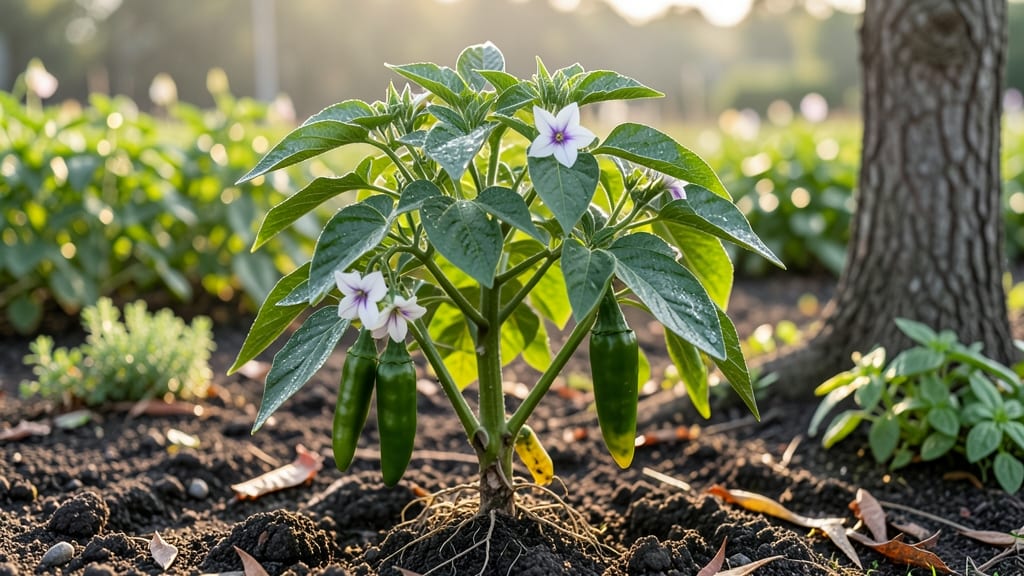
Jalapeño plants aren't naturally perennial but can grow back reliably for multiple years in frost-free zones (USDA 9-11) with proper care. In colder regions, they die back each winter but often regrow from their roots if protected. Successful overwintering depends on techniques like mulching or container relocation.
Jalapeños are technically annual plants—meaning they complete their life cycle in one growing season—but they often behave like perennials in warm climates. 🌱 The key difference lies in their response to temperature: in frost-free zones (like Southern California or Florida), they keep growing continuously, producing peppers year-round.
Even in cooler areas, their roots can survive winter if insulated properly, allowing them to regrow in spring. This "perennial-like" behavior is why many gardeners treat them as long-term crops rather than seasonal plants.
In colder climates (USDA zones 1-8), jalapeños need extra care to survive winter. Mulching with straw or leaves adds insulation, while container growing lets you move plants indoors during freezes.
The secret to multi-year harvests? Protecting the roots—whether through ground cover or relocation—so the plant can bounce back stronger each season.
💡 In This Article
- Why Jalapeño Plants Act Like Perennials in Warm Climates
- How to Overwinter Jalapeños in Cold Climates
Why jalapeño plants act like perennials in warm climates
Jalapeños belong to the Capsicum annuum species, which are technically annuals—meaning they complete their life cycle in one season. However, in frost-free zones like USDA 9-11, they behave like perennials because their growth isn't interrupted by cold.
The plant's roots and lower stems remain active year-round, continuously producing new shoots and flowers. This happens because the plant never enters true dormancy, which is triggered by temperatures below 40°F.
The key botanical reason is their tropical origin. Jalapeños evolved in Mexico's warm climates where frost never occurs, so their biology is adapted to continuous growth. In these zones, a mature jalapeño plant can produce peppers for 12-18 months without needing to restart from seed.
The plant's energy focuses on vegetative growth rather than seed production, which is why it keeps flowering and fruiting continuously. 🌿
Temperature control is everything. When nighttime temperatures stay above 55°F, jalapeños maintain active growth. Below this threshold, their metabolism slows, and they may stop producing peppers.
In warmer climates, gardeners often see plants reaching 3-5 feet tall over multiple years, with some even living for 5+ years if conditions remain ideal. This is why many Southern gardeners treat them as permanent fixtures in their landscapes.
There's a trade-off though: while they keep producing, the pepper quality can decline over time. Older plants may yield smaller, less pungent jalapeños because their energy shifts toward maintaining their extensive root systems rather than fruit production.
This is why many commercial growers reset their plants every 2-3 years to maintain peak quality.
Another fascinating aspect is their root system. Jalapeños develop deep, fibrous roots that spread 2-3 feet wide in ideal conditions. These roots store energy and water, allowing the plant to recover quickly from pruning or minor damage.
In frost-free zones, this stored energy lets them bounce back from seasonal challenges without needing to regenerate from seed each year.
What most gardeners don't realize is how light affects this behavior. Jalapeños need 6-8 hours of sunlight daily to maintain continuous production. In shorter-day winter months, even in warm climates, production may slow unless supplemented with grow lights.
This is why indoor growing becomes popular in tropical zones—it extends the growing season artificially.