
Flowers
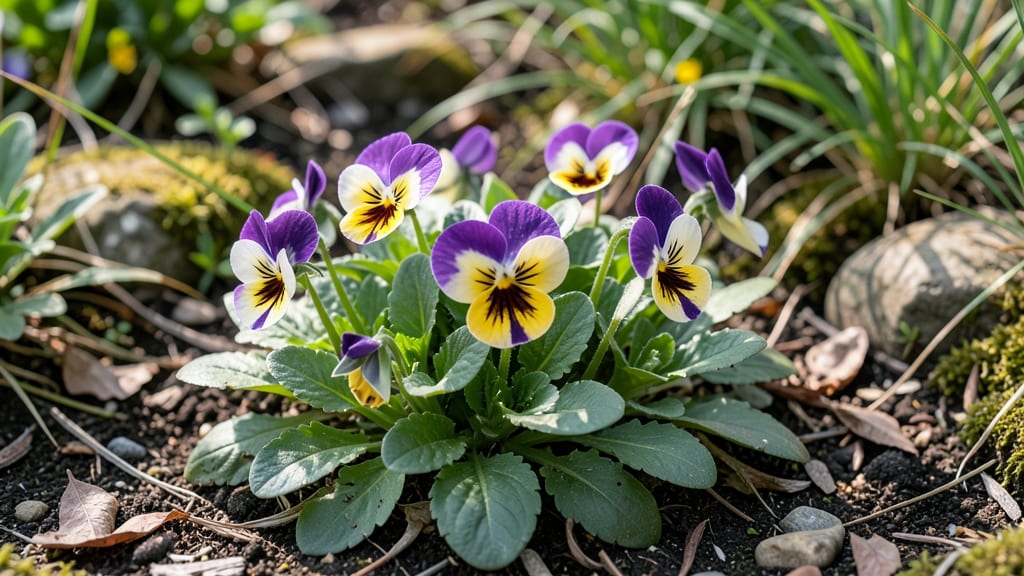
Johnny Jump-Ups behave like perennials in frost-free zones but aren't true perennials in most climates, dying back annually before regrowing from seed or roots when conditions are ideal.
Johnny Jump-Ups are often mistaken for true perennials because they return year after year, but their survival depends on climate. 🌱 In colder regions, they act like annuals, completing their life cycle in one season, while in warmer areas, their roots or self-seeding habits keep them blooming for multiple years.
This makes them what botanists call "short-lived perennials" or "tender perennials"—they thrive where winters are mild but struggle in freezing conditions.
What sets them apart from plants like violets (true perennials) is their inability to withstand harsh winters. Their foliage dies back completely each year, but with proper care—like mulching and choosing the right location—they'll bounce back stronger.
This cycle explains why gardeners in Zone 7 and above often see them return more vigorously than those in colder zones.
💡 In This Article
- Johnny Jump-Up Life Cycle: Why They Die Back Each Year
- How to Extend Johnny Jump-Up Blooms Year After Year
Johnny Jump-up life cycle: why they die back each year
The annual dieback of Johnny Jump-Ups (Viola tricolor) is triggered by cold temperatures, which force them into dormancy. Unlike true perennials like violets (Viola odorata), which maintain foliage year-round, Johnny Jump-Ups enter a survival state when nighttime temperatures drop below 40°F.
Their above-ground growth yellows and withers, but the root system remains alive, storing energy for next season’s regrowth. This process is called vernalization, a cold-induced dormancy that prepares plants for spring revival.
In frost-free zones (USDA Zones 8-10), Johnny Jump-Ups often survive winters as tender perennials, regrowing from their roots or self-seeding prolifically. Their fibrous root system can extend up to 6-12 inches deep, allowing them to access moisture during dry spells.
In colder climates (Zones 3-7), however, the roots may not survive freezing ground, forcing them to rely entirely on self-seeding—dropping thousands of seeds that germinate in spring. This explains why they’re classified as annuals in northern gardens but perennials in warmer regions.
The key difference from true perennials lies in their cold tolerance. Violets, for example, can withstand -10°F winters, while Johnny Jump-Ups typically tolerate only 20-25°F before damage occurs. Their leaves also lack the waxy coating of hardy perennials, making them more susceptible to frost.
This is why gardeners in Zone 7 often see them return year after year, while those in Zone 5 may need to replant annually unless they’ve established a dense seed bank.
What most gardeners don’t realize is how their seed production strategy compensates for their tender nature. A single Johnny Jump-Up plant can release 5,000-10,000 seeds in one season, ensuring new plants emerge even if the parent dies back.
This self-sowing habit is their secret weapon for persistence—far more reliable than root survival in marginal climates. The trade-off? Their blooms may appear less uniform if seeds pop up unpredictably across the garden.
Another fascinating detail is their photoperiod response. Johnny Jump-Ups detect shortening daylight in fall, which triggers flower production and seed set before winter. This ensures their reproductive cycle aligns with optimal germination conditions in spring.
In contrast, true perennials like hostas focus on storing energy in roots rather than seeding. This dual strategy—both root survival and prolific seeding—explains why Johnny Jump-Ups can outlast many annuals while still being classified as tender perennials.
For gardeners in transitional zones (like Zone 6-7), the solution often lies in mulching. A thick layer of straw or leaves (3-4 inches) can protect roots from freeze-thaw cycles, allowing them to persist for multiple years.
Without this protection, their roots may heave out of the soil during winter, leading to permanent die-off. This is why many gardeners in colder areas treat them as annuals—they simply can’t guarantee winter survival without extra care.
Understanding this life cycle helps explain why Johnny Jump-Ups seem to "come back from nowhere" each spring. Their ability to thrive through both root regrowth and self-seeding makes them one of the most resilient yet misunderstood garden plants.
The key to their success? Adaptability—whether through roots, seeds, or both, depending on the climate. 🌿