
Flowers
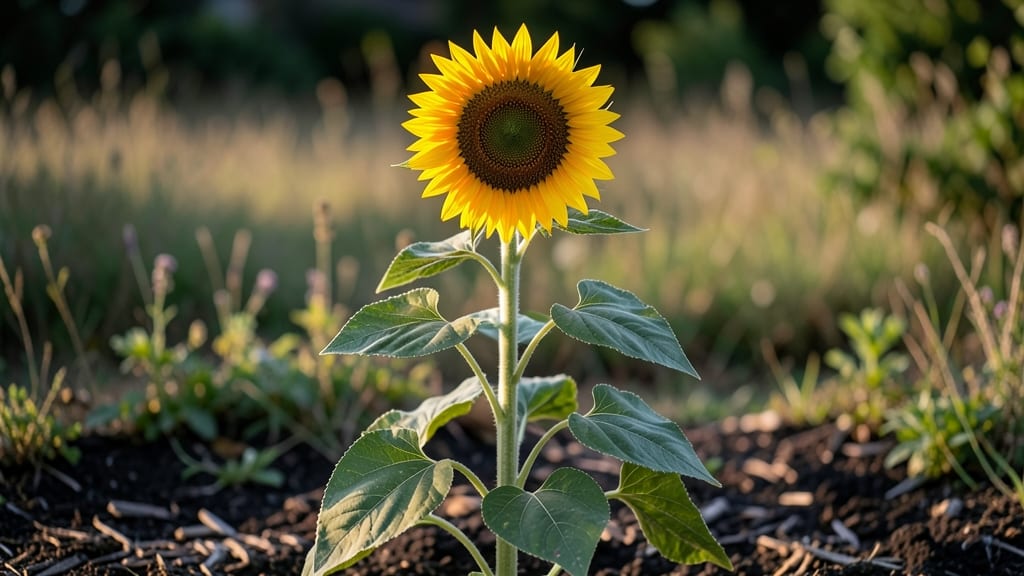
Mammoth sunflowers are NOT perennials—they grow as hardy annuals that complete their lifecycle in one season but often self-seed prolifically in warm climates, creating natural returns year after year. Unlike true perennials, they lack the root system to regrow annually from the same plant.
Mammoth sunflowers thrive as annuals because their deep taproots store energy for one season only. 🌱 In colder zones, they'll die back completely after blooming, but in mild climates (zones 5-9), dropped seeds often germinate the following spring.
This self-seeding habit creates the illusion of perennial behavior, but it's not true regrowth from the same plant.
True perennials like Helianthus species develop fibrous root systems that survive winter, allowing them to sprout new growth each year. Mammoth sunflowers, however, rely on seed propagation—meaning their "perennial" presence depends entirely on successful seed germination rather than persistent roots.
💡 In This Article
- Why Mammoth Sunflowers Die Back Every Year
- How to Grow Mammoth Sunflowers Like a Perennial
Why mammoth sunflowers die back every year
The key difference lies in their root structure: mammoth sunflowers (Helianthus annuus giant varieties) develop a single, deep taproot that stores energy for one growing season only.
Unlike true perennials, this root system lacks the fibrous, branching network that allows plants like Helianthus maximiliani (maximilian sunflower) to regenerate each spring. The taproot's energy reserves deplete after flowering, leaving nothing to sustain the plant through winter's frost.
Frost sensitivity plays a major role—mammoth sunflowers typically thrive in zones 4-9 but struggle to survive winter temperatures below 20°F. Their above-ground growth dies back completely, and without a persistent root system, the entire plant collapses.
True perennial sunflowers, however, develop crowns or rhizomes that remain dormant underground, ready to sprout new shoots when temperatures rise. 🌱 This biological difference explains why mammoth varieties never regrow from the same plant.
The energy storage limitation is critical: mammoth sunflowers allocate most of their resources to rapid vertical growth (reaching 10-14 feet tall) and massive flower production rather than root development.
Their seeds contain all the genetic material needed for next year's growth, but this relies on successful germination rather than plant survival. This is why they're classified as annuals despite their impressive stature.
Comparing to true perennials like Helianthus species reveals another key difference: perennial sunflowers invest in underground storage organs that can withstand -20°F to -30°F temperatures. Their roots remain viable through winter, allowing them to produce new stems annually.
Mammoth sunflowers simply don't have this biological adaptation—their entire lifecycle depends on completing growth, flowering, and seed production within one season.
What most gardeners don't realize is that even in mild climates (zones 8-9), mammoth sunflowers won't regrow from the same root—they'll only return if seeds survive winter and find suitable conditions. This self-seeding behavior creates the illusion of perennial behavior, but it's fundamentally different from true perennial growth patterns. 💫
The botanical distinction matters because it affects how you should care for these plants. While true perennials benefit from winter mulching and root protection, mammoth sunflowers require completely different strategies—focused on seed propagation rather than plant preservation.
This understanding helps explain why they never establish as true perennials, no matter how impressive their first-year growth appears.