
Plants
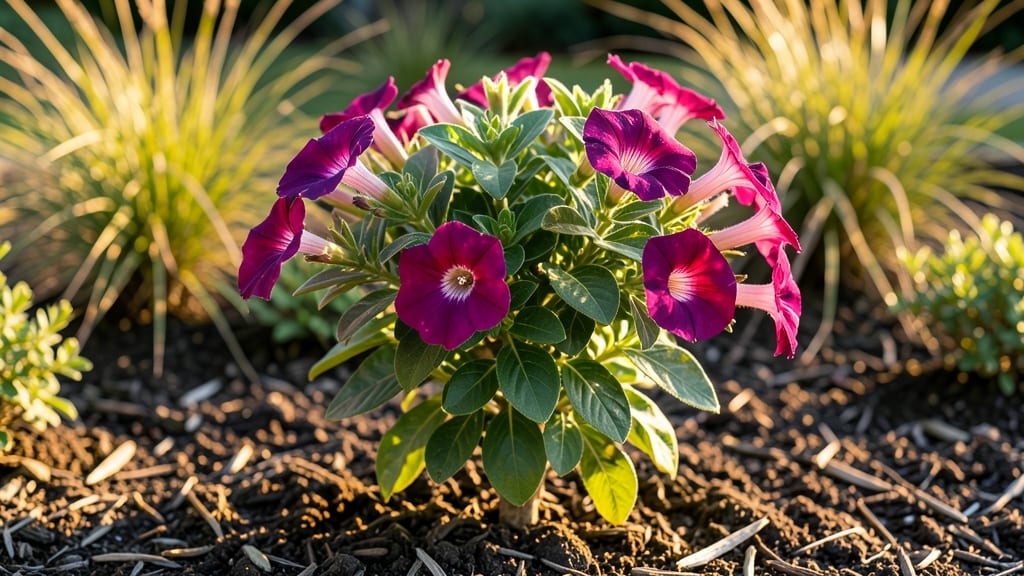
Mexican petunias are not true perennials in most climates, dying back to the ground in cold zones but often returning from roots if winters are mild. In frost-free regions, they thrive year-round as self-seeding ground covers.
Mexican petunias act like seasonal perennials in many areas—their above-ground growth freezes back, but their roots often survive to regrow in spring. 🌱 This behavior makes them more like tender perennials than true hardy ones, similar to how tropical plants respond to cold snaps.
Their ability to self-seed in warm climates means they'll often bounce back even if you don't actively replant each year, creating natural ground cover over time.
What sets them apart from traditional petunias is their tropical origin—Mexican petunias can't tolerate frost like USDA Zone 7+ plants, which is why gardeners in colder regions treat them as annuals or use protective measures.
The key to their survival lies in those stubborn roots, which can lie dormant through winter if protected from extreme cold.
💡 In This Article
- Why Mexican Petunias Die Back in Cold Climates
- Extending Mexican Petunia Growth in Cold Zones
Why Mexican petunias die back in cold climates
Mexican petunias (Ruellia brittoniana) originate from tropical and subtropical regions of Mexico and Central America, where temperatures rarely drop below 40°F. Their root systems are tender and lack the protective adaptations of true perennials like hardy geraniums, which can survive -10°F winters.
When exposed to frost, the above-ground growth freezes and turns black within hours, but the roots often remain viable if protected.
The key mechanism is their dormancy response—similar to how tropical plants survive dry seasons. Their roots contain stored carbohydrates that allow them to regrow once temperatures rise above 50°F.
However, prolonged exposure to 20°F or below can kill even the roots, which is why they're classified as Zone 9-11 plants by the USDA. This makes them behave like annuals in zones colder than 8, where winter dieback is inevitable without protection.
What's fascinating is their self-seeding strategy—when they die back, the seeds they've already dropped often germinate in spring, creating dense ground cover. This explains why they seem to "come back" in mild winters, even if you didn't plant them.
The trade-off? Their tropical nature means they can't compete with hardy perennials in cold climates, where plants like creeping thyme or ajuga thrive year-round.
For comparison, traditional garden petunias (Petunia × hybrida) are also not true perennials in most US zones, but they're slightly more cold-tolerant (Zone 10), while Mexican petunias push the tropical limit even further.
Their bright purple-blue flowers and succulent-like foliage make them stunning, but this tropical beauty comes with cold sensitivity as their price.
The botanical term for this behavior is "tender perennial"—they're not annuals because they can persist through mild winters, but they're not true perennials because they can't survive freezing temperatures.
This explains why gardeners in Zone 7 might get one year of growth before winter kills them, while those in Zone 10+ enjoy them as self-sustaining ground covers.
What most gardeners don't realize is that even in colder zones, the roots can sometimes survive if they're protected by 6+ inches of mulch or planted in containers that can be moved indoors.
This creates a gray area where they act like "semi-perennials"—not dying completely but requiring extra care to persist.