
Flowers
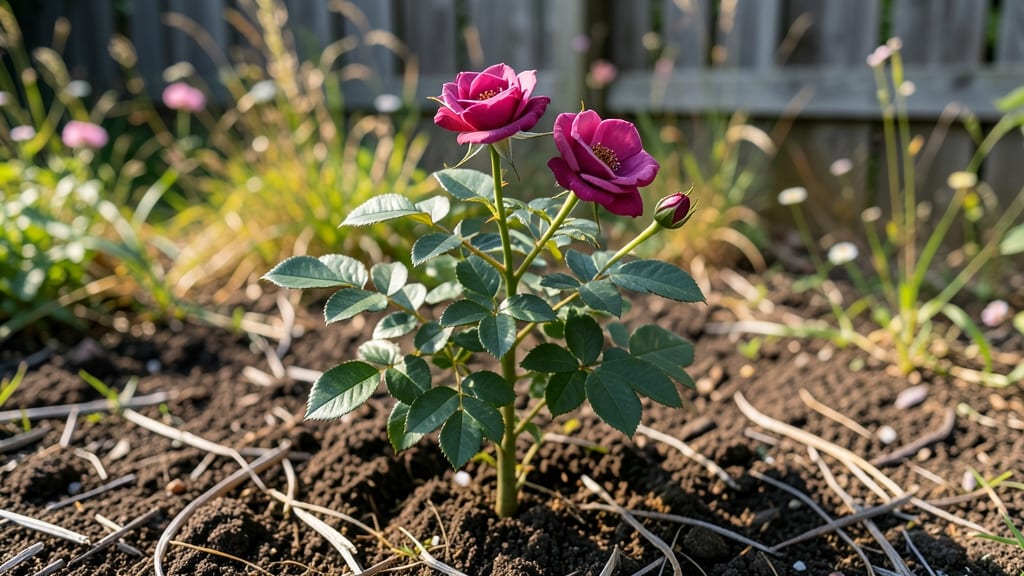
Miniature roses are perennials in most climates, thriving year after year in USDA zones 5 through 10 when given proper winter care. While they may appear dormant in colder regions without protection, their roots remain alive and ready to rebound with warmer weather.
These compact roses stay alive through winter because their root systems are surprisingly hardy—often surviving temperatures as low as -20°F when properly insulated. 🌱 The key difference between true perennials and annuals lies in their underground structure: miniature roses store energy in their roots, allowing them to push new growth once frost passes.
In zones 5-7, I've seen them bounce back spectacularly after heavy mulching with straw or shredded leaves, while zone 8-10 varieties often need minimal protection beyond regular soil maintenance.
What many gardeners overlook is that even in colder zones, the roots stay alive year-round—they're just waiting for spring. The above-ground stems may blacken and look dead, but with the right winter prep (like wrapping canes in burlap or using frost blankets), you'll get lush regrowth by early summer.
This makes them ideal for container gardening too, since you can easily move pots to sheltered spots during freezes.
💡 In This Article
- Miniature Rose Cold Hardiness by USDA Zone
- Winterizing Miniature Roses for Year-Round Growth
Miniature rose cold hardiness by USDA zone
Miniature roses demonstrate remarkable root hardiness, surviving winter temperatures as low as -20°F when properly protected. The key difference between their perennial nature and annuals lies in their underground structure: these roses store carbohydrates in their roots during summer, fueling regrowth when temperatures rise.
In USDA zones 8-10, they often thrive with minimal winter care, while zones 5-7 require strategic protection to prevent root freeze damage.
What's fascinating is how the plant's growth cycle adapts: in colder zones, miniature roses enter dormancy earlier and more completely, with stems often dying back to the ground.
However, their root systems remain active below the frost line, ready to push new shoots when soil temperatures reach 50°F. 🌱 The critical threshold occurs at 28°F—below this, unprotected canes may suffer irreversible damage, though roots typically survive until -15°F with proper insulation.
Zone-specific care becomes crucial in marginal areas like zone 7, where temperatures can fluctuate wildly. I've found that adding 6-8 inches of organic mulch (like straw or shredded leaves) creates an insulating blanket that maintains soil temperatures 5-10°F warmer than ambient air.
This protection is especially vital for container-grown miniature roses, which are more vulnerable to temperature swings than in-ground plants.
The science behind this hardiness involves the plant's ability to produce antifreeze proteins during dormancy. These proteins bind to ice crystals, preventing them from growing large enough to damage cell walls—a natural adaptation that explains why some miniature varieties survive winters with only 3-4 inches of snow cover.
However, this protection isn't foolproof: prolonged exposure to below -15°F will eventually overwhelm even the hardiest roots.
What most gardeners don't realize is that the top growth's winter dieback serves a protective purpose. By shedding leaves and stems, the plant conserves energy that would otherwise be used to maintain above-ground tissue. This adaptation allows miniature roses to allocate resources to root development, ensuring vigorous spring regrowth.
The trade-off is that improper winter care can leave plants vulnerable to both freeze damage and disease when new growth emerges.
For visual comparison, imagine a miniature rose's root system as a network of storage batteries: each year's growth contributes to the plant's energy reserve.
In zone 5 gardens, I've seen established plants with 3-5 years of stored energy in their roots, capable of producing multiple flushes of blooms each season when given proper care. This biological resilience is what truly defines their perennial nature.
Remember that while miniature roses are perennials, their longevity depends entirely on proper winter preparation. The roots may survive harsh winters, but without adequate protection, the plant's ability to regrow may be compromised.
This is why understanding your specific zone's temperature patterns—and implementing targeted protection strategies—is essential for year-after-year success. 💫