
Plants
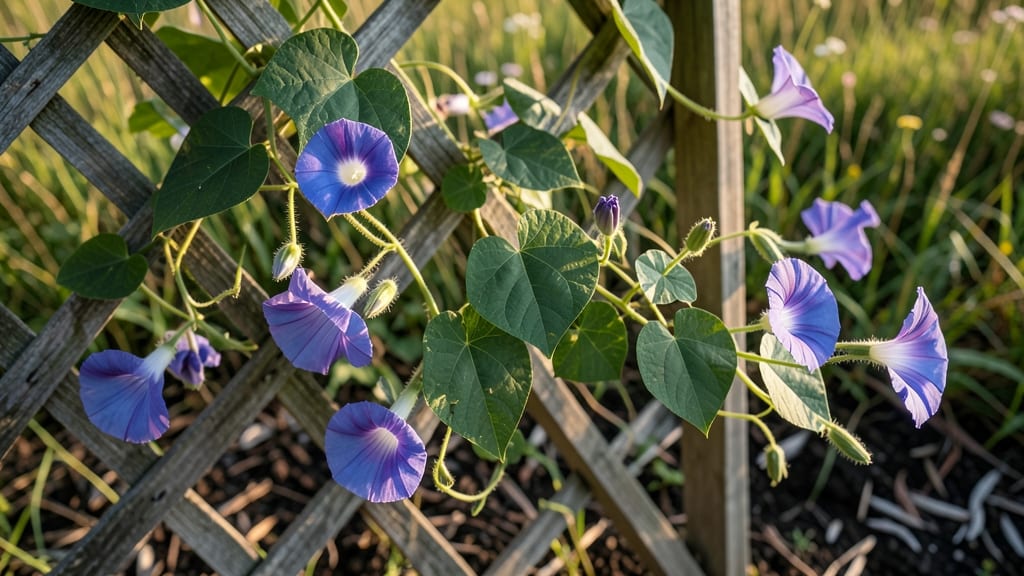
Morning glory plants are not perennial in most climates—they die back after frost and regrow from seeds each spring. Only in USDA Zones 10-12 do they survive winter as tender perennials, thriving in mild, frost-free conditions year-round.
Morning glories are annuals in most regions because their delicate vines and shallow roots can't withstand freezing temperatures. 🌱 When frost hits, the entire plant—leaves, stems, and even underground parts—turns crispy and dies.
However, in warmer climates like Florida or Southern California, these plants naturally persist year-round because they never experience hard freezes. The key difference lies in their growth habits: true perennials like hostas regrow from established root systems, while morning glories rely entirely on fresh seeds each season.
If you love morning glories but live in a colder zone, don't despair! Many gardeners successfully grow them as annuals while saving seeds from the previous year's plants. For those in marginal zones (like Zone 9), you might get away with overwintering tubers in protected containers.
The secret lies in understanding your microclimate—even a few degrees of extra warmth can make all the difference between losing your plants and enjoying them for another season.
💡 In This Article
- Why Morning Glory Dies in Cold Climates
- How to Grow Morning Glory Year-Round in Cold Zones
Why morning glory dies in cold climates
Morning glory plants—specifically species like Ipomoea purpurea—lack the cold-resistant mechanisms found in true perennials. Their shallow fibrous roots and tender vines can't survive temperatures below 28°F, which triggers cellular damage through ice crystal formation.
Unlike hardy perennials such as clematis or wisteria, morning glories don't develop specialized underground storage organs like rhizomes or true tubers to store energy for regrowth. Instead, they rely on annual seed germination, which halts when soil temperatures drop below 50°F.
The freezing process itself is the primary killer: water inside plant cells expands as it crystallizes, rupturing cell walls and disrupting nutrient transport.
You'll notice the first signs of distress when leaves turn brown and crispy, followed by blackened stems—this is the plant's irreversible response to frost. 🌱 What makes this worse is that morning glories don't enter true dormancy like bulbs do; they simply shut down completely, leaving no living tissue to regenerate in spring.
Even the roots, which might seem sturdy, often die back entirely in sub-freezing conditions.
Comparing morning glory to true perennials reveals the key difference: hardy plants like hostas or peonies store carbohydrates in thickened roots or tubers that remain viable through winter. These structures can withstand -20°F to -30°F temperatures because they contain antifreeze proteins that prevent ice formation.
Morning glories, however, have evolved for warm climates where frost is rare—making them biological annuals by default. Their entire life cycle is geared toward rapid growth and seed production before the first cold snap arrives.
Another critical factor is their growth rate: morning glories mature in just 60-90 days, leaving little time for root development if planted late in the season. This contrasts with perennials that allocate resources to underground storage over months. The result?
When frost hits, morning glories are often still in their early growth stages, with minimal energy reserves to survive. 💫 This biological trade-off explains why they thrive as annuals in temperate zones but struggle to persist through winter.
Interestingly, some morning glory varieties—particularly those from tropical regions—do produce small tubers, but these are typically 1-2 inches in diameter and contain only enough energy for limited regrowth.
These tubers rarely survive more than one freeze-thaw cycle, which is why gardeners in marginal zones must take active measures to protect them. The contrast with true perennials couldn't be more stark: a peony tuber might weigh several pounds and contain years' worth of stored energy.
Understanding this botanical limitation helps explain why morning glories perform so differently across climates. In USDA Zone 10, where winters rarely drop below 30°F, they behave like perennials because the plants never experience true dormancy-inducing cold.
But in Zone 5 or colder, their annual habit becomes an evolutionary necessity for survival. 🌿 This biological reality shapes every gardening decision, from planting timing to winter protection strategies.