
Vegetables
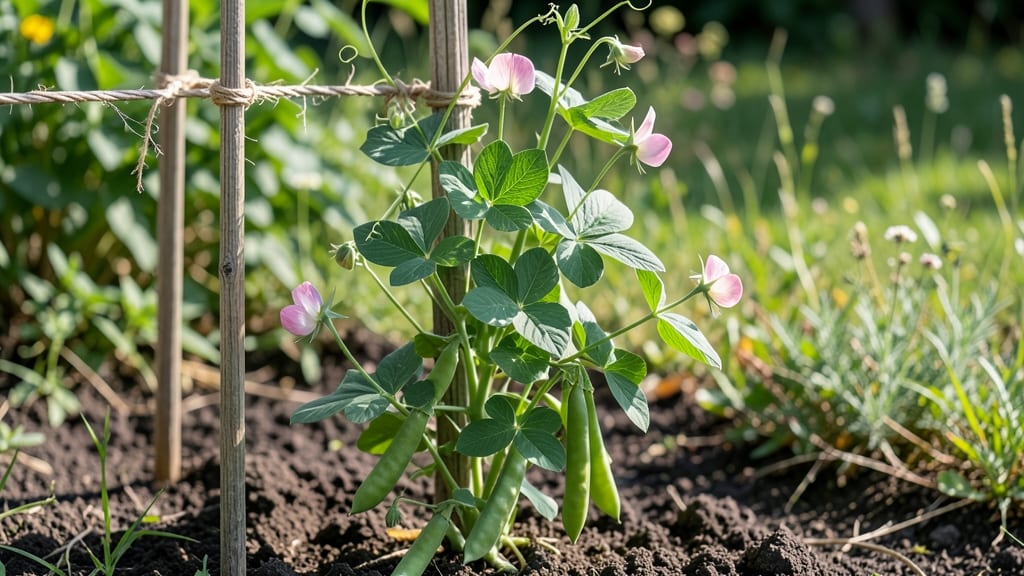
Peas are not perennial—they are cool-season annuals that complete their life cycle in one growing season. However, some varieties can overwinter in mild climates or regrow from roots if conditions stay cold, creating a semi-perennial effect in certain regions.
Peas thrive as annuals because their energy focuses entirely on producing seeds rather than maintaining roots or stems year-round. 🌱 This means once they finish flowering and setting pods, the plants naturally die back.
However, in regions with mild winters—like parts of California or the Pacific Northwest—certain hardy varieties can survive frost and even produce a second harvest the following spring.
What sets peas apart from true perennials like asparagus is their growth habit: they prioritize reproduction over longevity. While they won’t come back reliably every year like perennials, their ability to regrow in favorable conditions makes them feel almost perennial in practice.
For gardeners, this means planning for annual replanting but also taking advantage of their cold tolerance for extended harvests.
💡 In This Article
- Why Peas Die Back After Harvesting
- How to Extend Pea Harvests Like a Perennial
Why peas die back after harvesting
The key reason peas behave like annuals lies in their determinate growth habit, meaning they allocate nearly all their energy to seed production rather than maintaining long-term structures. Once the plant reaches maturity—typically 60-90 days after sowing—it shifts focus from leaf and stem growth to developing pods.
This energy redirection causes the plant to senesce (age and die back) after harvesting, as its primary goal is completed.
Botanically, this differs from true perennials like asparagus or rhubarb, which invest energy in underground storage organs (rhizomes, tubers) to survive winter. Peas, however, lack these structures—their roots are shallow and fibrous, designed to absorb nutrients quickly rather than store them.
When temperatures drop below 25°F, their cells rupture, and the plant dies entirely. 🌱 The only exception occurs in mild climates where some varieties survive frost and regrow from residual roots.
Temperature triggers this cycle: peas germinate best at 40-75°F but struggle above 80°F, which is why they thrive in cool seasons. Their life cycle is tightly linked to daylight hours—longer days signal flowering, while shorter days prepare them for dormancy.
This contrasts with perennials, which enter dormancy based on internal clocks rather than external cues.
Another factor is their short lifespan: most varieties complete their cycle in 2-3 months, after which the plant’s energy reserves are depleted. Unlike perennials that store nutrients in roots or crowns, peas have no mechanism to "bank" resources for future growth.
This is why they’re classified as annuals—even if they can regrow in some conditions, they don’t do so reliably like true perennials.
For comparison, consider asparagus: it takes 2-3 years to establish its crown, which stores energy year-round. Peas, however, prioritize speed—growing fast to produce seeds before competitors (like weeds) outcompete them. This "live fast, die young" strategy is why they’re annuals, not perennials. 🌿
What’s fascinating is how some varieties (like Lincoln or Sugar Snap) can cheat this system: their roots may survive winter in protected microclimates, allowing regrowth when temperatures rise again. But this isn’t true perennialism—it’s a temporary survival tactic, not a built-in life cycle like rhubarb’s.