
Flowers
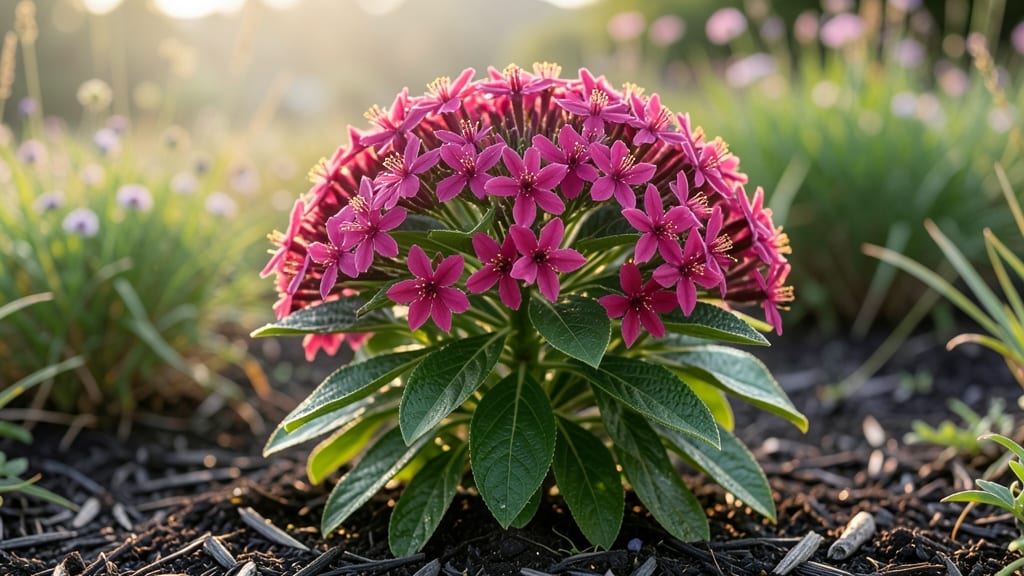
Pentas aren't true perennials in most regions—they die back each winter but regrow from roots or self-seed in spring. Their survival depends on winter temperatures and soil, acting like tender perennials in cooler areas.
Pentas thrive in warm climates but struggle with freezing temperatures, which is why they lose their foliage annually. 🌱 Their root systems remain dormant underground until spring warmth triggers regrowth, making them behave more like tender perennials than hardy ones.
This dieback is actually part of their natural survival strategy, especially in zones with mild winters where they can recover quickly.
What sets pentas apart is their ability to self-seed, which means you might see new plants popping up in spring even if you didn't intentionally plant them. This trait makes them feel more perennial-like in gardens, though their cold sensitivity remains their biggest limiting factor.
For gardeners in cooler climates, understanding this cycle is key to keeping your pentas blooming year after year.
💡 In This Article
- Why Pentas Die Back in Winter and How They Regrow
- Extending Penta Blooms: Year-Round Care Tips for Cold Climates
Why pentas die back in winter and how they regrow
Pentas originate from tropical and subtropical regions of Africa, where temperatures rarely drop below 50°F—this explains their sensitivity to cold. When nighttime temperatures fall below 40°F, the plant's foliage begins to yellow and die back as a protective response.
This isn't a sign of death but rather a survival mechanism called dormancy, where the plant conserves energy in its root system until conditions improve. Think of it like a bear hibernating—both organisms slow down their metabolic processes to endure harsh conditions.
The root system of pentas is surprisingly resilient, capable of surviving temperatures as low as 20°F for short periods, though prolonged exposure to freezing ground can damage them. What's fascinating is how these roots store carbohydrates during the growing season, which fuel regrowth when spring warmth returns.
In ideal conditions, you'll see new shoots emerging within 2-4 weeks of consistent temperatures above 55°F. The speed of regrowth depends heavily on soil moisture and sunlight exposure during this critical period.
Here's what's actually happening at the cellular level: cold temperatures trigger the production of abscisic acid, a plant hormone that signals the plant to shed leaves and redirect resources to roots. This hormone also helps the plant enter a state of physiological dormancy, where growth processes halt temporarily.
Meanwhile, the root system maintains a minimal level of activity, ready to spring back to life when temperatures rise. This dual survival strategy explains why pentas can bounce back so vigorously each spring.
For gardeners in cooler climates, understanding this cycle is crucial for maintaining healthy pentas. The plant's ability to regrow from roots means it's not a complete loss when it dies back—it's simply resting.
However, the key to successful overwintering lies in protecting those roots from extreme cold and ensuring they receive adequate moisture during dormancy. Without proper care, the roots can weaken, leading to slower or weaker regrowth in spring.
Consider this comparison: in USDA Zone 9 (where winters rarely drop below 20°F), pentas often act like true perennials, returning reliably each year. But in Zone 7 (where winters can drop to 0°F), they behave more like annuals unless given special protection.
This zone difference highlights how much pentas' behavior depends on their environment rather than an inherent classification as perennials or annuals.
One common misconception is that pentas won't return if they die back completely. In reality, their root systems can remain viable for 1-2 years even without visible growth, waiting for the right conditions.
This is why you might see unexpected pentas popping up in your garden after a particularly cold winter—the roots were still alive, ready to take advantage of warmer spring temperatures. 🌱