
Orchid Care
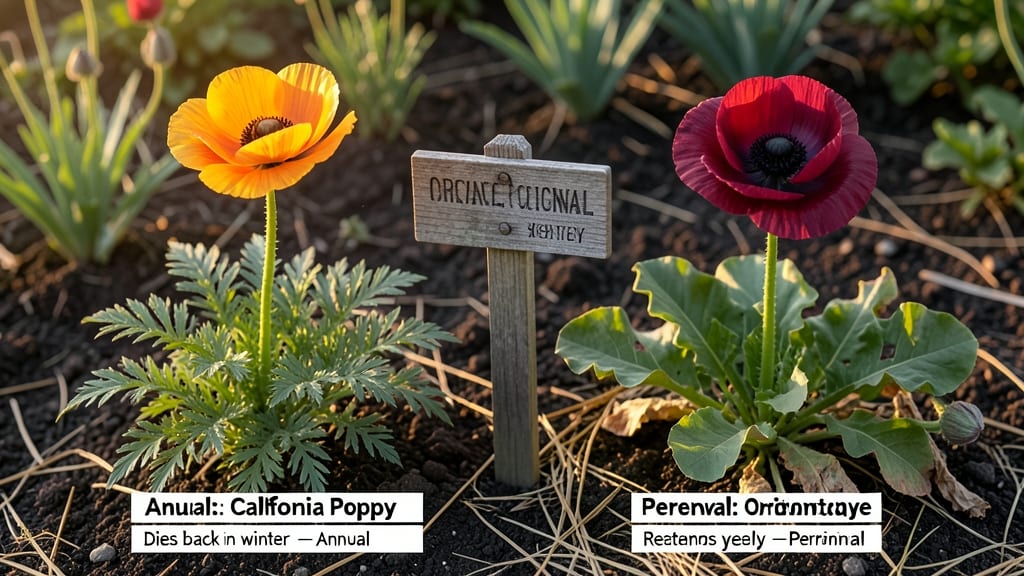
Poppies are annuals in most regions, completing their life cycle in one season, though some species like the Iceland poppy or California poppy behave as short-lived perennials or biennials depending on climate and care. Their dramatic dieback often misleads gardeners into thinking they’re perennials.
Most poppies you'll encounter in gardens—like the classic opium poppy (Papaver somniferum)—are true annuals, meaning they sprout, bloom, and die within a single growing season. 🌱 The confusion arises because some species, such as the hardy Iceland poppy (Papaver nudicaule), can survive multiple years in cooler climates, returning with fresh foliage if conditions are right.
This "perennial-like" behavior tricks gardeners into assuming all poppies behave the same way, but the reality is far more nuanced.
What sets these plants apart is their seed-saving strategy: many poppies self-sow prolifically, creating the illusion of perennial growth when their offspring simply take over the space.
In warmer regions, even biennial varieties like the California poppy (Eschscholzia californica) may only live two years, while in colder zones, they might persist for several seasons. The key takeaway? Don't assume—check your specific poppy species and local climate before planning your garden layout.
💡 In This Article
- How Poppy Life Cycles Vary by Species and Climate
- Growing Poppies Like a Pro: When and How to Plant for Maximum Blooms
How poppy life cycles vary by species and climate
The life cycle of poppies hinges on their species and environmental triggers. True annuals like the opium poppy (Papaver somniferum) complete their entire life cycle—from seed to bloom to seed production—in just 90-120 days.
Their roots store minimal energy, so once they've produced seeds, the plant's energy reserves deplete, and it dies back completely. This is why they vanish after one season, leaving only their seeds behind.
In contrast, short-lived perennials like the Iceland poppy (Papaver nudicaule) develop a more robust root system that can persist for 2-5 years in cooler climates. These species enter dormancy during harsh winters, only to regrow from their roots when temperatures rise above 50°F in spring.
The California poppy (Eschscholzia californica) follows a biennial pattern in many regions: it grows leaves the first year, blooms the second, and then dies—but in mild winters, it may skip the second year entirely and bloom annually.
Climate plays a critical role in this behavior. Poppies in USDA Zones 3-5 often exhibit perennial-like tendencies, while those in Zones 7-9 typically behave as annuals due to heat stress. Rainfall matters too: drought conditions can trigger premature seed production, cutting the plant's life short.
Even soil type affects longevity—poppies thrive in well-draining, slightly alkaline soils (pH 6.0-7.5), while heavy or waterlogged soils accelerate their decline.
Here's what's actually happening at the cellular level: Poppies produce ethylene gas as they age, which signals the plant to senesce (die back) once reproductive goals are met. In perennial species, this process is delayed until after seed production, allowing the root system to store energy for future growth.
Annuals, however, prioritize seed dispersal over root storage, leading to their complete collapse after flowering.
This explains why your garden might look empty after poppies bloom—it's not failure, but their natural survival strategy. The seeds they drop often germinate the following season, creating the illusion of perennial regrowth.
For example, California poppies can self-seed so aggressively that they form dense ground covers, making them seem perennial when they're actually annuals with prolific seed production.
Consider these key factors when choosing poppies for your garden:
- Climate zone: Zones 3-5 favor perennial species; zones 7-9 suit annuals
- Bloom timing: Annuals bloom 60-90 days after planting; perennials may take 2 years
- Water needs: Drought-tolerant species (like California poppy) thrive with minimal water; others need consistent moisture
- Soil prep: Amend heavy soils with sand to improve drainage—critical for root health
The takeaway? Poppies aren't failing you—they're following their evolutionary blueprint. Understanding these patterns lets you work with nature rather than against it, whether you're growing them as fleeting annuals or nurturing perennial varieties for years of blooms. 🌸