
Plants
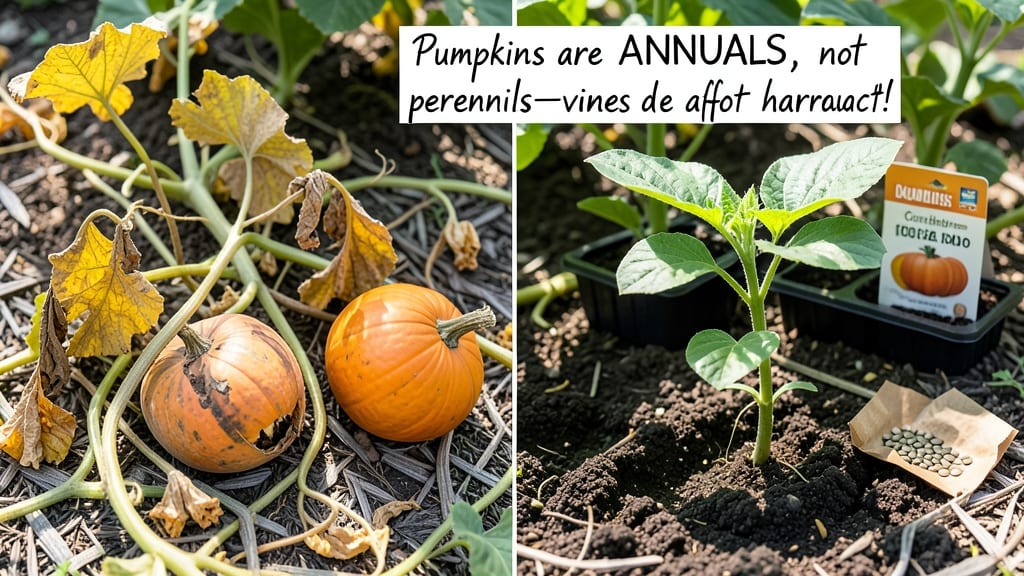
Pumpkin plants are not perennial—they die back after producing fruit each growing season, though their vines may regrow from the same root system under ideal conditions. Most gardeners treat them as annuals due to their short lifespan and cold sensitivity.
Pumpkin plants behave like annuals because their life cycle is tied to producing fruit, not surviving multiple growing seasons. 🌱 The moment frost hits or their energy is drained after setting fruit, the vines wither away—even if the roots stay alive underground.
Unlike true perennials such as winter squash or gourds, pumpkins lack the hardy root systems needed to rebound year after year in most climates. That said, in warmer regions where winters are mild, you might see regrowth from the same root stock, but it's not guaranteed.
This misconception often leads gardeners to replant seeds annually, thinking they're dealing with a true perennial. The key difference lies in their biology: pumpkins prioritize fruit production over longevity, making them more like short-lived annuals with a sneaky survival trick in the right conditions.
If you're in a frost-free zone, you could theoretically extend their lifespan—but don't count on it!
💡 In This Article
- Why Pumpkin Vines Die Back Annually
- How to Extend Pumpkin Plant Lifespan in Your Garden
Why pumpkin vines die back annually
Pumpkin plants prioritize fruit production over survival, which explains their annual dieback. After setting fruit, their energy reserves deplete rapidly—similar to how a marathon runner collapses after crossing the finish line.
The vines contain 90% water by weight, and once frost hits or temperatures drop below 50°F, cellular damage triggers the plant's shutdown mechanism. This is why you'll see vines wither within days of the first frost, even if the roots remain dormant underground.
The root system of pumpkins differs from true perennials like winter squash or gourds. While pumpkin roots can store some carbohydrates, they lack the robust, fibrous network of perennial plants that regenerates shoots year after year.
For comparison, winter squash varieties like 'Butternut' or 'Acorn' have deeper taproots that survive 2-3 years in ideal conditions, whereas pumpkin roots typically max out at 1 year of potential regrowth. The key difference? Perennials allocate energy to root expansion, while pumpkins focus on vine growth and fruit development.
Cold sensitivity is the primary trigger for dieback. Pumpkin plants originate from tropical regions and lack cold-hardiness genes found in their perennial cousins. When temperatures drop below 40°F, the plant's cellular membranes rupture, killing the vines permanently.
This is why gardeners in Zone 5 or colder rarely see regrowth—even if roots persist, the shock from winter frost is irreversible. The misconception arises because some gardeners observe "volunteer" pumpkins sprouting the following year, but this is from seeds that dropped and germinated, not from the original root system.
Another factor is the plant's growth habit. Pumpkin vines spread aggressively, requiring 50-100 square feet per plant to thrive. This rapid growth demands massive energy, leaving little reserve for overwintering. True perennials like strawberries or asparagus grow slowly, building root mass over years.
Pumpkins, however, treat each growing season as a sprint rather than a marathon, which is why their lifespan is so short-lived.
Consider this: a pumpkin plant that produces a 20-pound fruit has invested nearly all its stored energy into that single harvest. The remaining biomass is too depleted to support regrowth.
This is why even in mild climates, most pumpkin plants die back completely after fruiting—unless you provide specific conditions to preserve their roots, which we'll explore in the next section.
What most gardeners don't realize is that pumpkins share this trait with other cucurbits like zucchini and cucumbers, which also behave as annuals despite having perennial relatives.
The confusion stems from how we classify plants—pumpkins are technically "short-day" plants that trigger fruiting based on daylight hours, not their inherent ability to regenerate. This biological quirk means their lifecycle is tied to seasonal cues rather than survival instincts.