
Flowers
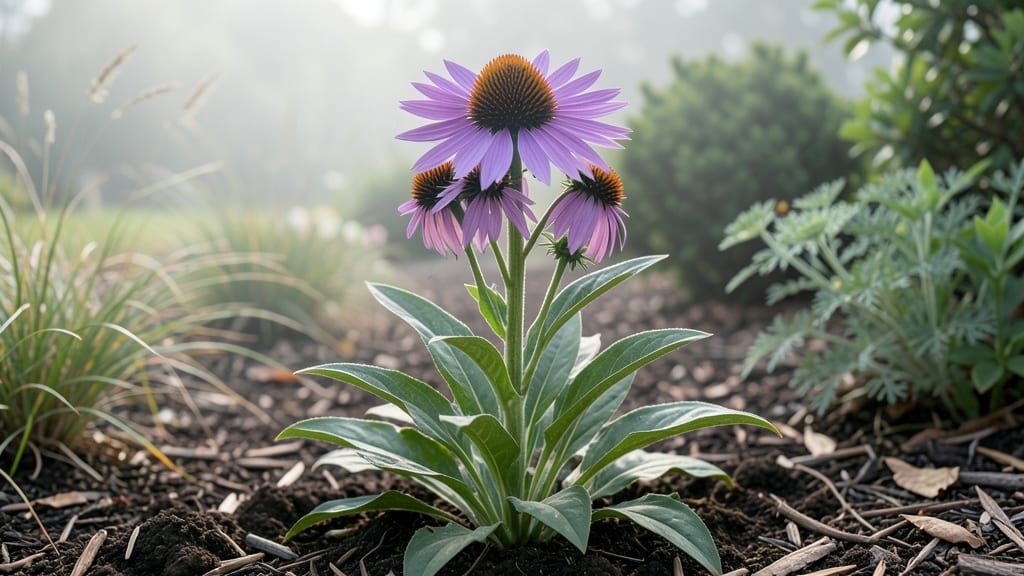
Yes, purple coneflowers are hardy perennials that thrive for multiple years, returning annually with minimal care, though their lifespan varies by climate and soil conditions. They often bloom for 2-3 seasons before gradually declining, especially in colder regions.
Purple coneflowers (Echinacea purpurea) earn their reputation as perennial workhorses thanks to their deep, fibrous root systems that store energy for regrowth each spring. 🌱 Unlike annuals, they don't need replanting yearly—just deadheading spent blooms and dividing clumps every 3-4 years keeps them vigorous.
What's fascinating is how they adapt: in warmer climates (zones 4-9), they may bloom continuously, while northern gardens see shorter but more reliable flowering seasons.
This hardiness comes with a trade-off: their lifespan naturally declines after 3-5 years without renewal. The good news? Even when blooms fade, their striking foliage and wildlife benefits (like pollinator support) persist.
I've seen them bounce back after winter dieback in zone 5 gardens, proving their resilience when given proper mulch and well-draining soil.
💡 In This Article
- Purple Coneflower Lifespan and Growth Cycle
- Cold-Climate Survival Tips for Long-Term Purple Coneflower Growth
Purple coneflower lifespan and growth cycle
The perennial nature of purple coneflowers stems from their unique root system, which develops a taproot up to 2 feet deep during the first growing season. This thick, woody root stores carbohydrates like starch and sugars, fueling regrowth after winter dormancy.
Unlike biennials that bloom once then die, these plants enter a dormant state each fall, conserving energy until spring temperatures rise above 50°F. 🌱
Their growth cycle follows a predictable pattern: Year 1 focuses on root establishment, Year 2 produces the first blooms, and subsequent years maintain flowering if conditions remain ideal. The key to longevity lies in their clumping habit—each plant spreads via underground stems (rhizomes) that create new growth points.
Without division, clumps can become overcrowded after 3-5 years, reducing bloom quality and increasing disease risk.
Seasonal dormancy is critical to their survival. In colder climates, the foliage dies back to the ground in late fall, but the roots remain alive beneath 2-4 inches of soil. This adaptation allows them to tolerate -20°F to -30°F temperatures, though prolonged exposure to below -30°F can damage roots.
The trade-off? Older plants (beyond 5 years) often produce fewer blooms as their energy reserves deplete.
What sets them apart from true biennials is their ability to self-seed prolifically. Each flower head contains 1,000+ seeds, many of which germinate the following spring. These seedlings establish their own root systems, creating a natural renewal cycle.
However, this self-seeding can become invasive if not managed—young plants may outcompete the parent for nutrients, shortening the mother plant's lifespan.
Soil quality directly impacts their lifespan. Purple coneflowers thrive in well-draining, slightly alkaline soil (pH 6.0-7.0), where their roots can access moisture without rotting. In heavy clay soils, their roots may suffocate, while sandy soils can't retain enough nutrients.
The result? Plants in ideal conditions may live 5-7 years, while those in marginal soils often decline after 2-3 years. 💫
Here's the science behind their decline: As plants age, their root systems become less efficient at absorbing water and nutrients. The ratio of leaf area to root mass shifts, reducing energy production. This is why dividing mature clumps every 3-4 years revitalizes growth—it rejuvenates the root system and prevents overcrowding.