
Plants
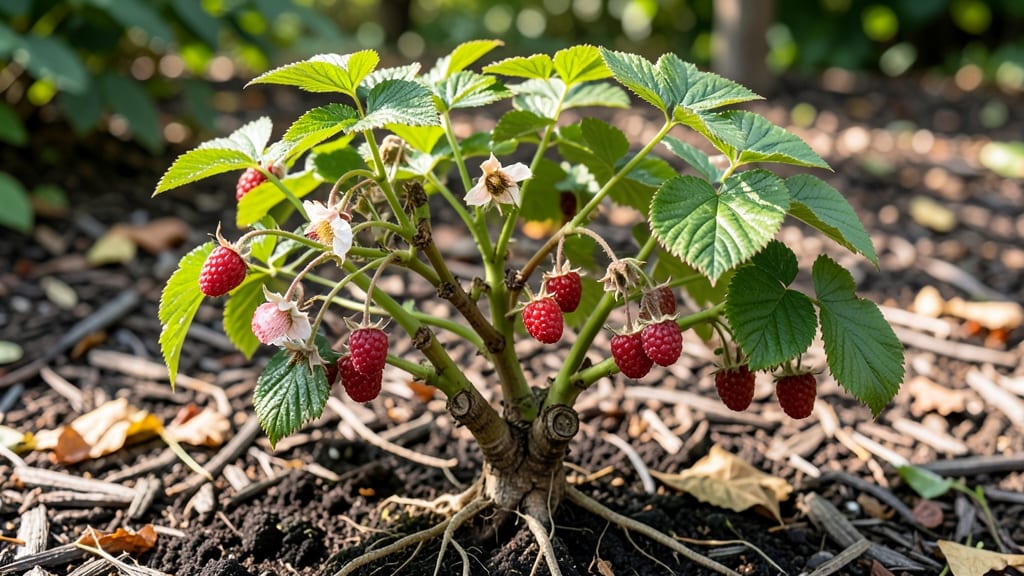
Yes, raspberries are perennials that regrow annually from their roots after winter dieback, producing fruit-bearing canes each season with proper care. Their crowns remain dormant but viable through freezing temperatures, making them reliable garden plants for multiple harvests.
This perennial behavior sets raspberries apart from annuals—their roots stay alive underground, storing energy for spring regrowth. 🌱 The plant's two-year cane cycle (primocanes for next year's fruit, floricanes for current harvest) creates a self-sustaining system when managed correctly.
Unlike annuals that must be replanted yearly, raspberry bushes establish permanent root systems that expand with each growing season, provided they receive adequate winter protection and summer care.
What makes this especially useful for gardeners is how their cold-hardy nature allows them to thrive in USDA zones 3-9 with minimal intervention. The key to their survival lies in the crown's ability to endure freezing temperatures while remaining protected by mulch or snow cover.
This hardiness means once established, raspberry plants can produce fruit for 10-20 years with proper maintenance—far longer than most garden vegetables.
💡 In This Article
- How Raspberry Plant Life Cycle Works as a Perennial
- Caring for Raspberry Perennials Year-Round
How raspberry plant life cycle works as a perennial
The raspberry's perennial nature hinges on its two-year cane cycle, where each cane produces fruit only once. Primocanes (first-year growth) develop from the roots and grow vigorously upward, storing energy in their roots for next year's fruit production.
These canes remain woody but non-fruiting. The following spring, they transform into floricanes that bear fruit before dying back after harvest—this is the plant's natural renewal process. 🌱
During winter dormancy, the above-ground canes die back to the ground, but the crown (the thickened base near the roots) remains alive. This crown contains dormant buds that can regenerate new primocanes when temperatures rise. Cold stratification—a process where chilling triggers growth hormones—activates these buds in early spring, kickstarting regrowth.
Unlike annuals that complete their lifecycle in one season, raspberries rely on this root system to persist through winters in USDA zones 3-9, where temperatures can drop to -30°F to -40°F.
The root system plays a critical role in this resilience. Raspberry roots extend 3-5 feet deep and spread horizontally, creating an extensive network that stores carbohydrates and nutrients. These reserves fuel spring regrowth, allowing the plant to recover from winter dieback.
The roots also produce new primocanes each year, ensuring continuous fruit production. This contrasts sharply with biennials (like carrots), which die after flowering, or annuals (like tomatoes), which complete their entire lifecycle in one season.
What's fascinating is how raspberries adapt to seasonal changes. In late fall, the plant senses shortening daylight and dropping temperatures, triggering the production of abscisic acid—a hormone that signals dormancy. This chemical change hardens the crown and prepares the plant for freezing conditions.
Once temperatures warm in spring, gibberellins (growth hormones) activate, prompting the crown to send out new shoots. This hormonal dance is what keeps raspberries thriving year after year. 🌿
For gardeners, understanding this cycle means timing pruning and fertilization correctly. Removing old floricanes after harvest prevents disease buildup, while leaving primocanes ensures next year's fruit.
The plant's ability to regenerate from the crown also means it can recover from accidental damage—even if canes are cut back to the ground, the roots will often sprout new growth. This resilience is why raspberries are such a rewarding perennial crop.
Consider this comparison: Annuals like strawberries produce fruit from the same plant each year but must be replanted, while raspberries establish a permanent root system that expands annually. This makes them far more sustainable for long-term harvests.
The trade-off? Raspberries require more upfront care to establish their root system, but once established, they reward gardeners with decades of fruit production. 💫