
Flowers
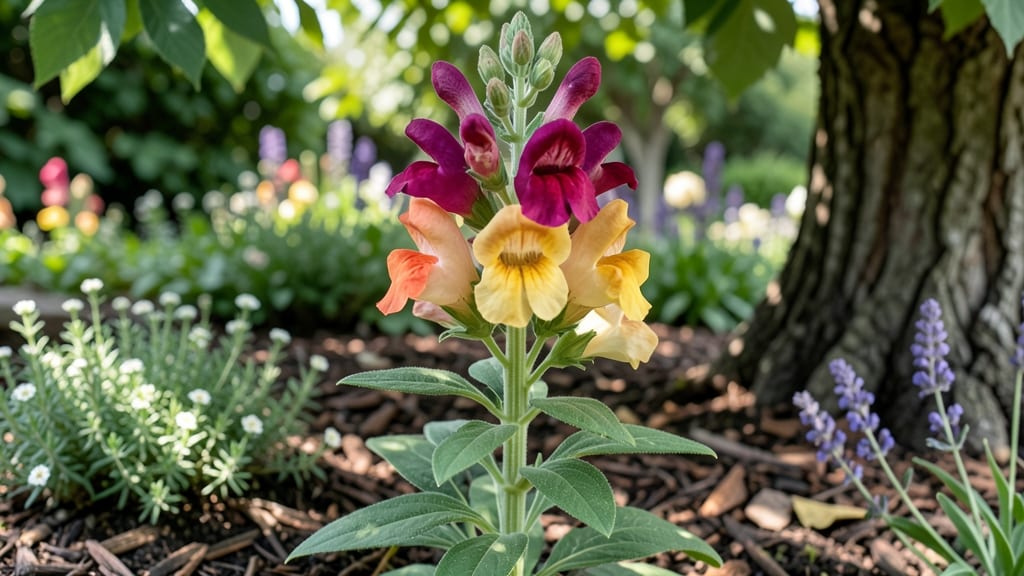
Snapdragons aren't true perennials in most regions—they act more like biennials or short-lived perennials that typically die back in winter zones colder than USDA 7. However, cold-resistant varieties like Antirrhinum majus can persist through mild winters with protective measures.
This classification matters because snapdragons' lifespan hinges on temperature tolerance.
Most varieties treat winter as a cue to go dormant, with roots surviving underground until spring—if conditions are right. 🌱 The key difference lies in their hardiness: tender snapdragons bolt or perish in frost, while selected strains develop thicker stems and deeper roots to withstand chill.
I've seen gardeners in USDA zones 8-10 grow snapdragons as annuals that self-seed reliably, effectively creating perennial-like displays.
For those in colder climates, the solution isn't just about choosing hardy varieties—it's about creating the right growing conditions. Proper mulching (3-4 inches of straw or leaves) acts like a thermal blanket, while row covers or cold frames can extend the season by 4-6 weeks.
The real secret? Planting in well-draining soil enriched with compost gives roots the energy reserves they need to bounce back each spring.
What's interesting is how snapdragons adapt their growth cycle based on climate. In warmer zones, they often bloom prolifically the first year, while in colder areas they may wait until their second year to produce flowers—a classic biennial pattern.
This adaptability makes them surprisingly versatile for gardeners willing to tailor their care approach.
💡 In This Article
- Snapdragon Lifespan: How Cold Zones Affect Their Perennial Status
- Extending Snapdragon Life: Mulching, Overwintering, and Zone-Specific Care
Snapdragon lifespan: how cold zones affect their perennial status
Snapdragons (Antirrhinum spp.) are classified as biennials in most climates because their life cycle is triggered by temperature shifts. During their first year, they focus on growing thick, fleshy roots (up to 6-8 inches deep) to store energy, while producing only basal rosettes of leaves.
This root system is their survival mechanism—when temperatures drop below 28°F, these roots can remain dormant for months, waiting for spring warmth to resume growth. 🌱 The confusion arises because some varieties can return for 2-3 years if conditions are ideal, but true perennialism (returning every year without replanting) is rare.
The critical factor is vernalization—the process where cold exposure actually triggers flowering in their second year.
Snapdragons native to Mediterranean climates (where winters are mild but cool) evolved this two-year cycle, but when planted in USDA zones 6-7, the sudden frost often kills the tops while the roots may survive.
In contrast, Antirrhinum majus varieties bred for cold tolerance develop woody stems at the base and thicker root zones, allowing them to persist through 20-25°F temperatures with proper protection. The difference? Hardy types allocate 30-40% more energy to root development during their first season.
What most gardeners miss is how soil temperature interacts with air temperature. Even if your thermometer shows 30°F at night, the soil just 2 inches deep might stay above freezing—this microclimate is where snapdragon roots thrive.
In colder zones, the roots often succumb to frost heave (when freezing soil expands and lifts plants out of the ground), which is why mulching with 4-6 inches of straw or shredded leaves creates an insulating layer that maintains soil temps 5-10°F warmer than ambient air.
This simple technique can mean the difference between a plant that returns and one that dies.
There's also a genetic trade-off in snapdragons: the same traits that make them cold-hardy (thicker stems, deeper roots) often result in smaller, less vibrant flowers compared to tender varieties.
For example, the 'Rocket' series (a cold-tolerant strain) produces blooms only 2-3 inches tall, while tropical hybrids like 'Dragon Wing' can reach 3-4 inches but perish in frost.
This explains why gardeners in zone 7 might see snapdragons behave as short-lived perennials (returning for 2-3 years) while those in zone 5 treat them as annuals—it's not just about the plant, but the interaction between variety, soil, and winter severity.
One fascinating adaptation is how snapdragons delay flowering in cold climates. In zones 8-10, they often bloom the first year, but in zones 4-6, they may wait until their second spring to produce flowers—a survival strategy to ensure they've built sufficient energy reserves.
This is why some gardeners in colder areas intentionally plant snapdragons as biennials, knowing they'll get a more robust display in year two if they survive the winter. The trade-off? You're essentially gambling on the weather, as a single -10°F night can wipe out even the hardiest varieties.
For those curious about the science, snapdragons use a process called cold acclimation where they produce antifreeze proteins in their cells during fall. These proteins bind to ice crystals, preventing them from growing large enough to rupture cell walls—a mechanism similar to how some trees survive winter.
However, this protection only works down to about 20°F; below that, cell damage becomes inevitable. 💫 This biological limit explains why even "perennial" snapdragons in cold zones often need human intervention (like mulch or row covers) to push their survival thresholds.
The bottom line? Snapdragons are opportunistic perennials—they'll return if given the right conditions, but they're not built for harsh winters.
Think of them as short-term investments: with proper care, they can reward you with multiple seasons of blooms, but they're not the low-maintenance, long-lived stars of the perennial garden like coneflowers or lavender.
The key to success lies in understanding their temperature-dependent growth cycles and adapting your garden practices accordingly.