
Plants
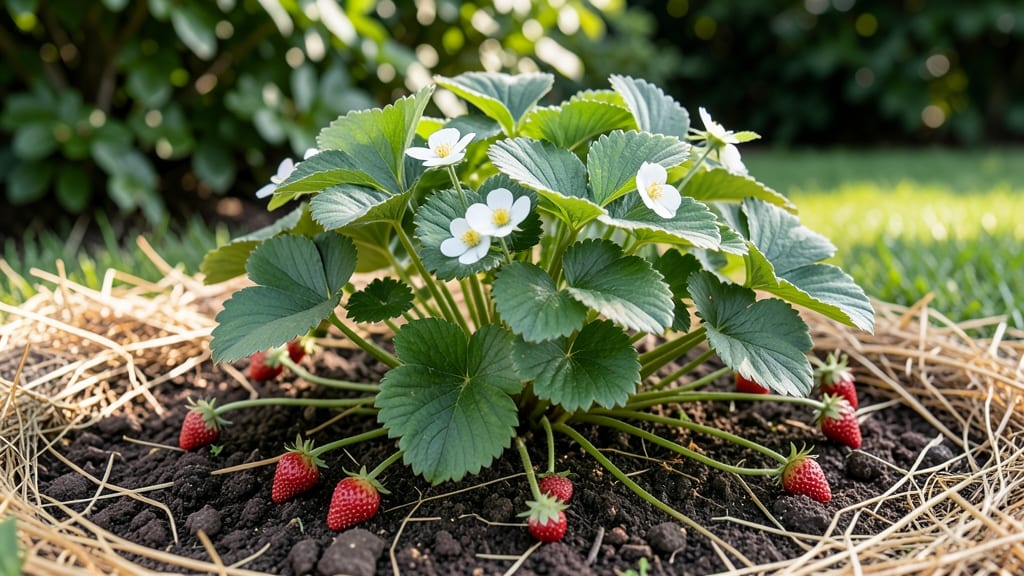
Yes, strawberries are perennials that die back to the ground each winter but regrow from their crowns in spring, producing new leaves and fruit annually under the right conditions. Their lifespan extends for years with proper care and climate adaptation.
Strawberries thrive as perennials because their crowns—where leaves and roots meet—remain dormant but alive underground during cold months. 🌱 This hardy survival strategy lets them bounce back each spring, unlike annuals that die completely after fruiting.
The key to their longevity lies in protecting these crowns from freezing and ensuring healthy soil for regrowth, which is why gardeners often mulch heavily in winter.
What sets strawberries apart from other perennials is their ability to produce fruit in their first year while still building root systems for future seasons. This dual-purpose growth pattern makes them both productive and resilient, but only if you provide consistent care like proper watering, sunlight exposure, and seasonal pruning.
Without these basics, even perennial strawberries may struggle to return year after year.
💡 In This Article
- How Strawberry Plants Survive Winter as Perennials
- Tips for Extending Strawberry Perennial Lifespan
How strawberry plants survive winter as perennials
The secret to strawberries' perennial survival lies in their specialized crown structure—a thickened stem base where leaves and roots connect. Unlike annuals that complete their life cycle in one season, strawberry crowns enter dormancy when temperatures drop below 40°F, shutting down active growth while preserving essential tissues.
This dormant state allows them to withstand freezing down to -10°F if properly protected, though extreme cold (-20°F) can damage even hardy varieties.
Beneath the soil, strawberry roots form a dense network that stores carbohydrates during summer, fueling regrowth in spring. The root system can extend 12-18 inches deep, anchoring the plant while accessing moisture and nutrients.
What's remarkable is how these roots remain metabolically active even in winter, slowly processing stored energy to maintain crown viability. This contrasts sharply with biennials like carrots, which die after flowering, or annuals like marigolds that complete their entire life cycle in one growing season.
Temperature acts as the primary trigger for regrowth. When daytime temperatures consistently reach 50-55°F for several weeks, the crowns break dormancy through a process called vernalization, where hormonal changes signal new leaf production.
You'll often see the first signs of regrowth as tiny red buds emerging from the soil in early spring—these contain all the genetic instructions needed to restart the plant's life cycle.
The timing of this awakening depends on your climate zone, with southern regions seeing regrowth 4-6 weeks earlier than northern areas.
Moisture plays a crucial role too. While dormant, strawberry crowns need minimal water (about 1 inch per month) to prevent desiccation, but proper winter moisture helps maintain soil structure around the roots. Too much water can lead to root rot, while too little causes crown dehydration.
This balance explains why gardeners often use straw mulch (hence the name "strawberry")—it insulates against temperature swings while regulating moisture levels.
What most gardeners don't realize is how light affects winter survival. Strawberry crowns actually perform photosynthesis at temperatures as low as 32°F, though at reduced rates. This means even under snow cover, the plants are subtly preparing for spring by building up energy reserves.
The snow itself acts as an insulator, maintaining stable ground temperatures that prevent freeze-thaw cycles—which can be more damaging than steady cold.
Consider this comparison: While annuals like basil must be replanted each year, strawberries establish permanent root systems that can persist for 5-10 years with proper care. This longevity comes at a cost—older plants produce smaller berries and require more maintenance.
The trade-off is worth it for patient gardeners who understand how to protect these perennial powerhouses through winter's challenges.